 flip
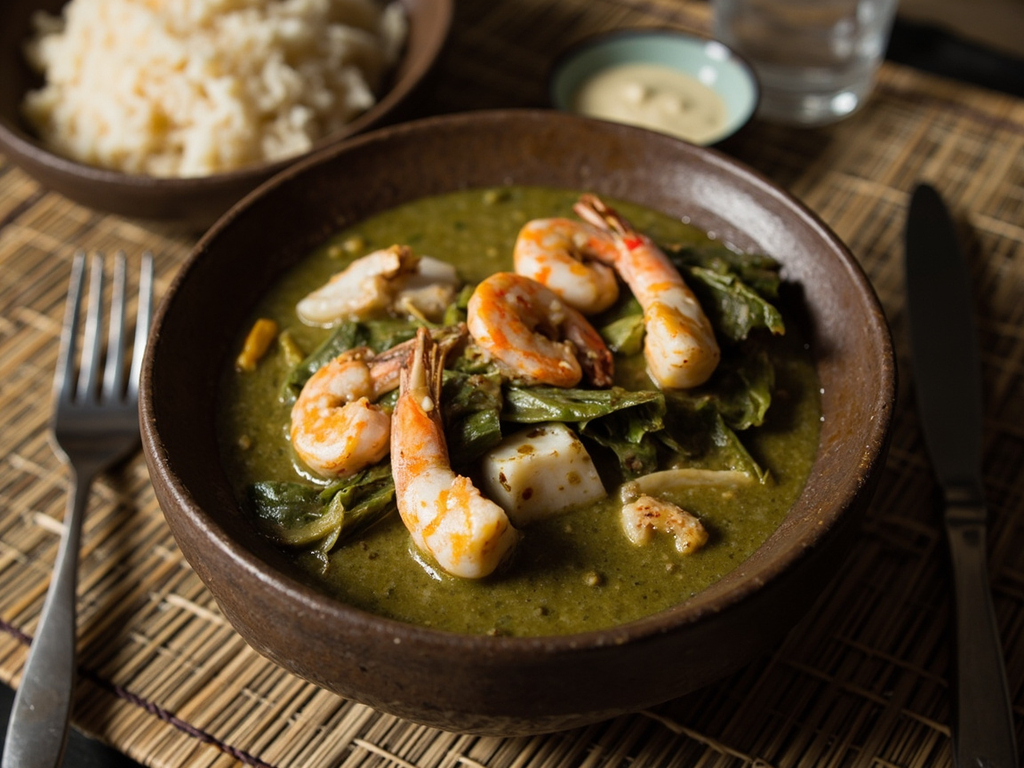
flipMatapa, Green Leaves with Coconut and Peanut
Matapa, Green Leaves with Coconut and Peanut
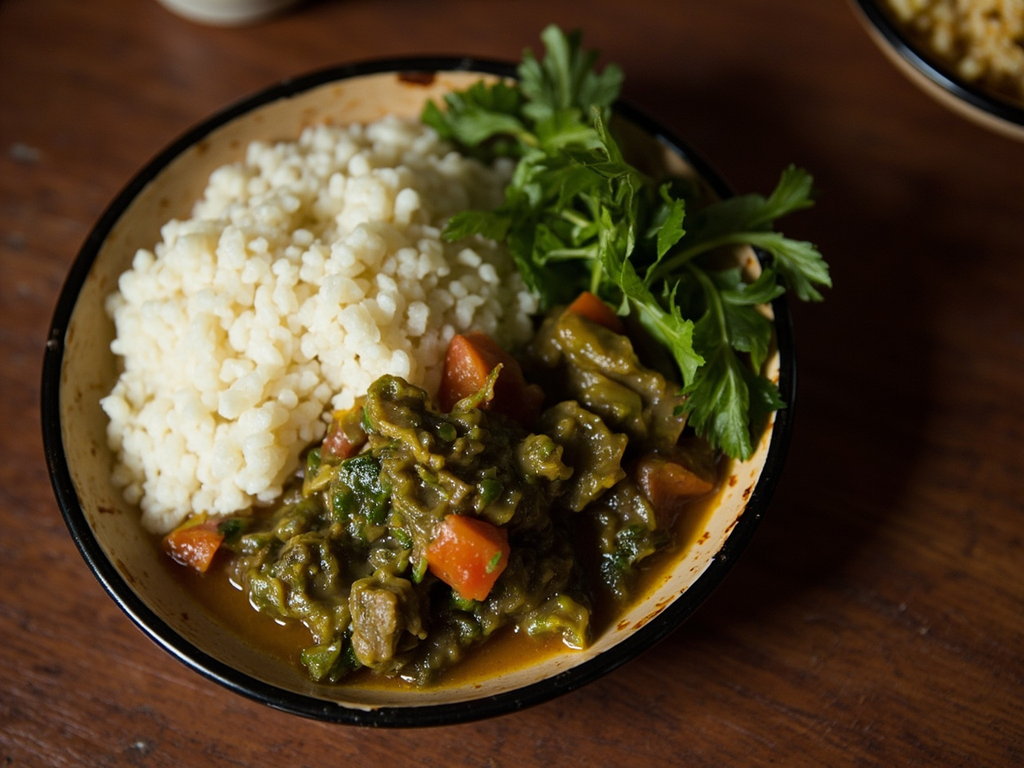
Why this dish? Matapa is the national dish of southern Mozambique, omnipresent in the Gaza and Maputo region where Graça Machel lived and worked. An everyday dish but also a festive one, made of pounded leaves, coconut and peanut, it embodies the popular cuisine she claims as part of her identity.
Creamy stew of young leaves (traditionally cassava) slowly simmered with roasted peanut paste and coconut milk, often enriched with shrimp or crab on the coast. Eaten with xima.
Matapa is patience: you have to pound the leaves for a long, long time, until they have no stringiness under the tooth. I put in the well-roasted and ground peanut, the milk I squeeze from the grated coconut, and if the Maputo market has been generous, a few shrimp to wake it all up. You let it simmer without rushing, like things that matter. Serve it on xima, and you'll understand why a Mozambican child recognizes that smell wherever they go.
- •Young pounded cassava leaves — a large basket (green base)
- •Roasted ground peanuts — a good handful (binder and fat)
- •Fresh grated and pressed coconut — one coconut (roundness, sauce)
- •Shrimp or coastal crab — according to catch (marine umami)
- •Onion, garlic, salt — to taste (aromatic base)
Matapa, Green Leaves with Coconut and Peanut
Creamy stew of young leaves (traditionally cassava) slowly simmered with roasted peanut paste and coconut milk, often enriched with shrimp or crab on the coast. Eaten with xima.
Why this dish? Matapa is the national dish of southern Mozambique, omnipresent in the Gaza and Maputo region where Graça Machel lived and worked. An everyday dish but also a festive one, made of pounded leaves, coconut and peanut, it embodies the popular cuisine she claims as part of her identity.
Matapa is patience: you have to pound the leaves for a long, long time, until they have no stringiness under the tooth. I put in the well-roasted and ground peanut, the milk I squeeze from the grated coconut, and if the Maputo market has been generous, a few shrimp to wake it all up. You let it simmer without rushing, like things that matter. Serve it on xima, and you'll understand why a Mozambican child recognizes that smell wherever they go.
Ingredients (period version)
- Young pounded cassava leaves — a large basket (green base)
- Roasted ground peanuts — a good handful (binder and fat)
- Fresh grated and pressed coconut — one coconut (roundness, sauce)
- Shrimp or coastal crab — according to catch (marine umami)
- Onion, garlic, salt — to taste (aromatic base)
Ingredients
- Spinach or sweet potato leaves (if cassava leaves unavailable) — 500 g (green base)
- Unsweetened peanut butter — 3 tbsp (binder and fat)
- Coconut milk — 400 ml (roundness, sauce)
- Peeled shrimp — 200 g (marine umami)
- Onion — 1 (aromatic base)
- Garlic — 2 cloves (aromatic base)
- Salt — to taste (seasoning)
Method
- Wash and finely chop the green leaves (spinach is a good substitute for cassava leaves).
- Sauté the chopped onion and garlic in a pot.
- Add the leaves, cover with a little water, and let wilt for 15 minutes.
- Dissolve the peanut butter in the coconut milk and pour into the pot.
- Simmer on low heat for 20-30 minutes, stirring; add the shrimp at the end of cooking; season with salt.
- Serve creamy over xima.
How it was made : Traditionally, cassava leaves were pounded in a mortar for long minutes to break down their fibers; coconut milk was extracted by hand from grated pulp. On the coast, abundant shrimp and crab enriched the dish; inland, it remained vegetarian.
The contemporary twist : A spoonful of matapa served in a hollowed-out half coconut shell, as in the pousadas of the Maputo coast.
Graça Machel · Charactorium