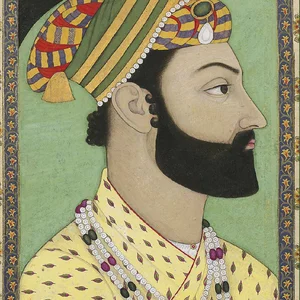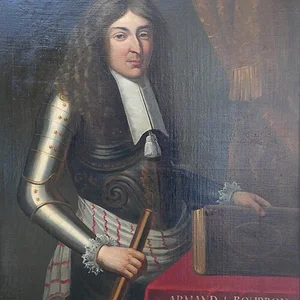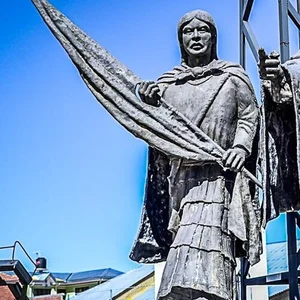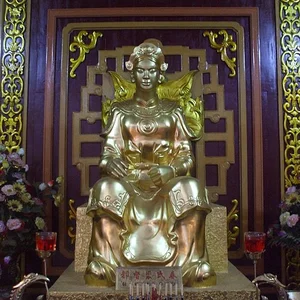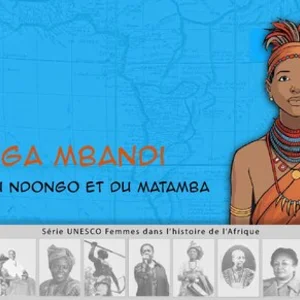

Queen of Ndongo and Matamba (Angola) in the 17th century, Nzinga led a fierce resistance against Portuguese colonization and the slave trade. A skilled diplomat and formidable warrior, she negotiated with the Portuguese before waging decades of guerrilla warfare against them.
Nzinga
Nzinga
9 min read
Frequently asked questions
Key Facts
- Around 1583: born in the Kingdom of Ndongo (present-day Angola)
- 1622: negotiates in person with Portuguese governor João Correia de Sousa in Luanda
- 1624: becomes Queen of Ndongo following the death of her brother, King Ngola Mbande
- 1630: conquers the Kingdom of Matamba and makes it her base of resistance
- 1663: dies at around 80 years old, after forty years of resistance against the Portuguese
Works & Achievements
A diplomatic agreement by which Portugal recognized Nzinga's authority over Matamba. The fruit of thirty years of armed resistance and negotiation, this treaty is regarded as one of the earliest agreements of near-equality between an African power and a European colonial power.
A strategic coalition with the Dutch West India Company during the Dutch occupation of Luanda. Nzinga demonstrated a rare geopolitical vision: using rivalries between European powers to defend her own independence.
Nzinga transformed Matamba into a state that welcomed escaped slaves, deserting soldiers, and refugees from Ndongo, building an armed force and an economic base that sustained thirty years of resistance against the Portuguese.
Nzinga maintained an active correspondence with the Pope and Portuguese authorities, through secretaries fluent in Latin and Portuguese, to defend her sovereign rights and secure international recognition of her kingdom.
In her final years, Nzinga welcomed Italian Capuchin missionaries and encouraged the conversion of her people, thereby strengthening her legitimacy with the Vatican and facilitating peace negotiations with Catholic Portugal.
Anecdotes
During her diplomatic mission to Luanda in 1622, the Portuguese governor João Correia de Sousa refused to offer her a seat — a deliberate humiliation meant to assert his superiority. Nzinga immediately had one of her servants kneel down and sat on her back as if on a throne, asserting her royal dignity without uttering a single word. The Portuguese governor, it is said, was left speechless.
In 1622, Nzinga was baptized under the name Ana de Sousa, taking the first name of the Portuguese governor's wife as her godmother — a purely diplomatic gesture to secure the release of her brother, who was being held hostage, and to negotiate a peace treaty. She did not hesitate to use the opposing religion as a political tool, while continuing to maintain the traditional rituals of her people.
Exiled from Ndongo by the Portuguese around 1626, Nzinga did not surrender: she conquered the neighboring kingdom of Matamba and made it her new base of resistance. There she organized a guerrilla army, recruiting Jaga warriors, deserters, and fugitive slaves, and waged a war of attrition against the Portuguese for more than thirty years without ever being definitively defeated.
When the Dutch seized Luanda in 1641, Nzinga immediately recognized the opportunity: she forged a military alliance with the Dutch West India Company to attack the Portuguese in a pincer movement. The alliance failed to permanently drive out the Portuguese when they retook Luanda in 1648, but it stands as a testament to the geopolitical skill of a queen who knew how to play European powers against one another.
Nzinga personally led her troops into battle until an advanced age: chroniclers still describe her at the head of her warriors in the 1650s, when she was past sixty. She died in 1663, at around 80 years old, having finally negotiated a peace treaty with Portugal in 1656 that recognized her authority over Matamba.
Primary Sources
Queen Nzinga, a woman of extraordinary intellect and unparalleled energy, had gathered around her warriors of all origins and organized resistance with tireless determination, holding Portuguese armies at bay in the forests and mountains of the interior.
This queen, our fierce enemy for so many years, proved capable of holding His Majesty's armies at bay through her perfect knowledge of the terrain and the unwavering loyalty of her followers, who rallied behind her as a commander of extraordinary caliber.
I am the rightful queen of Ndongo and Matamba. I demand the liberation of my subjects held in slavery in violation of all conventions, and respect for the agreements made between our peoples and the Portuguese crown.
Queen Ana de Sousa Nzinga, having renewed her commitment to the Christian faith, demonstrated sincere piety in her final years, attending masses celebrated by the Capuchin fathers and actively encouraging the conversion of her people.
The queen of Matamba sent us her ambassadors with proposals for an alliance against the Portuguese. She commands a large army, knows the interior terrain perfectly, and we judged this alliance favorable to the Company's interests in Angola.
Key Places
Royal capital of Ndongo and home to Nzinga's family. The Portuguese sacked it during repeated military campaigns, forcing Nzinga into exile and pushing her to shift her resistance to the neighboring kingdom of Matamba.
Portugal's main colonial port in Angola, where Nzinga led her diplomatic mission in 1622 and received baptism. The city was the hub of the transatlantic slave trade to Brazil and the Caribbean, exporting tens of thousands of people every year.
Kingdom conquered by Nzinga around 1629 after her expulsion from Ndongo. She made it her capital of resistance and ruled it until her death in 1663, maintaining the territory's independence against the Portuguese despite decades of military pressure.
A cluster of massive rock formations in the Angolan interior that served as a natural refuge for Nzinga during the guerrilla wars. This naturally impregnable site allowed her to hold off Portuguese offensives for several decades.
Portuguese military fort established at the confluence of the Cuanza and Lucala rivers, used as a launching point for offensives against Ndongo and Matamba. Repeated fighting around Massangano defined several decades of conflict between Nzinga and the Portuguese.
Liens externes & ressources
Références
Œuvres
Traité de paix avec le Portugal
1656
Alliance militaire avec les Pays-Bas
1641
Organisation du Matamba comme État refuge
1629-1663
Correspondance diplomatique avec Rome et Lisbonne
1646-1657
Accueil et protection des missions capucines au Matamba
1654-1663