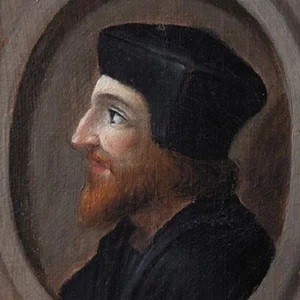

Genoese nobleman and merchant of the 16th century, from the influential Lomellini family. The Lomellinis controlled major commercial networks across the Mediterranean, including the concession of the island of Tabarka for coral fishing and trade with North Africa.
Orazio Lomellini
Orazio Lomellini
7 min read
Frequently asked questions
Key Facts
- Member of the powerful noble and merchant Lomellini family of Genoa
- The Lomellini family obtained the concession of the island of Tabarka (in present-day Tunisia) for the coral trade in the 16th century
- The Lomellinis were one of the great merchant and banking dynasties of the Republic of Genoa
- Active in Mediterranean commercial networks linking Christian Europe to the North African coasts
Works & Achievements
Foundation and organization of the commercial trading post on the island of Tabarka, enabling the systematic exploitation of coral reefs and the development of trade with North Africa. This concession made the Lomellini the principal intermediaries between Christian Europe and the Maghreb for several decades.
Establishment at Tabarka of a system for negotiating and ransoming Christian prisoners captured by Barbary corsairs. This activity reinforced the Lomellini's position as indispensable intermediaries between both shores of the Mediterranean, combining profit with religious prestige.
Like other great Genoese families, the Lomellini took part in loan contracts with the Spanish Crown. These financial operations, highly lucrative in normal times, nonetheless exposed lenders to the risks of repeated royal bankruptcies.
Organization of a complete supply chain for the exploitation and sale of coral harvested from the waters of Tabarka: fishing, transport to Genoa, crafting in jewelry workshops, and sale on European and Eastern markets.
Anecdotes
In 1540, the famous Ottoman corsair Dragut (Turgut Reis) was captured by Genoese admiral Gian Andrea Doria. The Lomellini family contributed to the payment of his considerable ransom. In exchange for this financial service, they obtained the exclusive concession of the island of Tabarka and its precious coral beds, transforming a political act into a commercial empire.
The island of Tabarka, granted to the Lomellini, quickly became a prosperous trading post where Genoese divers harvested red Mediterranean coral. This material, highly prized throughout Europe and as far as the Orient for jewelry and rosary beads, supplied specialist workshops in Genoa and Trapani. The profits drawn from this activity enriched the family for generations.
Tabarka also played an unexpected humanitarian role: Lomellini agents would negotiate the ransom of Christians held captive by Barbary corsairs. This ransom trade, blending religious interests with commercial profit, was a common activity for Genoese merchants established on the North African coasts in the 16th century.
The Lomellini, like other great Genoese families, placed their capital with the Banco di San Giorgio, a financial institution founded in 1407. This powerful body managed public debts and financed distant commercial expeditions, allowing families like the Lomellini to act as true bankers to European sovereigns — until the repeated bankruptcies of the Spanish Crown.
Primary Sources
Haedo describes the island of Tabarka as the main settlement of the Genoese known as 'Lumelinos', where several hundred of them typically resided, engaged in coral fishing and trade with the populations of the African shore.
Partnership deeds (*accomandita*) drawn up before Genoese notaries document the Lomellini family's shares in commercial expeditions across the western Mediterranean and the North African coasts, with details of profit shares and risk distribution.
The records of the Banco di San Giorgio preserve bills of exchange and accounts relating to the operations of the great Genoese noble families, including the Lomellini, in Mediterranean trade and the financing of Spanish *asientos*.
Ramusio describes in his geographical compilations the trade routes of the western Mediterranean and the Genoese merchant settlements on the North African coasts — the broader context within which the great Genoese families conducted their affairs.
Key Places
The Lomellini family's city of origin and seat of power. In the 16th century, Genoa was one of Europe's foremost financial centers, whose noble bankers financed the Spanish Crown and controlled vast Mediterranean trade networks.
Granted to the Lomellini around 1540, the island became their main trading post in North Africa. It served as a base for coral fishing, commerce with local populations, and the ransoming of Christian captives from Barbary corsairs.
The Lomellini's principal political partner in North Africa. The Hafsid rulers granted Genoese merchants the right to trade along their coasts in exchange for fees and a role as commercial intermediaries.
A financial institution founded in 1407 and the backbone of the Genoese economic system. The great noble families, including the Lomellini, deposited their capital there and used it to finance their commercial ventures and loans to European sovereigns.
Typical Objects

Red coral (*Corallium rubrum*) harvested from the seabed around Tabarka was the Lomellini's primary raw material. Whether raw or worked, it was shipped to jewellery workshops in Genoa, Naples, and Trapani.

A central financial instrument in Mediterranean trade, the bill of exchange allowed merchants to transfer funds between commercial centres without physically moving coin. Genoese merchants had made it their preferred tool for financing long-distance operations.

An oar-and-sail vessel used to carry precious cargo across the Mediterranean. Genoese galleys linked Genoa, Tabarka, Spanish ports, and Levantine trading posts, transporting coral, textiles, and precious metals.

A Catholic devotional object crafted from Tabarka's red coral, in high demand across Europe during the Counter-Reformation. It was one of the most lucrative outlets for the Lomellini's coral trade.

An inheritance of the Italian accounting revolution of the fourteenth century, the double-entry account book allowed Genoese merchants to track debts, credits, and profits across multiple simultaneous transactions with precision.

Genoese nobility distinguished themselves by wearing garments of black silk brocade, a luxury fabric produced in Genoa's workshops. Wearing such cloth was a mark of social standing and mercantile power.
School Curriculum
Vocabulary & Tags
Key Vocabulary
Daily Life
Morning
The day of a Genoese noble merchant began early with reading the mail brought in by galleys — letters from correspondents in Seville, Antwerp, or Constantinople. Business followed: receiving partners, signing deeds before a notary, reviewing the account books kept by the clerks.
Afternoon
The afternoon was devoted to commercial negotiations and courtesy calls at the palaces of other noble families. One would visit the **Banco di San Giorgio** to check on the family's deposits or meet with representatives of the Republic. News from the sea lanes — storms, captures by corsairs, the arrival of a coral shipment — would often come in at this hour.
Evening
In the evening, the family gathered for the main meal in the great hall of the *palazzo*. Conversation blended business, politics, and news from across the Mediterranean; distinguished guests might be received — ambassadors or galley captains. The evening ended with prayers told on a rosary of red coral from **Tabarka**.
Food
The table of a great Genoese merchant was plentiful: fresh fish and seafood (sea bream, tuna), pasta and *focaccia*, market vegetables, Ligurian cheeses. Spices seasoned the meat dishes. Ligurian wine was served, and at formal dinners, Spanish wines imported by galley.
Clothing
Orazio wore garments of black silk brocade — the characteristic color of Genoese nobility — trimmed with gold passementerie. Over these, a short cloak in the Italian fashion. Official occasions required the senatorial toga to sit on the councils of the Republic. The women of the family wore jewelry in coral and gold.
Housing
The **Palazzo Lomellini** in Genoa was a multi-story residence with an interior courtyard, frescoed reception rooms, and a loggia open to the city. Carved walnut furniture and velvet hangings attested to the family's wealth. In **Tabarka**, the *fondaco* was more austere: a fortified trading post protected by walls facing the sea.
Historical Timeline
Period Vocabulary
Liens externes & ressources
Références
Œuvres
Établissement du comptoir de Tabarka
vers 1540-1542
Réseau de rachat des captifs chrétiens
XVIe siècle
Commerce du corail rouge méditerranéen
XVIe siècle