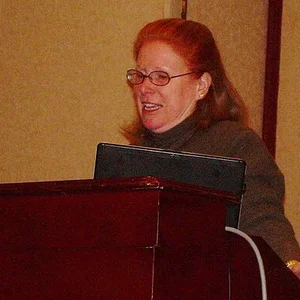

An American ophthalmologist and inventor, Patricia Bath revolutionized cataract treatment by developing the Laserphaco Probe, a laser device patented in 1988. The first African American woman to receive a medical patent in the United States, she also co-founded the American Institute for the Prevention of Blindness.
Patricia Bath(1942 — 2019)
Patricia Bath
États-Unis
9 min read
Frequently asked questions
Key Facts
- 1942: Born in Harlem, New York
- 1968: Medical degree from Howard University College of Medicine
- 1974: First African American woman to lead an ophthalmology department in the United States (UCLA/Drew)
- 1988: Patent granted for the Laserphaco Probe — first African American woman to receive a medical patent
- 1993: Co-founder of the American Institute for the Prevention of Blindness
Works & Achievements
A revolutionary medical device combining a pulsed laser with an irrigation-aspiration system to remove cataracts with unmatched precision and speed. The first medical patent awarded to an African-American woman in the United States, it still serves as the foundation for modern cataract surgery techniques.
An innovative public eye health approach proposed by Bath, aimed at bringing care to underserved populations rather than waiting for them to seek it out. This model has had a lasting influence on community health policies in the United States.
A nonprofit organization dedicated to preventing blindness in marginalized populations, co-founded by Bath. She championed universal access to eye care and the training of physicians in developing countries.
A body of scientific publications documenting the disproportionate rates of blindness among African Americans and proposing structural solutions. This pioneering work laid the groundwork for the field of public health ophthalmology in the United States.
An initiative led by Bath in the later years of her career to harness digital technologies and telemedicine to deliver eye diagnoses and care to populations in Africa and Asia lacking access to specialists.
Anecdotes
At sixteen years old, Patricia Bath takes part in a cancer research program organized by Yeshiva University in New York. Her results are so impressive that they are presented at an international conference, and the program director declares she is the most promising researcher he has ever encountered.
While observing patients at Harlem Hospital in the 1970s, Patricia Bath notices that Black people suffer from blindness twice as often as white people, due to lack of access to ophthalmological care. This discovery leads her to create the concept of “community ophthalmology,” bringing care to underserved populations rather than waiting for them to come to the hospital.
To develop her laser device, Patricia Bath has to work in European laboratories: she conducts her research successively at the Laser Medical Center in Berlin, the Rothschild Eye Institute in Paris, and the University of Loughborough in England, since the necessary equipment does not yet exist in the United States. It is this international collaboration that allows her to finalize the invention.
After obtaining her patent in 1988, Patricia Bath uses her Laserphaco Probe to restore sight to patients who had been suffering from cataracts for more than thirty years. One of these patients, who had not seen for three decades, can once again recognize the faces of loved ones thanks to her invention — something no traditional surgical technique had ever managed to achieve.
Patricia Bath faces double discrimination throughout her career: as a woman and as a Black person. When she becomes in 1974 the first woman to join the faculty of the ophthalmology department at UCLA, she is denied access to certain laboratories. Rather than giving up, she conducts her research at Harlem Hospital and continues to publish work that ultimately earns international recognition.
Primary Sources
A method and apparatus for ablating and removing cataract lenses using a pulsed laser beam is disclosed. The apparatus includes a probe having an irrigation-aspiration system coupled with a laser source for delivering pulsed laser energy to ablate the lens.
The Laserphaco Probe combines laser energy delivery with simultaneous irrigation and aspiration, allowing the rapid ablation of cataract lenses with minimal trauma to surrounding ocular structures.
Blindness among Black Americans is at least twice that among white Americans. A community-based ophthalmology program can reduce this disparity by bringing preventive and therapeutic care directly to underserved populations.
The American Institute for the Prevention of Blindness is established to protect, preserve and restore the gift of sight, with a particular focus on populations historically deprived of adequate ophthalmic care.
Key Places
The neighborhood where Patricia Bath was born in 1942 and where she held her first consultations at Harlem Hospital. It was by observing patients in this underprivileged community that she became acutely aware of the racial inequalities in access to ophthalmic care.
A historically Black college and university (HBCU) where Patricia Bath earned her medical degree in 1968. Founded after the Civil War to train African Americans for the professions, this institution shaped her deep convictions about equality in access to healthcare.
A prestigious ophthalmology institute where Patricia Bath joined the faculty in 1974 as the first woman in the Department of Ophthalmology. She conducted much of her clinical and academic career there.
The laboratory where Patricia Bath carried out part of her research in the 1980s to develop the Laserphaco Probe, after finding that sufficiently advanced laser equipment was not available in the United States.
A Parisian institution specializing in ophthalmology where Bath continued her experiments with medical lasers, drawing on the expertise and cutting-edge equipment available across Europe.
Typical Objects
A device invented by Patricia Bath and patented in 1988: a miniaturized probe combining a pulsed laser, an irrigation system, and suction to remove the lens clouded by cataracts in a matter of seconds, with minimal trauma to the eye.

An optical instrument used daily by ophthalmologists to examine the interior of the eye, including the retina and lens; Bath used it from her very first consultations at Harlem Hospital to diagnose patients.

An essential piece of equipment in ocular microsurgery, it magnifies the operating field to allow movements of millimeter-level precision; Bath used it during her cataract operations both before and after the invention of the Laserphaco Probe.

An official document issued by the USPTO (United States Patent and Trademark Office) in 1988 certifying intellectual ownership of the Laserphaco Probe; for Bath, this document symbolizes the institutional recognition of an inventor who had long been marginalized.

A pulsed ultraviolet laser energy source used in the European laboratories where Bath developed her invention; these large machines of the 1980s were only available in Europe, which required Bath to travel abroad to complete her research.

Medical files of patients screened in the low-income neighborhoods of Harlem as part of the community ophthalmology model Bath pioneered; these records form the statistical foundation that demonstrated the unequal access to eye care.
School Curriculum
Vocabulary & Tags
Key Vocabulary
Tags
Daily Life
Morning
In the 1980s, Patricia Bath began her days very early, often before 7 a.m., making rounds to visit hospitalized patients at the UCLA Medical Center. She reviewed the medical files of patients who had undergone surgery the day before, checked the results of ophthalmic examinations, and prepared morning consultations with the medical students she supervised.
Afternoon
Afternoons were dedicated to surgery and research. Bath operated on patients with cataracts or glaucoma in the sterile operating rooms of the Jules Stein Eye Institute, then headed to the laboratory to work on developing the Laserphaco Probe, taking meticulous notes on her laser experiments. She also taught courses and seminars for ophthalmology residents.
Evening
In the evenings, Patricia Bath wrote scientific articles, prepared presentations for international conferences, and responded to professional correspondence. She also devoted time to her community work, organizing vision screening campaigns in underserved neighborhoods of Los Angeles, often in connection with the American Institute for the Prevention of Blindness, which she had co-founded.
Food
Like many American physicians of the era working long hours, Bath often ate on the go at the hospital cafeteria: sandwiches, soups, and coffee punctuated her busy days. She paid close attention to healthy eating, advising her patients on diets rich in leafy greens and antioxidants beneficial to eye health.
Clothing
In the hospital setting, Bath wore the standard white coat of an ophthalmologist, beneath which she dressed in understated professional attire. At international conferences, she dressed elegantly to command a strong presence in scientific circles that had long been unwelcoming to her as a Black woman.
Housing
Patricia Bath lived in Los Angeles in a residential neighborhood near UCLA, in a comfortable home befitting a university medical professor. Her home office was cluttered with scientific journals, patent files, and correspondence with European researchers with whom she collaborated to develop her laser technologies.
Historical Timeline
Period Vocabulary
Liens externes & ressources
Références
Œuvres
Laserphaco Probe (brevet US 4 744 360)
1988
Concept d'ophtalmologie communautaire
1975
Cofondation de l'Institut américain pour la prévention de la cécité (AIPB)
1976
Articles académiques sur les inégalités raciales en ophtalmologie
1975-1993
Programme de télé-ophtalmologie pour les pays en développement
2000-2019