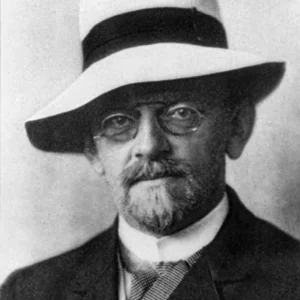

Austrian philosopher of science, a major figure in twentieth-century epistemology. Known for his radical critique of a single scientific method and for the “epistemological anarchism” he defended in *Against Method* (1975).
Paul Feyerabend(1924 — 1994)
Paul Feyerabend
États-Unis, Autriche, Allemagne
7 min read
Frequently asked questions
Famous Quotes
« Anything goes.»
Key Facts
- Born in 1924 in Vienna, Austria
- Professor of philosophy at the University of California, Berkeley, from 1958 onward
- Published *Against Method* in 1975, the manifesto of “epistemological anarchism”
- Argued that no universal scientific method guarantees the progress of knowledge
- Died in 1994 in Geneva, Switzerland
Works & Achievements
His major work, where he defends “epistemological anarchism” and the idea that science progresses according to no fixed rules. It has become a classic in the debate over scientific rationality.
A sequel to *Against Method*, in which he responds to his critics and argues for the separation of science and the State. He defends the pluralism of knowledge traditions.
A collection of essays defending relativism and criticizing the idea of a universal reason. He questions the West's claim to impose its own rationality.
A collection of his philosophical articles on the theory of knowledge and physics. In it he develops his critique of logical empiricism and the Vienna Circle.
His autobiography, published just after his death, in which he recounts with humor his journey from opera to philosophy. A personal and unsparing account of his life.
A posthumous and unfinished work on the richness of reality that scientific abstractions tend to impoverish. In it he continues his reflection on the limits of science.
Anecdotes
Before becoming a philosopher, the young Feyerabend dreamed of singing at the opera and took voice lessons alongside his studies. Throughout his life he remained passionate about theatre and opera, and he liked to say that science was merely one tradition among others, no more sacred than art.
Drafted into the German army during the Second World War, Feyerabend was severely wounded by gunfire on the Eastern Front in 1945. Hit in the spine, he was left disabled and suffered from chronic pain for the rest of his life, sometimes having to walk with a cane.
His provocative slogan “anything goes” caused an uproar among philosophers of science. Many accused him of being an enemy of reason, but Feyerabend was amused by his reputation as the “worst enemy of science” and gladly cultivated his image as a troublemaker.
Feyerabend and the philosopher Imre Lakatos had planned to write a two-voiced book, “For and Against Method,” in which each would defend his own position. The sudden death of Lakatos in 1974 left Feyerabend on his own: he published his half under the title *Against Method*, dedicated to his late friend.
In his lectures at Berkeley, Feyerabend was a spectacular and unpredictable teacher: he juggled ideas, played devil's advocate and sometimes changed his mind in the middle of an argument. He wanted to push his students to think for themselves rather than accept a ready-made doctrine.
Primary Sources
The idea of a method that contains firm, unchanging, and absolutely binding principles for conducting the business of science meets with considerable difficulty when confronted with the results of historical research.
There is only one principle that can be defended under all circumstances and in all stages of human development. It is the principle: anything goes.
Science is one of the many forms of thought that humans have developed, and not necessarily the best. It is dazzling, noisy, and insolent, but it is superior only to those who have already decided in favour of a certain ideology.
I wanted to be a great opera singer. Philosophy came later, almost by accident, and I never took it entirely seriously as a sacred vocation.
Key Places
Feyerabend's birthplace, cradle of the Vienna Circle and of a vibrant intellectual life. He grew up here, studied here, and earned his doctorate here.
American campus where he taught for decades and built his reputation as an extraordinary professor. It was here that he developed his most provocative ideas.
City where he stayed in the early 1950s and met Karl Popper and his circle. These exchanges nourished and then challenged his philosophical training.
Theatre of Second World War combat where Feyerabend, a soldier, was severely wounded in 1945. This injury left a lasting physical mark on him for life.
City where he taught at the Swiss Federal Institute of Technology (ETH) in the final years of his career, splitting his time between Europe and California.
Town in the canton of Vaud where Paul Feyerabend died in 1994, at the end of a life shared among several countries. He had settled here with his wife.
Typical Objects

His most famous work, which became a controversial classic of the philosophy of science. In it, he develops the idea that scientific progress follows no single method.

An everyday object made necessary by his wartime spinal injury. He used it to move around despite chronic pain.

The working tool of the twentieth-century intellectual, on which he drafted articles and manuscripts. His sharp, polemical texts came out of it page after page.

A testament to his passion for lyric singing, which he had nearly taken up as a profession. Music remained for him a model of free creation, opposed to methodical rigidity.

The tools of the Berkeley professor, whose spectacular lectures left their mark on generations of students. There he improvised, changed his mind, and played devil's advocate.

An everyday accessory for the philosopher immersed in the history of science, from Galileo to modern physicists. They accompanied his long hours of reading and writing.
School Curriculum
Vocabulary & Tags
Key Vocabulary
Tags
Daily Life
Morning
A professor at Berkeley and later in Zurich, Feyerabend often began his day with reading and preparing his lectures, coffee in hand. Despite his back pain, he was determined to stay active and engaged in his intellectual exchanges.
Afternoon
The afternoon was devoted to teaching: his classes were unpredictable performances in which he provoked, juggled ideas, and shook up his students. He also enjoyed hosting colleagues and friends for lively debates.
Evening
In the evening, he immersed himself in writing his polemical essays, or gave free rein to his passion for music and theater. He relished long conversations, in which he would defend opposing positions one after another.
Food
A citizen of the world divided between America and Europe, he ate simply, according to the customs of the university towns where he lived. His table reflected a nomadic life, between California and Switzerland.
Clothing
He wore the ordinary attire of the twentieth-century academic: jacket, shirt, and trousers, with no striving for ostentatious elegance. A cane often accompanied him, a lingering reminder of his war wound.
Housing
His life unfolded between university apartments in Berkeley, lodgings in Switzerland, and stays in Europe. He ended his days in Genolier, in the canton of Vaud, surrounded by books and musical scores.
Historical Timeline
Period Vocabulary
Liens externes & ressources
Références
Œuvres
Contre la méthode (Against Method)
1975
La Science en tant qu'art (Science in a Free Society)
1978
Adieu la raison (Farewell to Reason)
1987
Problèmes de l'empirisme (Philosophical Papers)
1981
Conquête de l'abondance (Conquest of Abundance)
1999