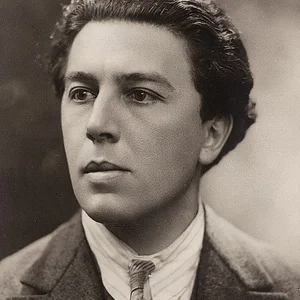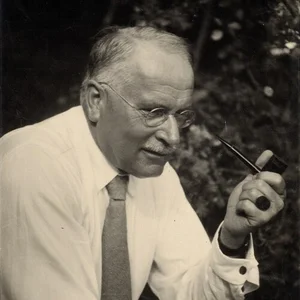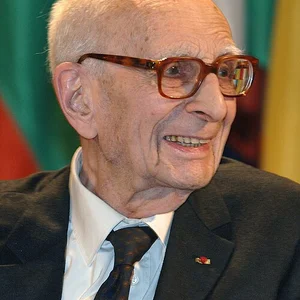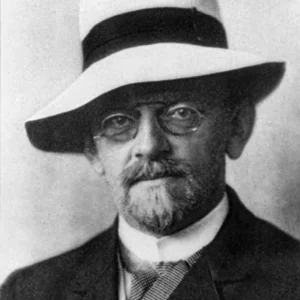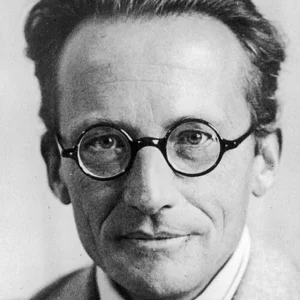

Daniel Lagache (1903-1972) was a French psychiatrist, psychologist, and psychoanalyst. A graduate of the École normale supérieure with an agrégation in philosophy, he sought to unify psychoanalysis and clinical psychology and was a major figure in the French psychoanalytic movement.
Daniel Lagache(1903 — 1972)
Daniel Lagache
France
5 min read
Frequently asked questions
Key Facts
- Born in 1903 in Paris, he was admitted to the École normale supérieure in 1924 alongside Sartre and Aron.
- Holding an agrégation in philosophy (1928) and later a doctorate in medicine, he turned toward psychiatry and psychoanalysis.
- Author of “The Unity of Psychology” (1949), he sought to bring together experimental and clinical psychology.
- In 1953, he took part in the split that gave rise to the Société française de psychanalyse, together with Jacques Lacan.
- A professor of psychology at the Sorbonne, he died in 1972.
Works & Achievements
Major clinical study of the psychological mechanisms of jealousy, drawn from his psychiatry thesis.
A programmatic text seeking to reconcile experimental psychology and clinical psychology, which became a teaching reference.
Together with Lacan, Lagache led a decisive split in the history of the French psychoanalytic movement.
The reference dictionary of Freudian concepts, written by Laplanche and Pontalis under his direction, translated throughout the world.
A highly successful introductory work making psychoanalysis accessible to a broad student readership.
An editorial series he directed, shaping the scholarly dissemination of psychoanalysis in France.
Anecdotes
Daniel Lagache and Jacques Lacan were friends at first: both were physicians passionate about Freud, and they taught together at the Psychoanalytic Society of Paris. But in 1953 their visions clashed radically, and Lagache drew Lacan into a resounding split: they founded a rival society before parting ways themselves a few years later.
Before becoming a psychoanalyst, Lagache was admitted to the École normale supérieure in 1924, in the same class as Jean-Paul Sartre, Raymond Aron and Paul Nizan. This brilliant generation would leave a lasting mark on French philosophy and the human sciences.
In 1947, Lagache delivered a now-famous lecture entitled “The Unity of Psychology,” in which he proposed reconciling two camps that had been at war with each other: the experimental psychology of the laboratories and the clinical psychology inspired by Freud. This text became a manifesto for generations of students.
Together with his collaborator Jean Laplanche and others, Lagache directed a colossal project: a dictionary that defined precisely all the concepts of psychoanalysis. Published in 1967 under the title “The Language of Psychoanalysis,” it is still translated throughout the world today and consulted by students.
Lagache was one of the first to apply psychology to very concrete fields: he studied testimony before the courts, showing how unreliable witnesses' memories could be, a subject that still fascinates the courts today.
Primary Sources
Clinical psychology is not a special branch of psychology: it is psychology itself, considered from the standpoint of individual behaviour and its conditions.
The aim of this work is to define and comment on the concepts that psychoanalysis has employed, tracing them back to their elaboration in the work of Freud.
Jealousy brings into play, to varying degrees, the anxiety of losing the loved object, rivalry, and the wound to one's self-esteem.
Key Places
Lagache's birthplace and the center of his entire career as a psychiatrist, professor, and psychoanalyst.
The elite school where Lagache was admitted in 1924, a cradle of French philosophical thought.
The university where Lagache was appointed professor of psychology in 1949 and taught for decades.
The institution where Lagache taught psychology before the Second World War and at the start of his career.
Typical Objects

The couch on which the patient lies during the session, inherited from Freudian practice. The analyst sits out of sight to encourage free speech.

A notebook in which the practitioner records observations about patients after sessions. A basic tool of the clinical psychology championed by Lagache.

A dictionary directed by Lagache defining Freudian concepts. A reference work still reissued and translated today.

Ambiguous plates, such as the Rorschach test, used by clinical psychologists to explore personality. Lagache valued these diagnostic tools.

A robe worn by professors during ceremonies. Lagache donned it as the holder of the chair of psychology in Paris.
School Curriculum
Vocabulary & Tags
Key Vocabulary
Daily Life
Morning
Lagache's mornings were split between the psychiatric hospital and his private practice, where he saw patients lying on the couch. A methodical professor, he also prepared his lectures for students at the Sorbonne.
Afternoon
The afternoon was devoted to university teaching and research. Lagache supervised students' work, led seminars, and discussed clinical cases with his fellow psychoanalysts.
Evening
In the evening, he read and wrote, producing articles and books, or attended meetings of the psychoanalytic societies, where fierce debates raged over the future of the discipline.
Food
A Parisian academic of the first half of the 20th century, Lagache took his meals in the French bourgeois tradition, often in the brasseries of the Latin Quarter near the Sorbonne and the École normale.
Clothing
He wore the dark suit, shirt, and tie of the academic of his time, along with the formal gown during official faculty ceremonies.
Housing
Lagache lived in Paris, in a bourgeois apartment where he could also see his patients in private consultation, as was customary among the psychoanalysts of the era.
Historical Timeline
Period Vocabulary
Liens externes & ressources
Références
Œuvres
La jalousie amoureuse
1947
L'unité de la psychologie
1949
Fondation de la Société française de psychanalyse
1953
Vocabulaire de la psychanalyse (direction)
1967
La psychanalyse (collection « Que sais-je ? »)
1955
Bibliothèque de psychanalyse (PUF)
1955