 flip
flipL'absinthe de l'heure verte
L'absinthe de l'heure verte
Why this dish? Verlaine is the poet of absinthe par excellence: he drank it in the cafés of the Left Bank and Soho, it accompanies his downfall as much as his legend. His absinthe glass is even among his typical objects.
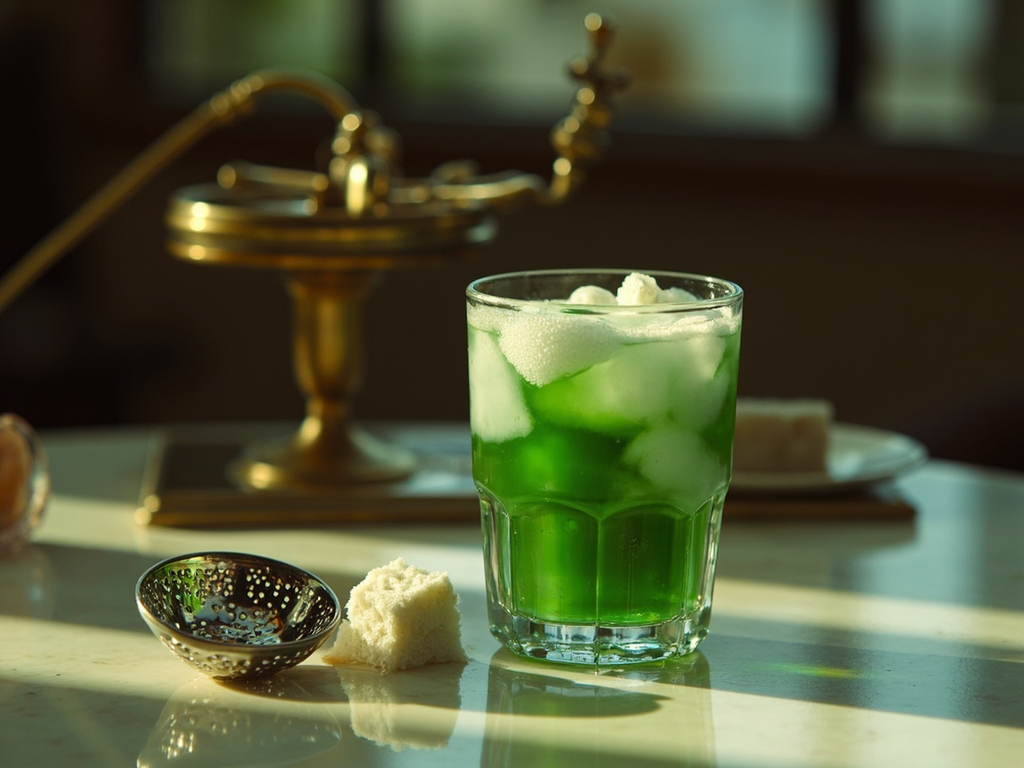
The ritual of the absinthe glass: a measure of green liqueur, a perforated spoon, a sugar cube, and iced water poured drop by drop, which turns the drink cloudy and opalescent (the famous "louche"). Bitter, aniseed, hypnotic.
Ah, the green hour! Come closer and watch carefully. I place the sugar on the flat spoon, I let the water from the fountain fall drop by drop, and behold the liqueur clouds and pales like an autumn sky over the rooftops. I loved her too much, this fairy, she burned my blood and darkened my days — but no bourgeois syrup could ever sing in my ear this bitter music. Drink slowly, my friend, for it is a whole poem that descends into the glass.
- •Absinthe (liqueur of wormwood, anise, fennel) — one measure (aromatic and bitter base)
- •Sugar cube — one piece (sweetens the bitterness)
- •Very cold spring water — to taste (dilution and opalescence)
L'absinthe de l'heure verte
The ritual of the absinthe glass: a measure of green liqueur, a perforated spoon, a sugar cube, and iced water poured drop by drop, which turns the drink cloudy and opalescent (the famous "louche"). Bitter, aniseed, hypnotic.
Why this dish? Verlaine is the poet of absinthe par excellence: he drank it in the cafés of the Left Bank and Soho, it accompanies his downfall as much as his legend. His absinthe glass is even among his typical objects.
Ah, the green hour! Come closer and watch carefully. I place the sugar on the flat spoon, I let the water from the fountain fall drop by drop, and behold the liqueur clouds and pales like an autumn sky over the rooftops. I loved her too much, this fairy, she burned my blood and darkened my days — but no bourgeois syrup could ever sing in my ear this bitter music. Drink slowly, my friend, for it is a whole poem that descends into the glass.
Ingredients (period version)
- Absinthe (liqueur of wormwood, anise, fennel) — one measure (aromatic and bitter base)
- Sugar cube — one piece (sweetens the bitterness)
- Very cold spring water — to taste (dilution and opalescence)
Ingredients
- Pastis or non-alcoholic aniseed drink (family version) — 3 cl (aniseed base, non-alcoholic alternative for school context)
- Cane sugar — 1 cube (sweetener)
- Iced water — 12 to 15 cl (dilution, clouding effect)
- Ice cubes — 2-3 (coolness)
Method
- Place the aniseed drink at the bottom of a straight glass.
- Rest a perforated spoon (or a small strainer) across the glass and place the sugar cube on it.
- Pour the iced water very slowly over the sugar, drop by drop, to melt it into the glass.
- Observe the drink cloud and become milky (the "louche"), then add a few ice cubes.
- For a family/school setting: illustrate the ritual with a non-alcoholic drink; the interest lies in the gesture and the opalescence.
How it was made : In the 19th century, absinthe was served with a tap fountain that dispensed iced water, and a specific perforated spoon rested on the glass. So cheap that it became the drink of workers and poets alike, it was blamed for all ills and eventually banned in France in 1915.
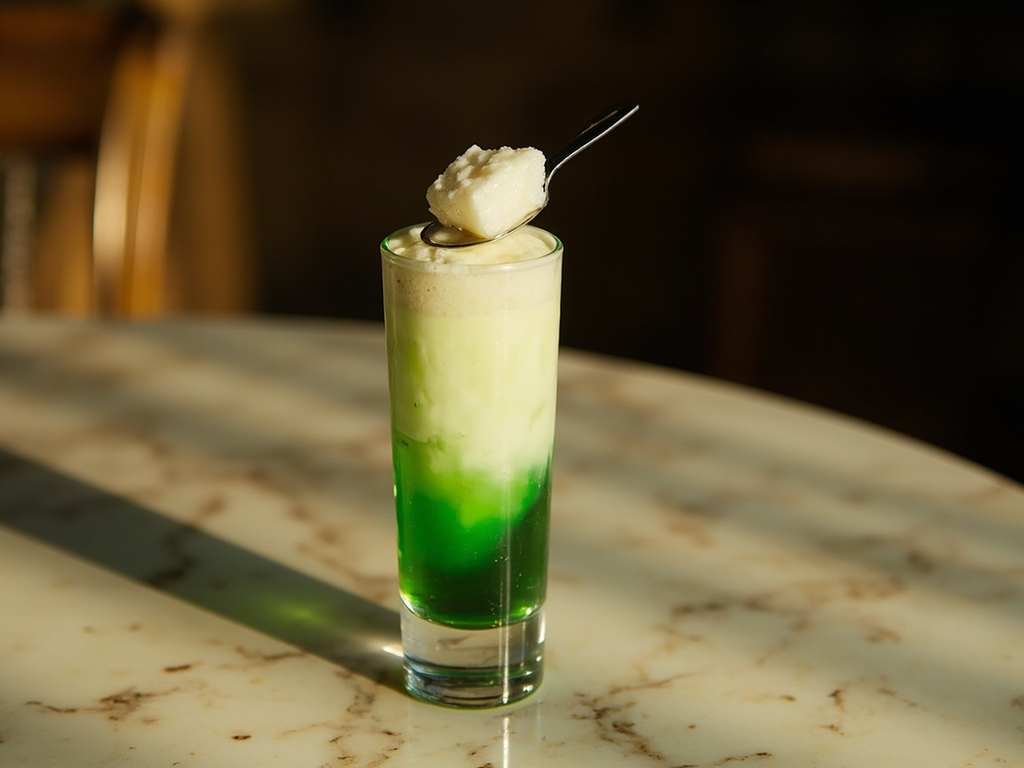
The contemporary twist : In a verrine, non-alcoholic, with a dash of anise syrup and a cloud of sparkling water: "the poet's louche" to present to curious history enthusiasts.
Paul Verlaine · Charactorium