 flip
flipMaza, the barley cake of the hearth
Maza, the barley cake of the hearth
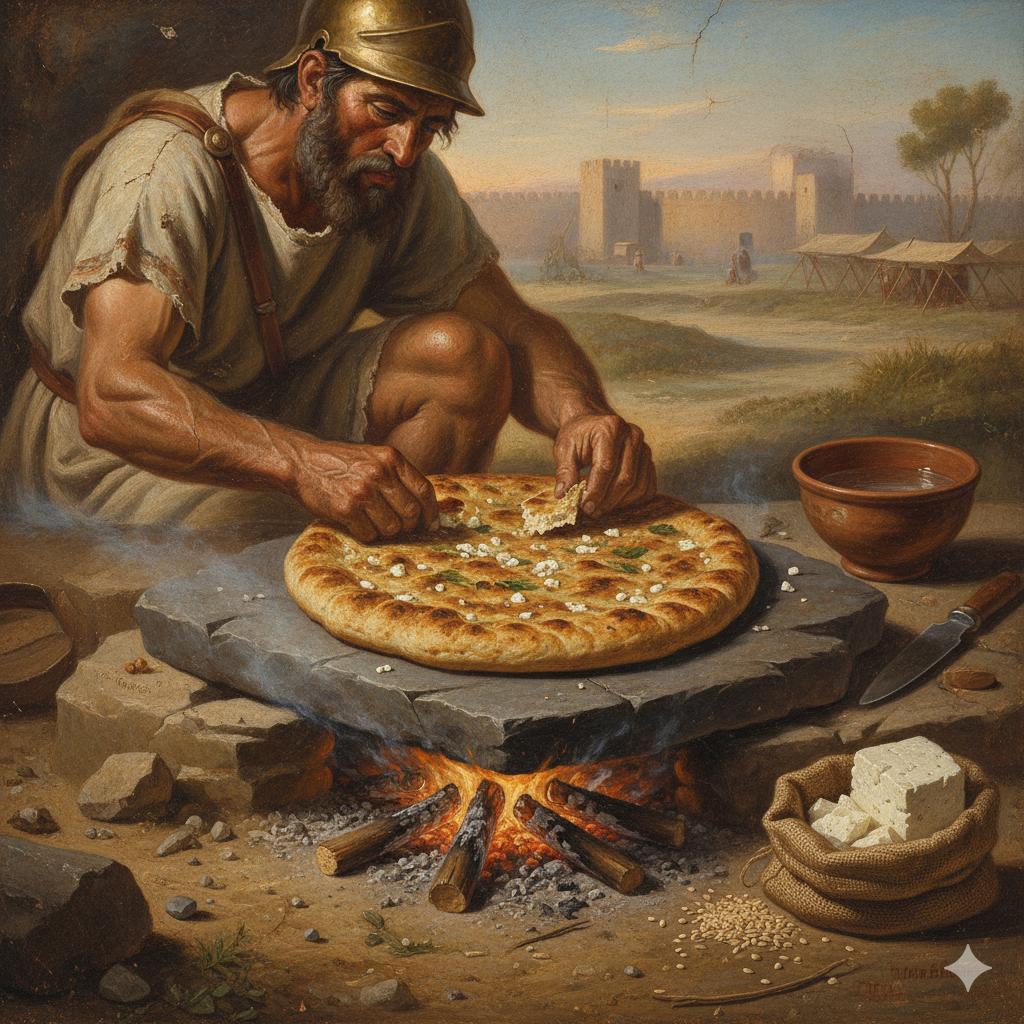
Why this dish? Raised on the island of Seriphos by the fisherman Dictys after the sea cast up his chest, Perseus shared the bread of humble folk. The barley maza, kneaded without an oven, was the daily food of everyone, from shepherd to prince: it is the first taste of his exiled childhood.
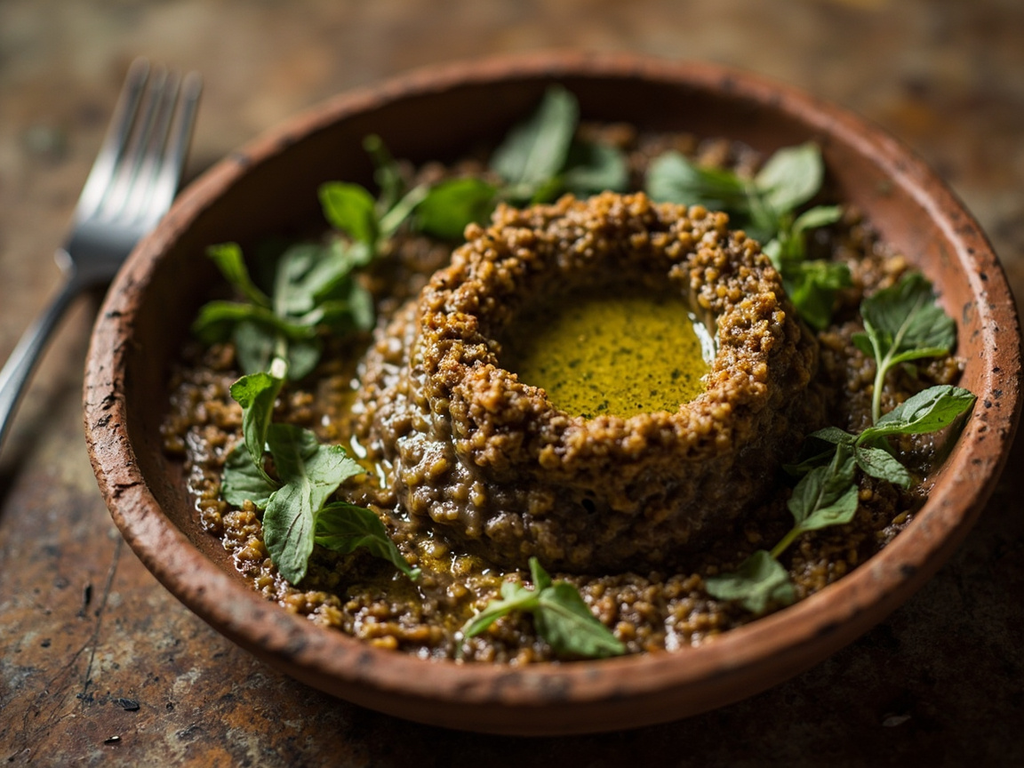
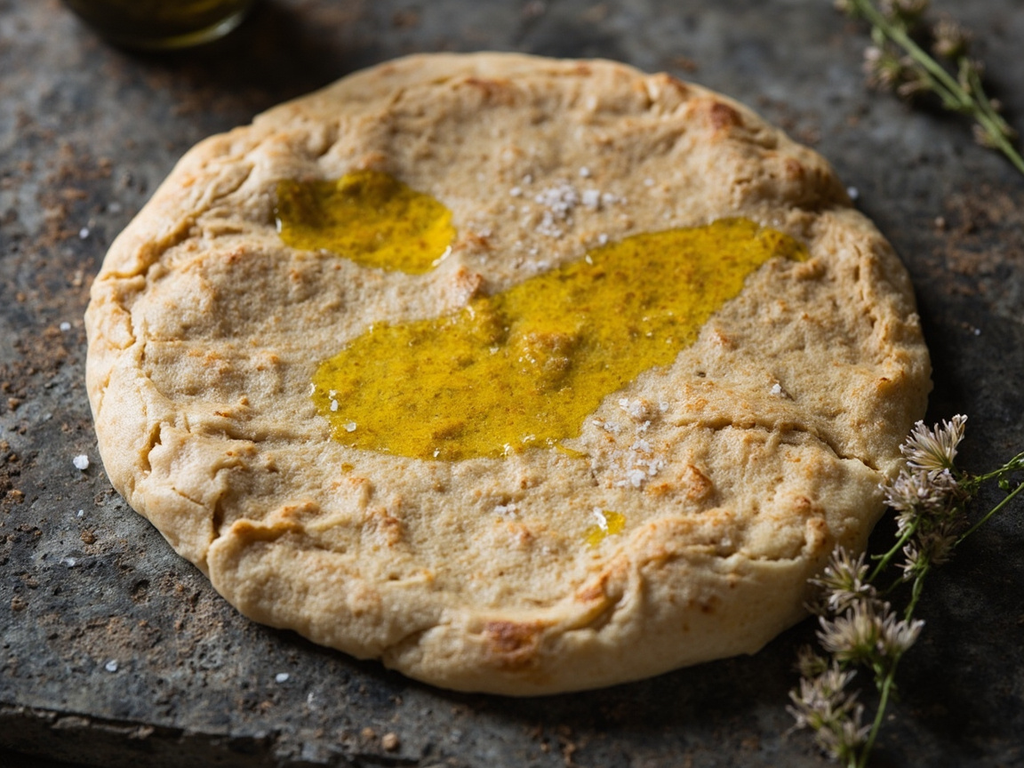
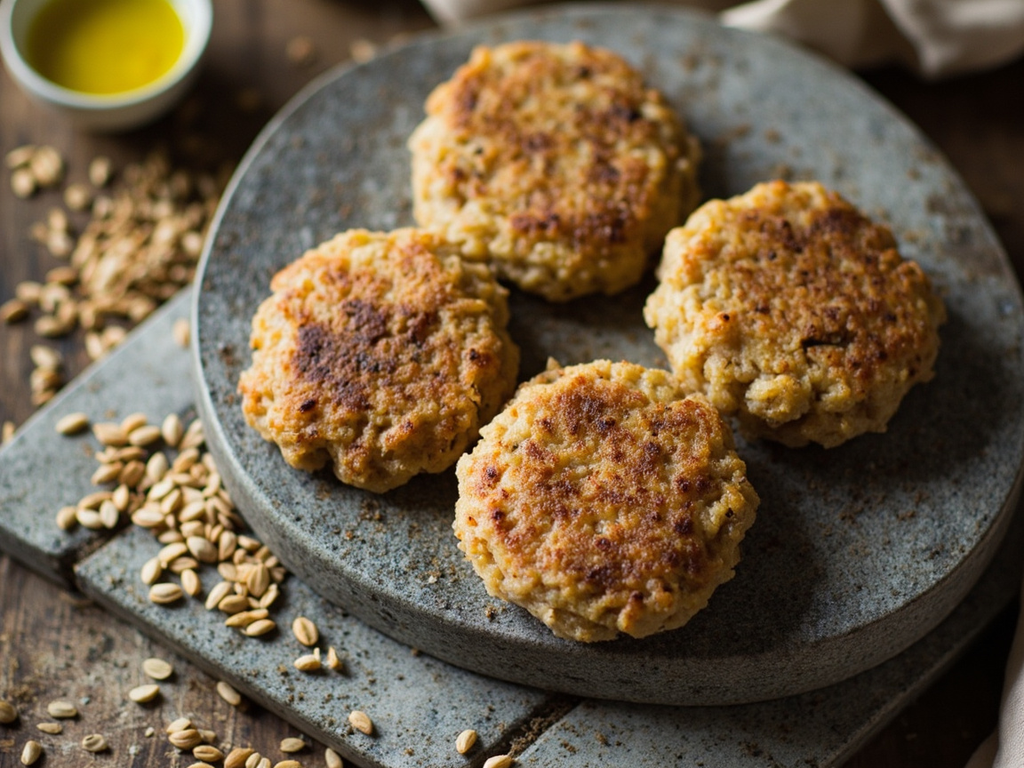
A dense, rustic flatbread made from toasted barley flour, kneaded with water and olive oil, barely salted. It was eaten raw (simply kneaded) or cooked on a hot stone, as an accompaniment to the rest of the meal.
Come closer, stranger, and do not be ashamed of this grey cake: it is what nourished my arms before they bore the sword. On Seriphos, good Dictys would toast the barley, crush it between two stones, and I would knead it with my child's hands using spring water and a trickle of oil. The poor waste nothing, and it was among them that I learned the hunger that makes a man hard in battle. Break off a piece: you eat the bread of a son of Zeus who was first the son of a fisherman.
- •Toasted barley flour — two handfuls per person (base)
- •Spring water — enough to bind (binder)
- •Olive oil — a drizzle (fat)
- •Sea salt — a pinch (seasoning)
Maza, the barley cake of the hearth
A dense, rustic flatbread made from toasted barley flour, kneaded with water and olive oil, barely salted. It was eaten raw (simply kneaded) or cooked on a hot stone, as an accompaniment to the rest of the meal.
Why this dish? Raised on the island of Seriphos by the fisherman Dictys after the sea cast up his chest, Perseus shared the bread of humble folk. The barley maza, kneaded without an oven, was the daily food of everyone, from shepherd to prince: it is the first taste of his exiled childhood.
Come closer, stranger, and do not be ashamed of this grey cake: it is what nourished my arms before they bore the sword. On Seriphos, good Dictys would toast the barley, crush it between two stones, and I would knead it with my child's hands using spring water and a trickle of oil. The poor waste nothing, and it was among them that I learned the hunger that makes a man hard in battle. Break off a piece: you eat the bread of a son of Zeus who was first the son of a fisherman.
Ingredients (period version)
- Toasted barley flour — two handfuls per person (base)
- Spring water — enough to bind (binder)
- Olive oil — a drizzle (fat)
- Sea salt — a pinch (seasoning)
Ingredients
- Barley flour — 200 g (base)
- Warm water — about 120 ml (binder)
- Olive oil — 2 tbsp (fat)
- Salt — 1 pinch (seasoning)
Method
- If possible, lightly toast the barley flour in a dry pan to bring out its nutty flavor, then let cool.
- Mix the flour, salt, and oil, then add water little by little until you have a soft, non-sticky dough.
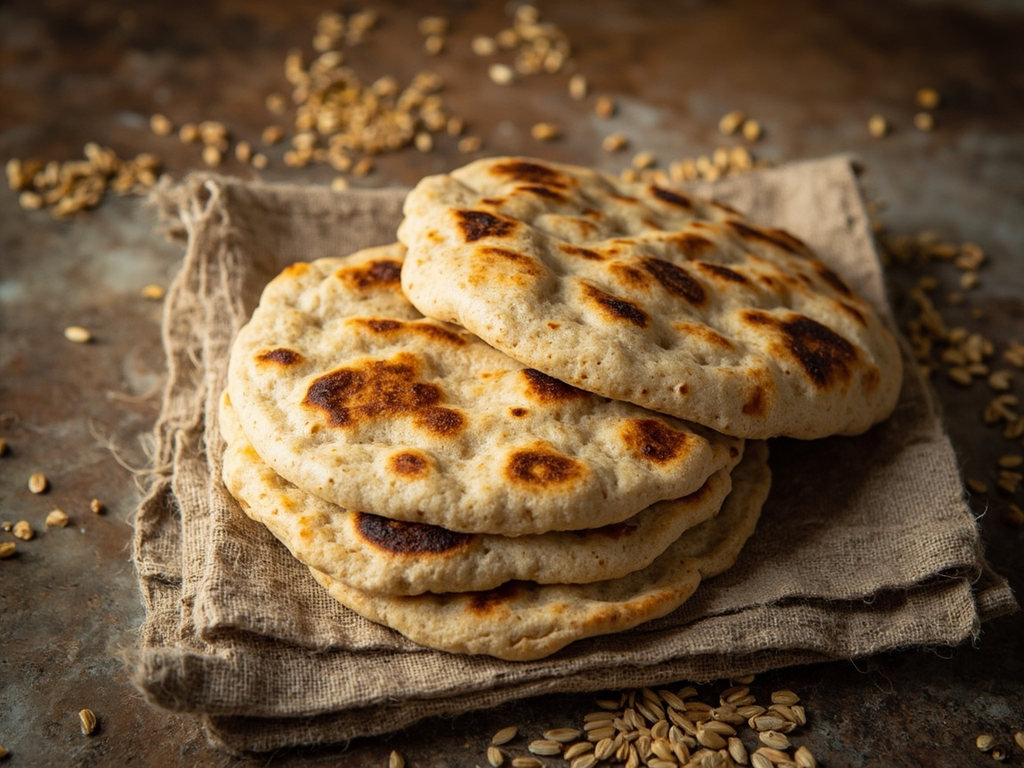
- Shape into flat cakes the size of a palm.
- Cook for 3 to 4 minutes on each side on a hot stone or pan, without fat, until golden and marked.
- Serve warm, accompanied by cheese, olives, or meat.
How it was made : Barley was the grain of the common Greek, hardier than wheat. The maza could be simply kneaded and eaten raw, or cooked on embers. Athenaeus of Naucratis cites countless variations in the Deipnosophistae.
The contemporary twist : Serve it still warm with a little thyme honey and fresh cheese: the sweet-salty contrast makes it an irresistible snack.
Sources : Andrew Dalby, Siren Feasts (1996) · Athenaeus of Naucratis, Deipnosophistae
Perseus · Charactorium