 flip
flipPuls — Emmer Porridge
Puls — Emmer Porridge
Why this dish? Born in Arpinum into a family of rural notables, Cicero cultivated the image of the sober old Roman, faithful to the *mos maiorum*. Puls is precisely that dish of the ancestors: the Romans were said to have long been a 'porridge-eating people' before becoming bread-eaters. For a man who extolled frugality against corrupting luxury, it is the emblematic dish.
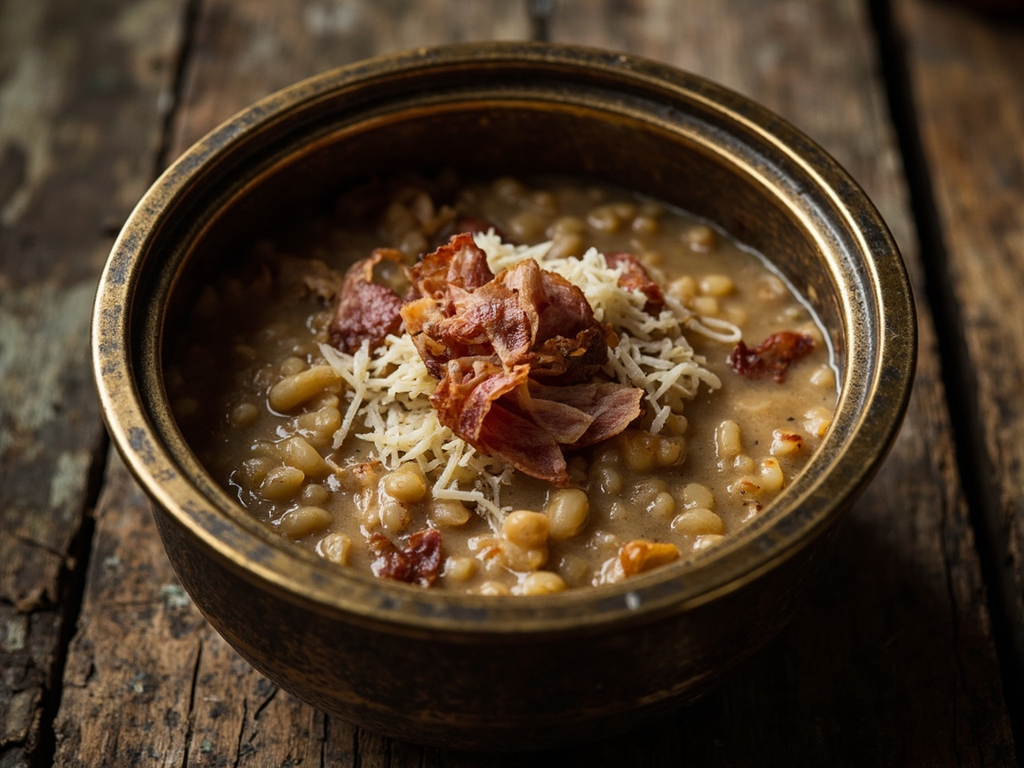
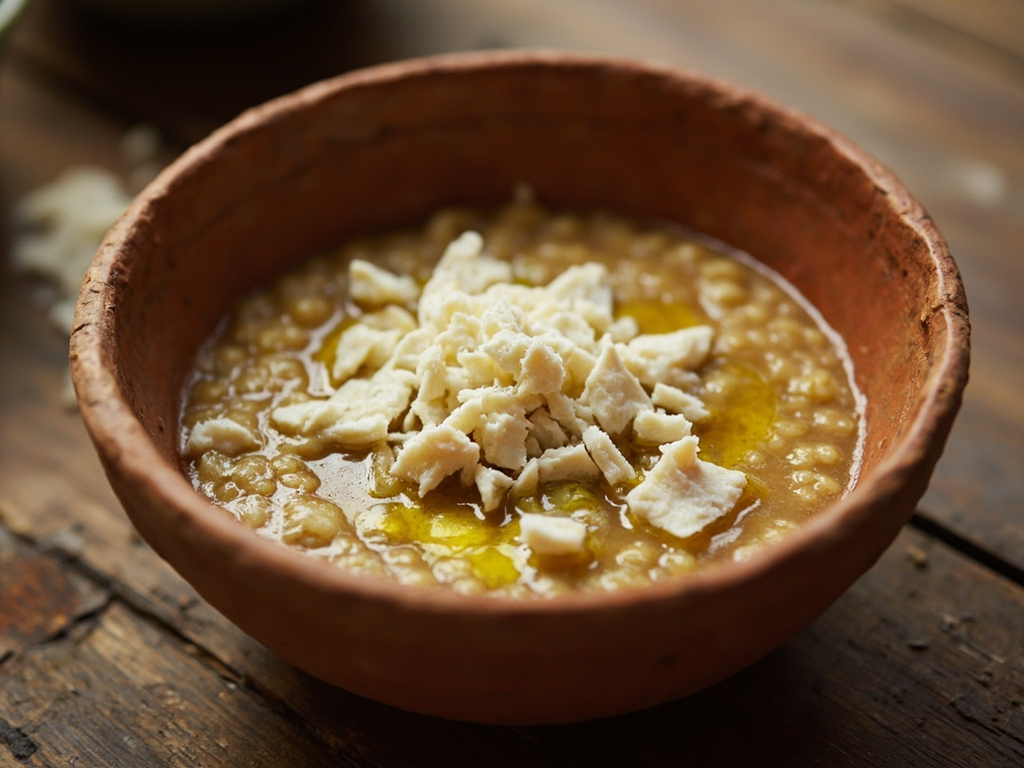
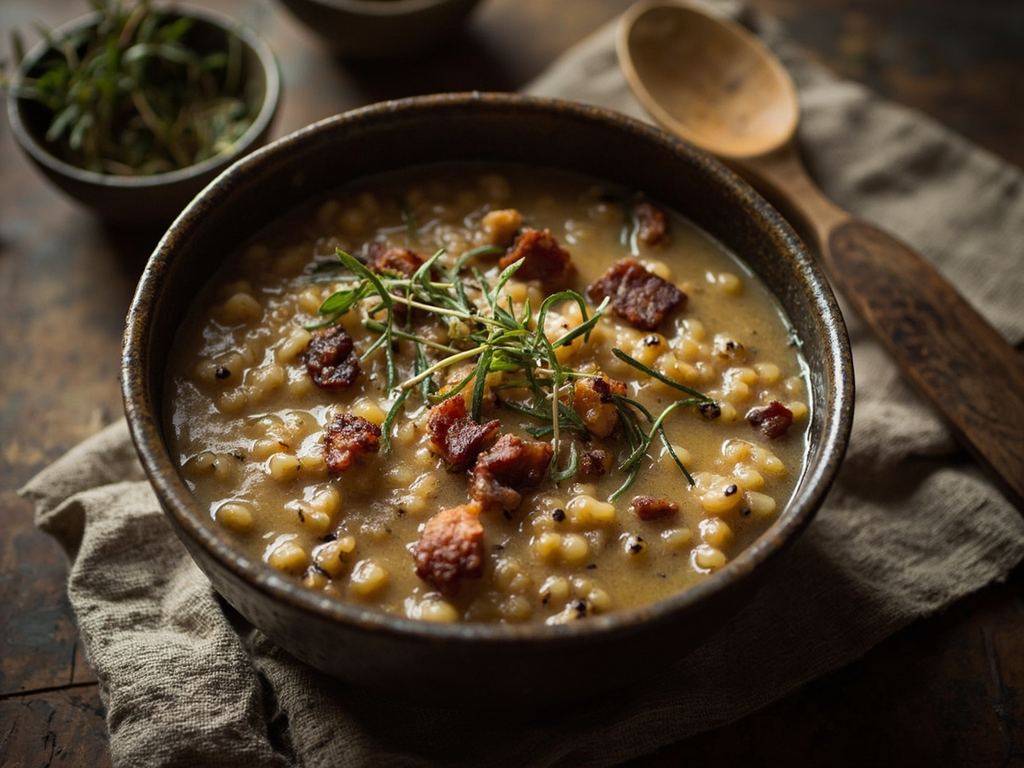
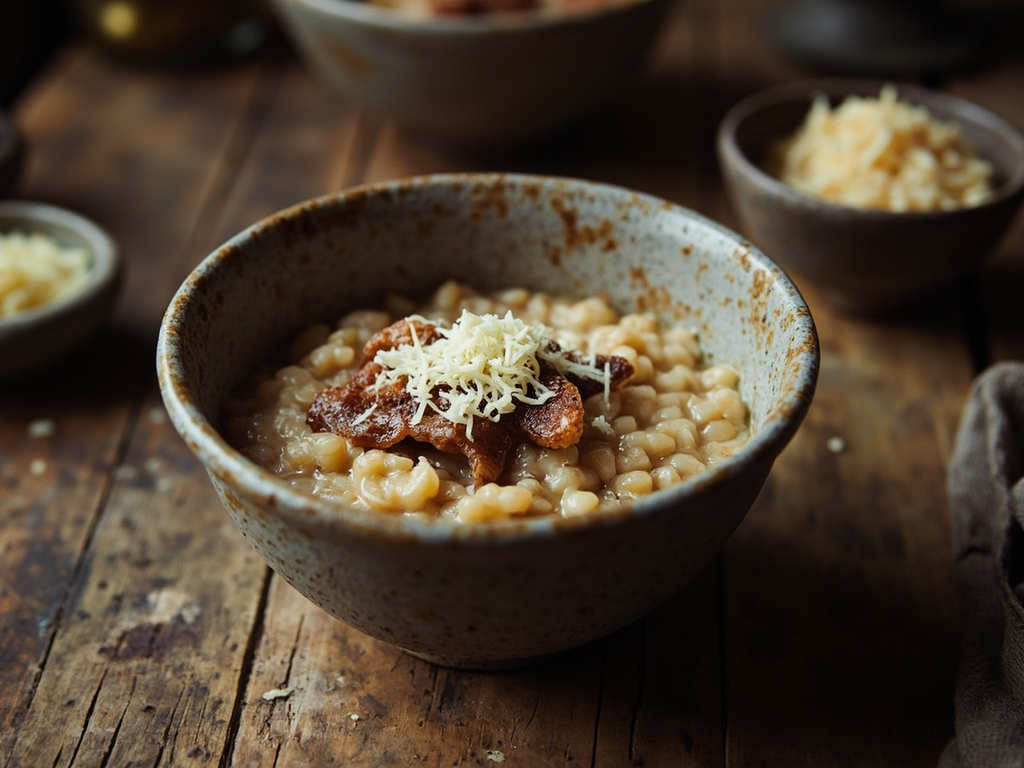
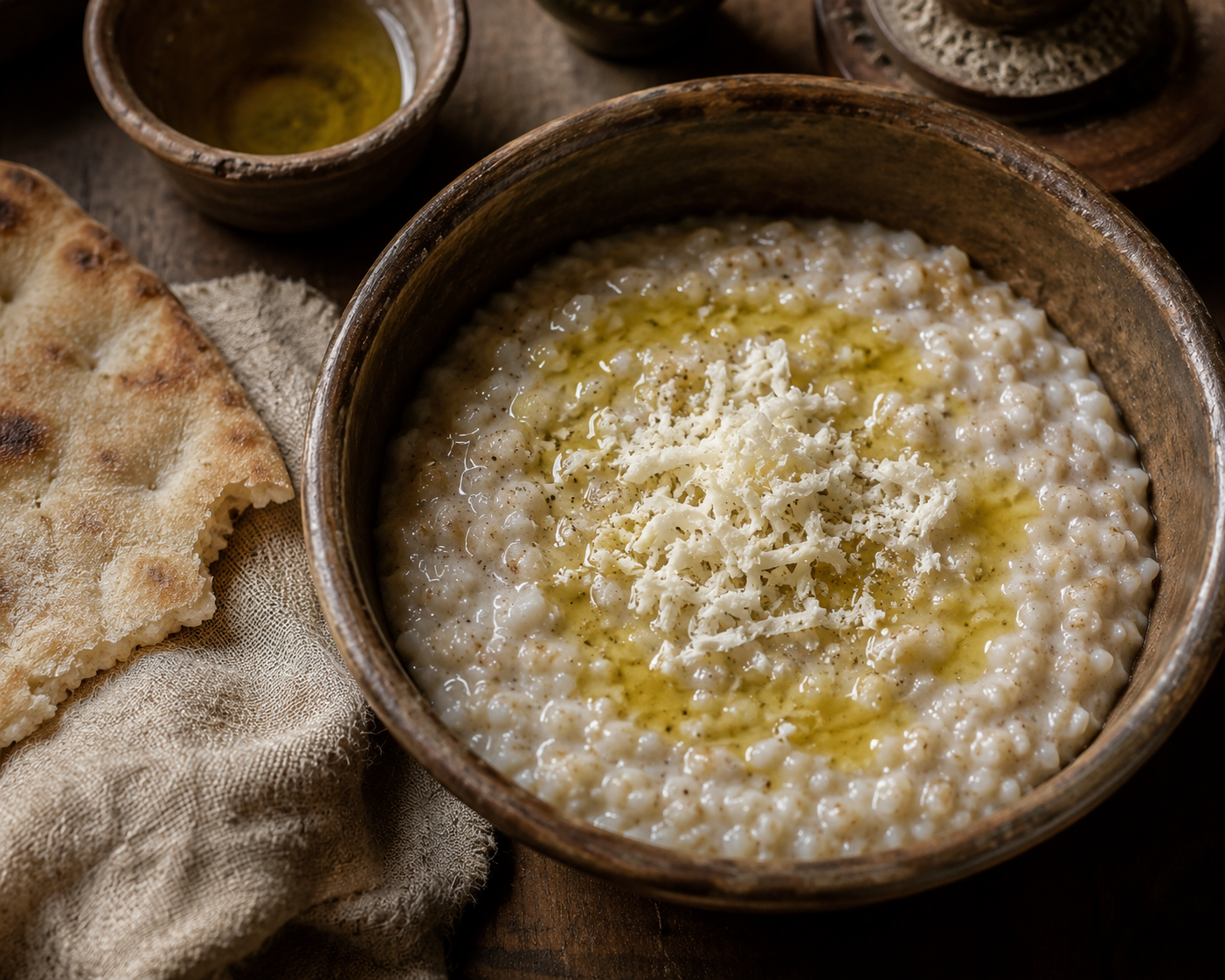
A creamy emmer (far) porridge cooked in water, glossed with olive oil, seasoned with a dash of garum, and topped with grated cheese. Rustic, nourishing, economical: the daily fare of millions of Romans.
You find me austere? Know that our ancestors conquered the world with their bellies full of this simple emmer porridge, when tables were not yet corrupted by the luxury of Eastern cooks. At home in Arpinum, we threw the crushed grain into boiling water, stirred tirelessly with a patient arm, then came the oil from our olive trees and three drops of garum. I tell you as I learned from my father: a man who can be content with puls will never be a slave to his stomach, nor to any tyrant.
- •Crushed emmer (far / spelt) — a good handful per guest (cereal base)
- •Spring water — to cover (cooking liquid)
- •Olive oil — a drizzle (binding and fat)
- •Garum (liquamen) — a few drops (salt and umami)
- •Fresh sheep's cheese — to grate on top (richness)
Puls — Emmer Porridge
A creamy emmer (far) porridge cooked in water, glossed with olive oil, seasoned with a dash of garum, and topped with grated cheese. Rustic, nourishing, economical: the daily fare of millions of Romans.
Why this dish? Born in Arpinum into a family of rural notables, Cicero cultivated the image of the sober old Roman, faithful to the *mos maiorum*. Puls is precisely that dish of the ancestors: the Romans were said to have long been a 'porridge-eating people' before becoming bread-eaters. For a man who extolled frugality against corrupting luxury, it is the emblematic dish.
You find me austere? Know that our ancestors conquered the world with their bellies full of this simple emmer porridge, when tables were not yet corrupted by the luxury of Eastern cooks. At home in Arpinum, we threw the crushed grain into boiling water, stirred tirelessly with a patient arm, then came the oil from our olive trees and three drops of garum. I tell you as I learned from my father: a man who can be content with puls will never be a slave to his stomach, nor to any tyrant.
Ingredients (period version)
- Crushed emmer (far / spelt) — a good handful per guest (cereal base)
- Spring water — to cover (cooking liquid)
- Olive oil — a drizzle (binding and fat)
- Garum (liquamen) — a few drops (salt and umami)
- Fresh sheep's cheese — to grate on top (richness)
Ingredients
- Small spelt (or spelt semolina) — 200 g (base)
- Water or light broth — 800 ml (cooking liquid)
- Extra-virgin olive oil — 3 tbsp (binding)
- Fish sauce (garum / nuoc-mam as substitute) — 1 tsp (seasoning)
- Pecorino or feta, grated — 60 g (topping)
- Salt — to taste (adjustment)
Method
- Rinse the spelt. Pour it into cold salted water and bring gently to a boil.
- Simmer over low heat for 30–40 minutes, stirring often, until creamy like a slightly runny risotto. Add hot water if it thickens too much.
- Off the heat, stir in the olive oil and fish sauce. Taste and adjust salt.
- Serve very hot, topping each bowl with grated cheese.
How it was made : Cato the Elder and Pliny describe puls as the foundational food of the Romans. It was cooked in a bronze cauldron, sometimes enriched with beans or cheese (*puls Punica*). The grain was emmer (far), not modern wheat; it was pounded in a mortar to hull it.
The contemporary twist : Plate it like a contemporary risotto, with a twist of black pepper and a final drizzle of raw oil: the 'ancestral polenta' revisited in a bistro style.
Sources : Cato the Elder, *De agricultura* · Pliny the Elder, *Naturalis Historia*, Book XVIII
Cicero · Charactorium