 flip
flipThe Spartan black broth (melas zōmos)
The Spartan black broth (melas zōmos)
Why this dish? Sparta is the city of Ares par excellence, where they kept a chained god for the youth so that martial ardor would never leave its walls. At the syssition, the common meal of citizen-soldiers, they served the famous melas zōmos, the 'black broth': a dark-colored pork stew. It was said that this austere dish made the Spartans indifferent to death — the very food of Ares' men.
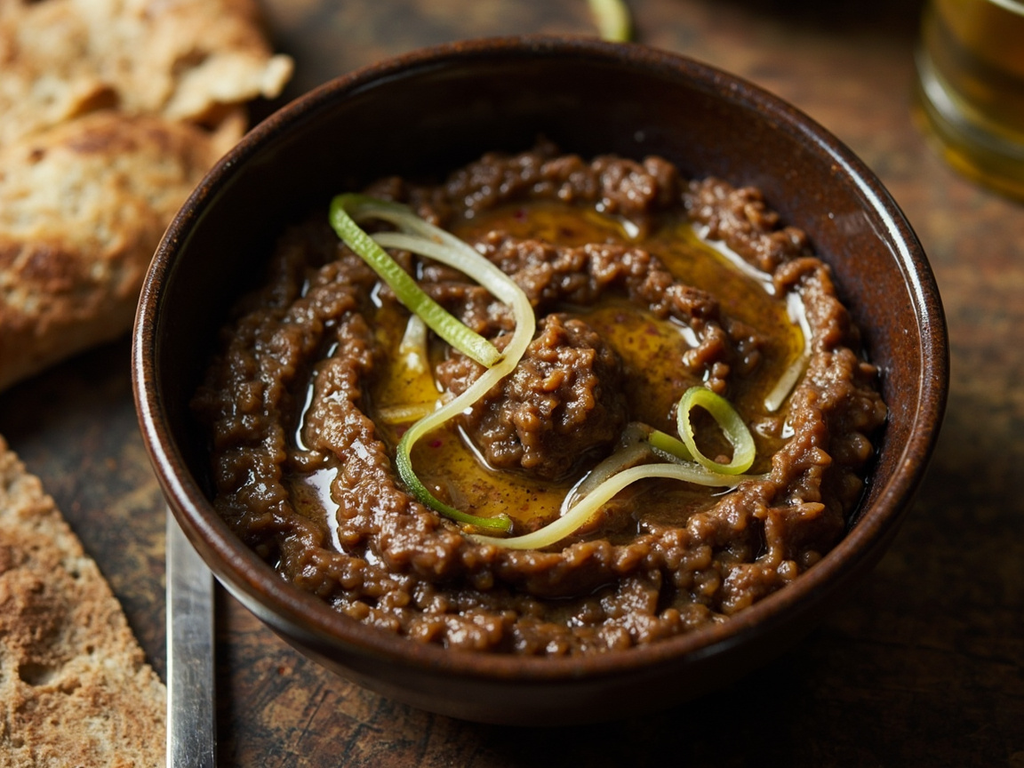
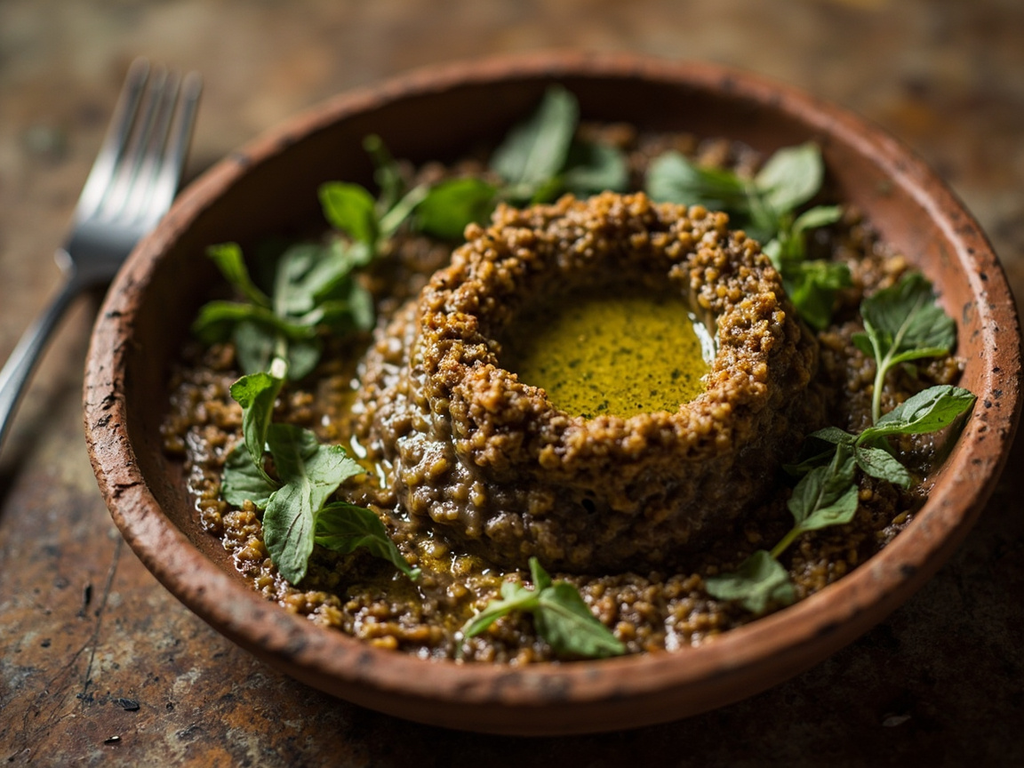
Pork stew long simmered, dark and tangy with vinegar, salty and fortifying. The legendary dish that nourished the Spartan warriors in the mess.
You make a face? That means you lack the only seasoning that matters: the fatigue of war and the icy bath of the Eurotas. In Sparta, my children do not eat for the pleasure of the tongue, but to hold the shield at dawn. You simmer the pork in its blood and juice, you throw in strong vinegar that stings and blackens, salt, nothing else. Drink this broth without acting like a child: he who scorns it never understood why Spartans do not fear death.
- •Pork meat and bones — fatty pieces (base of the stew)
- •Pork blood — one bowl (black color and binder (traditional))
- •Wine vinegar — generous (acidity and preservation)
- •Salt — as needed (seasoning)
The Spartan black broth (melas zōmos)
Pork stew long simmered, dark and tangy with vinegar, salty and fortifying. The legendary dish that nourished the Spartan warriors in the mess.
Why this dish? Sparta is the city of Ares par excellence, where they kept a chained god for the youth so that martial ardor would never leave its walls. At the syssition, the common meal of citizen-soldiers, they served the famous melas zōmos, the 'black broth': a dark-colored pork stew. It was said that this austere dish made the Spartans indifferent to death — the very food of Ares' men.
You make a face? That means you lack the only seasoning that matters: the fatigue of war and the icy bath of the Eurotas. In Sparta, my children do not eat for the pleasure of the tongue, but to hold the shield at dawn. You simmer the pork in its blood and juice, you throw in strong vinegar that stings and blackens, salt, nothing else. Drink this broth without acting like a child: he who scorns it never understood why Spartans do not fear death.
Ingredients (period version)
- Pork meat and bones — fatty pieces (base of the stew)
- Pork blood — one bowl (black color and binder (traditional))
- Wine vinegar — generous (acidity and preservation)
- Salt — as needed (seasoning)
Ingredients
- Pork shoulder — 800 g, in large cubes (main meat)
- Shank or marrow bone — 1 piece (richness of broth)
- Red wine vinegar — 8 cl (signature acidity)
- Cooked pork blood or crumbled blood sausage (optional) — 150 g (authentic dark color)
- Salt and water — as needed (cooking)
Method
- Sear the pork cubes in a pot with a little fat on all sides.
- Add the shank, cover with water, salt and let simmer for 1 hour 30 minutes covered.
- Pour in the vinegar and continue cooking for 45 minutes over low heat, until the meat falls apart.
- For the traditional color, stir in the crumbled blood sausage at the end and let melt for 10 minutes without boiling.
- Adjust salt and acidity, serve in thick bowls, very hot.
How it was made : Ancient sources (notably Plutarch) mention the black broth as a dish of the common Spartan meals, made with pork, blood, vinegar and salt — but no precise recipe has survived, hence a degree of reconstruction. Vinegar played the dual role of enhancing flavor and preserving the meat. A foreign visitor supposedly found it inedible, understanding that its secret was Spartan training and frugality.
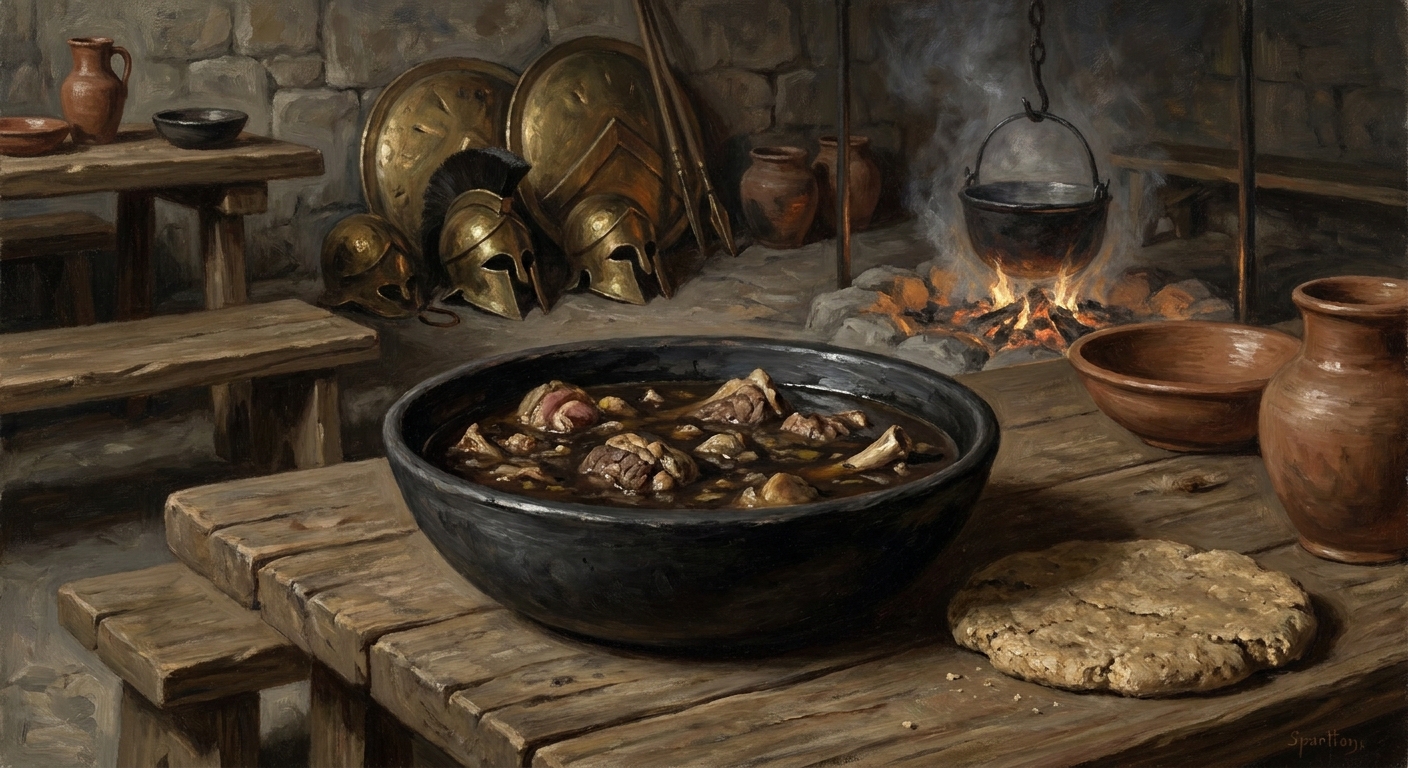
The contemporary twist : Serve 'Laconian-style' in a black earthenware bowl, with a simple barley flatbread for dipping, and announce the dish by its reputation: 'the stew that fears nothing'.
Sources : Plutarch, Life of Lycurgus (common meals and black broth) · Plutarch, Table Talk
Ares · Charactorium