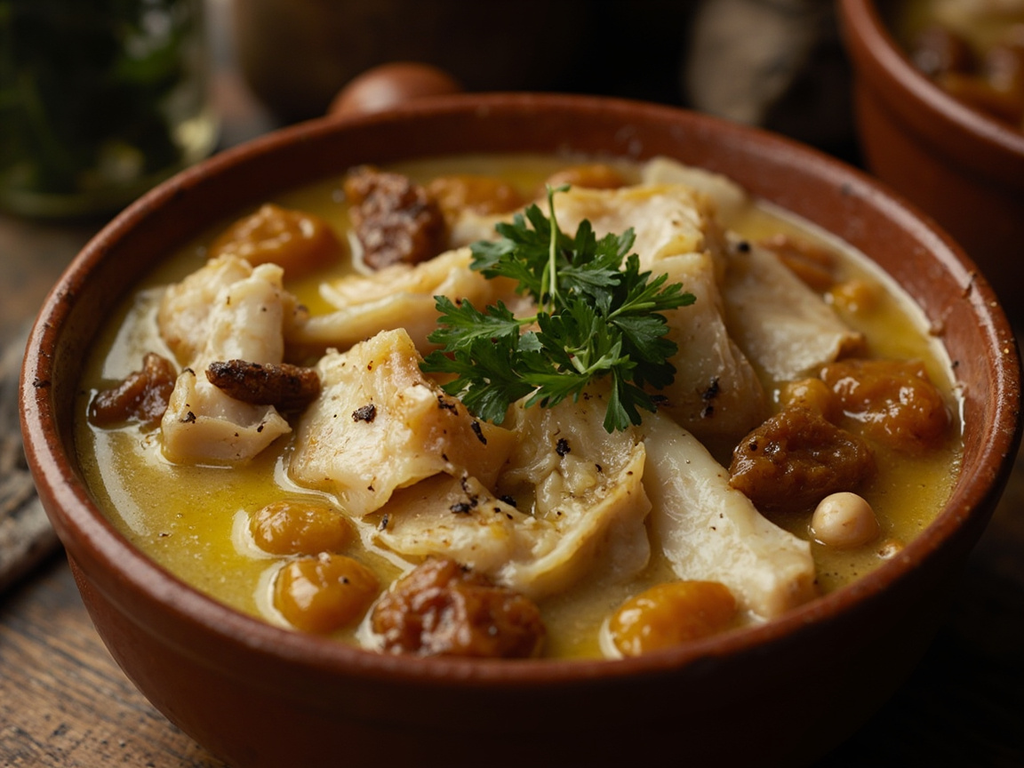
 flip
flipConfit d'oie
Confit d'oie
Why this dish? In Fermat's Languedoc and Gascony, the goose was killed at the onset of winter and preserved for months in its own fat, at the bottom of a stoneware jar. This was the meat supply of a bourgeois household, ensuring lean days and winter suppers in Beaumont as in Toulouse.
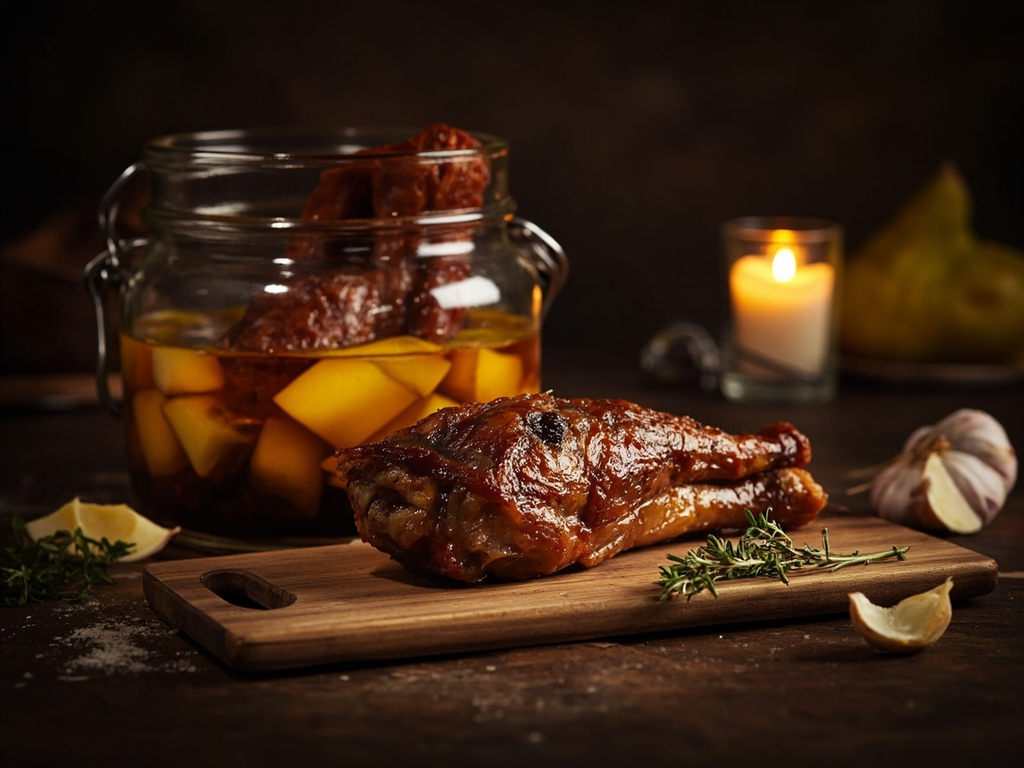
Salted goose pieces slowly cooked in fat, then stored submerged in the same fat — an emblematic preservation technique of the Southwest.
I will share with you the secret of our larder at Beaumont. When the cold comes, we cut up the goose, rub it with salt, and wait a whole day. Then we cook it very gently in its own fat, for hours, until the flesh falls apart on its own. We then pack the pieces at the bottom of a jar, well covered with solidified fat: thus sealed in its own suet, the meat keeps all winter. When the urge takes us, we pull out a piece, warm it up, and it is as if we are opening a store of fine days.
- •Goose — cut into quarters (meat to preserve)
- •Salt — a good handful (curing and preservation)
- •Goose fat — in quantity, to submerge (cooking and preservation)
- •Thyme, bay leaf, garlic — a few sprigs and cloves (aromatics)
- •Pepper — a few grains (seasoning)
Confit d'oie
Salted goose pieces slowly cooked in fat, then stored submerged in the same fat — an emblematic preservation technique of the Southwest.
Why this dish? In Fermat's Languedoc and Gascony, the goose was killed at the onset of winter and preserved for months in its own fat, at the bottom of a stoneware jar. This was the meat supply of a bourgeois household, ensuring lean days and winter suppers in Beaumont as in Toulouse.
I will share with you the secret of our larder at Beaumont. When the cold comes, we cut up the goose, rub it with salt, and wait a whole day. Then we cook it very gently in its own fat, for hours, until the flesh falls apart on its own. We then pack the pieces at the bottom of a jar, well covered with solidified fat: thus sealed in its own suet, the meat keeps all winter. When the urge takes us, we pull out a piece, warm it up, and it is as if we are opening a store of fine days.
Ingredients (period version)
- Goose — cut into quarters (meat to preserve)
- Salt — a good handful (curing and preservation)
- Goose fat — in quantity, to submerge (cooking and preservation)
- Thyme, bay leaf, garlic — a few sprigs and cloves (aromatics)
- Pepper — a few grains (seasoning)
Ingredients
- Goose legs and wings (or duck) — 4 to 6 pieces (meat to preserve)
- Coarse salt — about 40 g (curing)
- Goose or duck fat — 1 to 1.5 kg (enough to submerge) (cooking and preservation)
- Thyme, bay leaf, garlic — 2 sprigs, 2 leaves, 3 cloves (aromatics)
- Peppercorns — 1 tsp (seasoning)
Method
- Rub the goose pieces with coarse salt, crumbled thyme, and crushed garlic. Cover and let cure in the refrigerator for 12 to 24 hours.
- Rinse and pat the pieces dry thoroughly to remove excess salt.
- Melt the fat in a pot, submerge the pieces completely. Add bay leaf and pepper.
- Cook at a very low simmer (85-90 °C) for 2.5 to 3 hours, until a knife pierces the flesh without resistance.
- Pack the pieces in a jar or terrine, cover entirely with the strained warm fat. Let set and store in a cool place.
- To serve, reheat a piece skin-side down in a pan until crispy.
How it was made : Confit is one of the oldest meat preservation methods of the Southwest: salting draws out water, slow cooking destroys spoilage agents, and the cooled fat seals the meat from air. Goose was thus kept for months in stoneware jars, a precious resource before artificial refrigeration.
The contemporary twist : Shred a piece of confit on a slice of grilled garlic-rubbed bread: a 'Toulouse parmentier' without potato, true to Fermat's era.
Sources : Olivier de Serres, Le Théâtre d'agriculture et mesnage des champs, 1600 · Tradition de conservation du Sud-Ouest (confit)
Pierre de Fermat · Charactorium