 flip
flipCotignac (pâte de coing)
Cotignac (pâte de coing)
Why this dish? Quince preserves appeared at the end of meals and were believed to comfort the stomach. In a bourgeois household like Fermat's, quinces from the garden and Languedoc were preserved in autumn into firm paste, a sweet winter reserve and a little mouth remedy after supper.
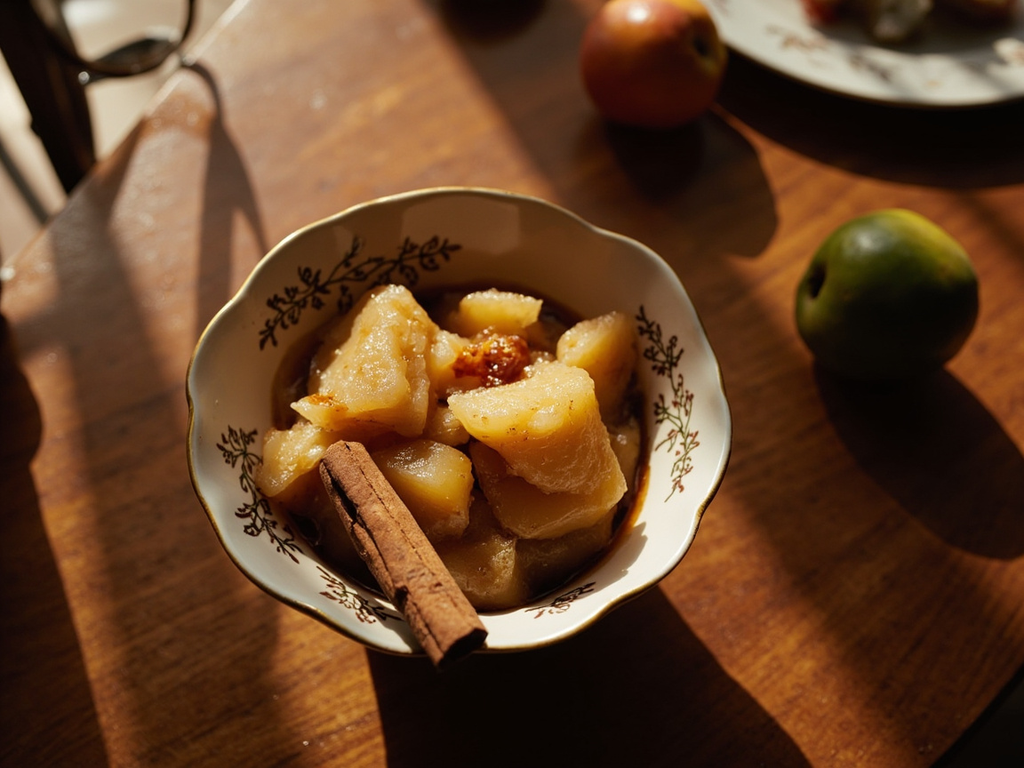
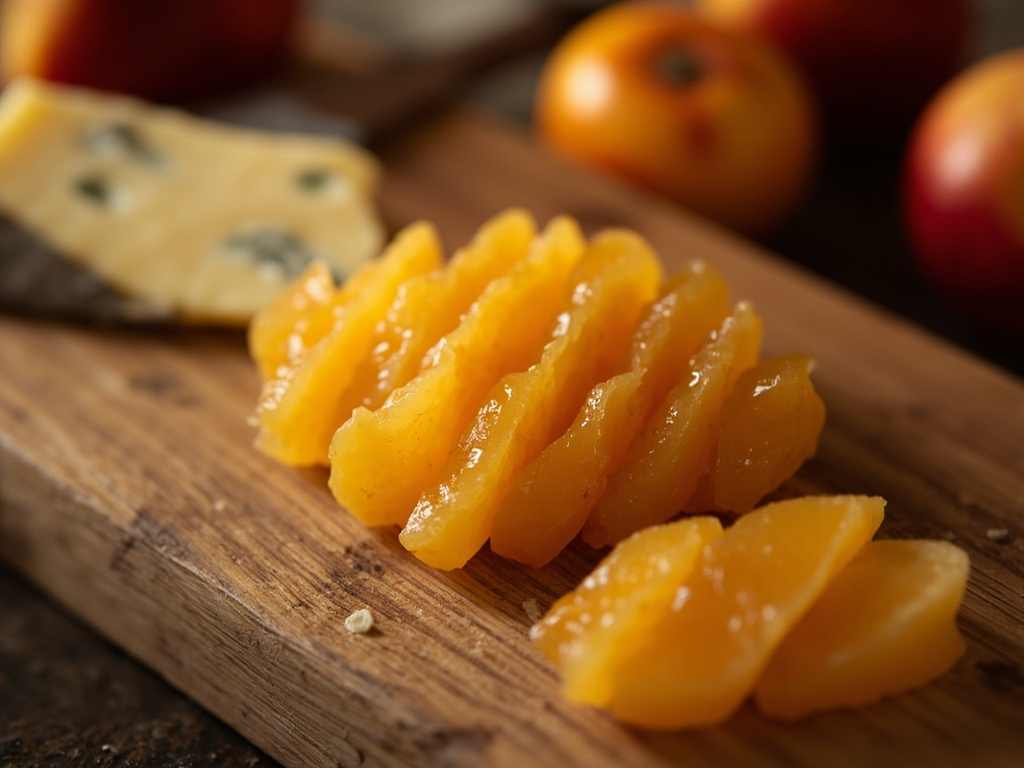
A dense, amber quince paste, cooked long with sugar until it can be cut with a knife — a dry preserve reputed to aid digestion.
To finish gently, taste my cotignac. In autumn, when the quinces already perfume the whole house, we cook them until tender, strain them to keep only the pulp, and mix in an equal weight of sugar. Then comes patience: we stir over the fire, for a long time, until the paste pulls away from the bottom and holds to the knife. We spread it, dry it, cut it into diamonds. One piece after the meal, you see, and your stomach thanks you — it is our mouth remedy, sweet and sure.
- •Ripe quinces — a basket (base fruit)
- •Sugar (or honey) — equal weight to pulp (preservation and sweetness)
- •Water — for cooking quinces (softening)
Cotignac (pâte de coing)
A dense, amber quince paste, cooked long with sugar until it can be cut with a knife — a dry preserve reputed to aid digestion.
Why this dish? Quince preserves appeared at the end of meals and were believed to comfort the stomach. In a bourgeois household like Fermat's, quinces from the garden and Languedoc were preserved in autumn into firm paste, a sweet winter reserve and a little mouth remedy after supper.
To finish gently, taste my cotignac. In autumn, when the quinces already perfume the whole house, we cook them until tender, strain them to keep only the pulp, and mix in an equal weight of sugar. Then comes patience: we stir over the fire, for a long time, until the paste pulls away from the bottom and holds to the knife. We spread it, dry it, cut it into diamonds. One piece after the meal, you see, and your stomach thanks you — it is our mouth remedy, sweet and sure.
Ingredients (period version)
- Ripe quinces — a basket (base fruit)
- Sugar (or honey) — equal weight to pulp (preservation and sweetness)
- Water — for cooking quinces (softening)
Ingredients
- Quinces — 1.5 kg (approx. 1 kg pulp) (base fruit)
- Sugar — same weight as pulp obtained (approx. 1 kg) (preservation and sweetness)
- Lemon juice (optional) — 1 tbsp (fix color)
Method
- Wash and rub the quinces to remove their fuzz. Cut into quarters (with skin and seeds for pectin) and cook in water until tender.
- Drain, remove skins and seeds, then pass the flesh through a sieve or food mill to obtain a fine pulp. Weigh it.
- Mix the pulp with an equal weight of sugar in a heavy-bottomed pot.
- Cook over medium heat, stirring constantly (watch for splatters), for 30 to 45 minutes, until the paste thickens and pulls away from the bottom, showing the metal.
- Spread to 1.5 cm thickness on a lined tray, smooth, and let dry for 24 to 48 hours in a dry place.
- Cut into diamonds or squares; store in a box, separated by paper.
How it was made : Cotignac (from 'coing', quince) is one of the oldest dry preserves in France; that of Orléans was famous. Rich in natural pectin, quince sets into a firm paste without added gelling agents. It was served at the end of meals, and 16th-17th century treatises, like Nostradamus's, describe it as both a sweet treat and a digestive cordial.
The contemporary twist : Serve a few diamonds of cotignac with a slice of aged Languedoc cheese: the sweet-salty pairing that enlivens the end of a meal.
Sources : Michel de Nostredame (Nostradamus), Traité des fardements et confitures, 1555 · François Pierre de La Varenne, Le Parfait Confiturier, 1667
Pierre de Fermat · Charactorium