Character Catalog

Historical Library

CollectionGalaxy
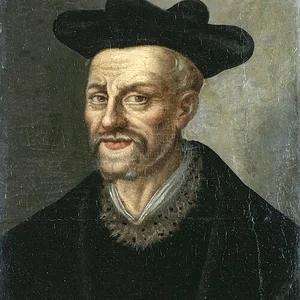
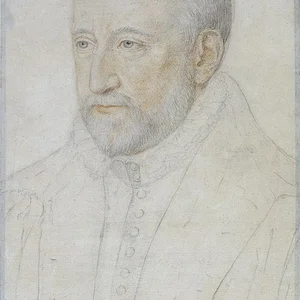
Portrait de Pierre de Ronsard

Pierre de Ronsard

Pierre de Ronsard

1524 — 1585

France

LiteraturePoète(sse)Renaissance16th century (French Renaissance)

Major French poet of the Renaissance (1524–1585), co-founder of the Pléiade with du Bellay. He transformed French poetry by introducing lyrical forms inspired by Antiquity and championing the vernacular language.

Émotions disponibles (6)

N

Neutre

par défaut

I

Inspiré

P

Pensif

S

Surpris

T

Triste

F

Fier

Famous Quotes

« When you are very old, at evening, by candlelight, sitting by the fire, spinning and winding »
« I want to read Homer's Iliad in three days »
« Love is a tyrant who shows no mercy »

Key Facts

  • 1550: publication of the Quatre Premiers Livres des Odes, establishing Ronsard as a leading poet
  • 1552: publication of the first edition of Les Amours, a collection of 180 sonnets addressed to Cassandre
  • 1556: co-founding of the PlĂ©iade with Joachim du Bellay, a movement to renew French poetry
  • 1572: publication of La Franciade, an unfinished epic poem inspired by the Aeneid
  • 1584: official recognition as court poet, ennobled by the king

Works & Achievements

Les Odes (1550)

Ronsard's first major collection, inspired by Pindar and Horace. It revolutionized French poetry by introducing the grand ancient lyric ode and established Ronsard as the leader of the new poetic school.

Les Amours (Cassandre) (1552)

A collection of Petrarchan sonnets addressed to Cassandre Salviati. It defines the amorous lyric register of the French Renaissance and introduces the influence of the poet Petrarch into national literature.

Les Hymnes (1555-1556)

Large-scale poems celebrating the ancient gods, the stars, and the seasons. They bear witness to Ronsard's epic and philosophical ambition, beyond his purely amorous lyricism.

Discours des misères de ce temps (1562)

Politically engaged poetic pamphlets against the Wars of Religion and Protestantism. They show that Ronsard was also a civic poet capable of addressing the major political and religious events of his time.

La Franciade (1572 (unfinished))

A national epic commissioned by Charles IX, tracing the mythical origins of the Franks. Left unfinished at four cantos out of the planned twenty-four, it illustrates the difficulties of adapting the ancient epic genre into French.

Sonnets pour Hélène (1578)

The masterpiece of Ronsard's maturity, addressed to Hélène de Surgères. This collection blends the melancholy of passing time, the threat of death, and the promise of immortality conferred by poetry.

Anecdotes

At the age of twelve, Ronsard was sent to Scotland as a page to Princess Madeleine of France, wife of King James V. This stay at the Scottish court revealed to him a cosmopolitan and refined world that profoundly shaped his poetic sensibility.

Around the age of fifteen, Ronsard contracted a serious illness that left him half-deaf for the rest of his life. This disability forced him to abandon a diplomatic career and directed him definitively toward literature and poetry.

Ronsard and his friends Joachim du Bellay, Jean-Antoine de Baïf, and a few others formed the literary group known as the Pléiade in 1549, whose name evokes the seven stars of the constellation. They took it upon themselves to defend and illustrate the French language against Latin.

King Charles IX admired Ronsard so greatly that he visited him at his retreat at the priory of Saint-Cosme, near Tours. The poet was elderly and ailing at the time, yet the sovereign treated him with all the deference owed to the 'prince of poets' of his age.

Ronsard was fiercely attacked by Protestant poets during the Wars of Religion, notably by Agrippa d'Aubigné, because he championed the Catholic cause. In response, he wrote his Discours des misères de ce temps, demonstrating that he could wield polemical prose as skillfully as amorous lyricism.

Primary Sources

Les Amours (sonnet to Cassandre) (1545 (ode to Cassandre, published 1550))
Darling, let us go and see if the rose / That this morning had unfurled / Its crimson robe to the Sun, / Has not lost this evening / The folds of its crimson robe, / And its complexion like unto yours.
Defence and Illustration of the French Language (du Bellay, Pléiade manifesto) (1549)
Leave therefore that old French poetry to the Floral Games of Toulouse and the Puy of Rouen, and choose rather to imitate the ancient Greeks and Latins.
Discourse on the Miseries of This Time (1562)
I see the Turk armed against the Christians, / I see the Christians armed against themselves, / I see the people dying of thirst in their homes, / And the soldier living at the expense of the land.
Sonnets for Hélène (1578)
When you are very old, at evening by candlelight, / Seated by the fire, spinning and winding thread, / You will say, singing my verses, marvelling: / Ronsard celebrated me in the time when I was beautiful.

Key Places

Château de la Possonnière, Couture-sur-Loir

Ronsard's birthplace, built by his father Loys de Ronsard in the early Renaissance style. The château is still standing today and bears witness to the noble, cultivated environment in which the poet grew up.

Collège de Coqueret, Paris

The decisive centre of intellectual formation where Ronsard studied Greek and Latin under Jean Dorat, alongside du Bellay and Baïf. It was here that the literary project that would become the Pléiade was born.

Priory of Saint-Cosme, La Riche (Tours)

Ronsard's favourite retreat in his final years, where he tended his garden and revised his work. He died there in 1585 and was buried on the site; it is now a museum dedicated to the poet.

Château de Fontainebleau

The royal residence where Ronsard was presented at the court of Henri II and Catherine de Médicis. There he rubbed shoulders with Italian painters, musicians, and humanists who enriched his vision of the Renaissance.

Forest of Gastine, VendĂ´mois

A forest in Ronsard's native region that he celebrated in his poems and mourned the destruction of in his famous poem 'Against the Woodcutters of the Forest of Gastine'. It symbolises his attachment to nature and to his origins.

Typical Objects

Horace's book

Ronsard had received a copy of Horace's Odes from his master Jean Dorat. He drew directly from it to compose his own Odes and make this ancient form a fundamental genre of French poetry.

The goose quill

The universal writing instrument of the 16th century, with which Ronsard composed his sonnets and odes. He tirelessly revised his texts, reworking his entire body of work several times throughout his life.

The lute

A Renaissance musical instrument very present in learned circles. Ronsard's poems were often set to music and sung with lute accompaniment in aristocratic salons.

The manuscript sonnet

Sonnets first circulated as handwritten copies among the courts before being printed. This is how Ronsard built his reputation and won over his royal patrons.

The laurel crown

An ancient symbol of poetic glory, the laurel crown was bestowed upon great poets of the Renaissance during official ceremonies. Ronsard was crowned 'Prince of Poets' during his own lifetime.

The priory (ecclesiastical benefice)

Ronsard held several ecclesiastical benefices, including the priory of Saint-Cosme near Tours, which provided him with income without his being a priest. It was there that he spent his final years writing and revising his work.

School Curriculum

Cycle 4 (5e-3e)Français — La Pléiade et la Renaissance littéraire française
LycéeFrançais — La Pléiade et la Renaissance littéraire française
LycéeFrançais — La poésie lyrique et le sonnet au XVIe siècle
LycéeFrançais — L'influence de l'Antiquité gréco-romaine sur la littérature française
LycéeFrançais — La défense et illustration de la langue française
LycéeFrançais — L'amour et la mort dans la poésie de la Renaissance
LycéeFrançais — L'humanisme et la valorisation du français comme langue littéraire

Vocabulary & Tags

Key Vocabulary

Pléiadesonnetodelyric poetryhumanismversificationalexandrineanaphora

Tags

Époque

Pierre de Ronsardreforme-protestanteRéforme protestantesonnetodepoésie lyriqueversificationalexandrinanaphoreXVIe siècle (Renaissance française)

Daily Life

Morning

Ronsard rose early, often before dawn, to take advantage of the quiet conducive to poetic composition. He would begin with prayer, then settle at his writing table to reread and correct the verses written the previous evening by candlelight.

Afternoon

Afternoons were devoted to scholarly discussions with his humanist friends, to reading the Ancients, or to attending the royal court when he was staying in Paris or Fontainebleau. He would also dictate his poems to a secretary, as his partial deafness made certain exchanges difficult.

Evening

In the evenings, Ronsard took part in banquets and poetic gatherings where his verses were read aloud, sometimes set to music and sung with lute accompaniment. In his retreats, he preferred reading by the fireside and contemplating his garden.

Food

Ronsard ate in the manner of the nobility of his time: roasted meats, game, freshwater fish, garden vegetables, and wines from the Loire Valley. In his final years, weakened by illness, he followed a more frugal diet prescribed by his physicians.

Clothing

As a minor nobleman attached to the court, Ronsard wore doublets of velvet or fine cloth, fitted hose, a lace ruff around the neck, and a richly trimmed cloak for official occasions. In his priories, he adopted a simpler, more comfortable attire.

Housing

Ronsard lived alternately in several priories of which he was the titular head (Saint-Cosme, Croixval, Bourgueil) and in Paris during his stays at court. These priories offered him cultivated gardens and a library — an ideal setting for reflection and poetic writing.

Historical Timeline

1515Victoire de Marignan : François Ier ouvre la France aux influences de la Renaissance italienne.
1524Naissance de Pierre de Ronsard au château de la Possonnière, en Vendômois.
1539Ordonnance de Villers-Cotterêts : le français devient la langue officielle des actes juridiques, légitimant l'usage littéraire du vernaculaire.
1540Ronsard commence son éducation humaniste sous la tutelle de Jean Dorat au Collège de Coqueret à Paris.
1549Publication de la Défense et illustration de la langue française par du Bellay, manifeste du groupe qui deviendra la Pléiade.
1550Ronsard publie ses Odes, s'inspirant de Pindare et Horace, révolutionnant la poésie française.
1552Publication des Amours, recueil de sonnets pétrarquistes dédiés à Cassandre Salviati.
1559Mort d'Henri II lors d'un tournoi : début d'une période d'instabilité politique et religieuse en France.
1562Début des guerres de Religion ; Ronsard publie ses Discours des misères de ce temps, prenant parti pour les catholiques.
1572Massacre de la Saint-Barthélemy : apogée de la violence confessionnelle que Ronsard avait redoutée.
1574Ronsard se retire progressivement de la cour et se consacre à la révision de son œuvre dans ses prieurés.
1578Publication des Sonnets pour Hélène, chef-d'œuvre de sa maturité poétique, dédié à Hélène de Surgères.
1585Mort de Pierre de Ronsard au prieuré de Saint-Cosme, le 27 décembre ; il est pleuré par toute la cour de France.

Period Vocabulary

La Pléiade — A group of seven humanist poets of the 16th century led by Ronsard, whose name was inspired by the Pleiades constellation. They championed the renewal of French poetry through imitation of the ancient Greeks and Romans.
Ecclesiastical benefice — Income attached to a Church office (priory, abbey, canonry) granted by the king or a great lord. Ronsard held several, which provided him with revenue without requiring him to exercise any real pastoral ministry.
Petrarchism — A poetic movement inspired by the Italian poet Petrarch, characterized by the idealization of the beloved woman, a melancholic register, and the use of the sonnet. Ronsard drew on it in his Amours before gradually distancing himself from it.
Vernacular — The language spoken in a region or nation, as opposed to scholarly Latin. The Pléiade's endeavor was to demonstrate that the vernacular French language was capable of rivaling Latin and Greek in great literature.
Humanism — An intellectual movement of the Renaissance that valued the study of ancient Greek and Latin texts as a means of cultivating the individual. Ronsard and his fellow members of the Pléiade were all shaped by humanism at the Collège de Coqueret.
Mignonne (term of address) — A term of affection used in the 16th century to address a young woman tenderly. Ronsard employs it in his famous poem 'Ode to Cassandra': 'Mignonne, allons voir si la rose...' ('Darling, let us go and see if the rose...').
Carpe diem — A Latin expression meaning 'seize the day', that is, make the most of the present moment because life is fleeting. It is the central theme of many of Ronsard's poems, particularly those comparing feminine beauty to the rose that withers.
The Pindaric ode — A lofty lyric form inspired by the Greek poet Pindar, composed of strophes, antistrophes, and epodes. Ronsard introduced it to France in his Odes of 1550, marking a break with medieval poetry.
The Wars of Religion — Armed conflicts between Catholics and Protestants (Huguenots) in France from 1562 to 1598. Ronsard, a committed Catholic, was a direct witness to them and a literary voice through his Discours des misères de ce temps.

Gallery

Pierre de Ronsard (Blois)

Pierre de Ronsard (Blois)

PierredeRonsard1620

PierredeRonsard1620


Songs & sonnets of Pierre de Ronsard

Songs & sonnets of Pierre de Ronsard


A short history of Europe, from the fall of the Eastern empire to the dissolution of the Holy Roman empire

A short history of Europe, from the fall of the Eastern empire to the dissolution of the Holy Roman empire

Guay--Les bourreaux des bois--1909--Mairie de Bourges

Guay--Les bourreaux des bois--1909--Mairie de Bourges

Détail statue Jardin Pelletier

Détail statue Jardin Pelletier

Le Mans - Cite Plantagenet 01

Le Mans - Cite Plantagenet 01

Rose4 Ronsard FR 2013

Rose4 Ronsard FR 2013

Rose P de Ronsard FR 2014

Rose P de Ronsard FR 2014

Portrait de Ronsard par Benjamin Foulon

Portrait de Ronsard par Benjamin Foulon

Visual Style

Un style visuel ancré dans l'esthétique de la Renaissance française : portraits sobres et raffinés sur fond de décors châtelains, lumière chaude et palette riche en verts, bordeaux et or évoquant la cour d'Henri II et le Val de Loire.

#5C3A1E
#8B2230
#2E5945
#C9A84C
#E8DCC8
AI Prompt
French Renaissance court portrait style, inspired by the school of Fontainebleau and Flemish portraiture, rich silk and velvet garments in deep emerald green, burgundy and gold, warm candlelight illuminating parchment manuscripts and leather-bound books, stone château interiors with tapestries, Italianate architectural details, ornate inkwells and quill pens, rose garlands and laurel wreaths as poetic symbols, lush Loire Valley landscape glimpsed through mullioned windows, classical column motifs, mythological allegory in the manner of French Mannerism, harmonious and elegant composition.

Sound Ambience

Un univers sonore mêlant la douceur musicale des cours royales de la Renaissance, la quiétude studieuse des prieurés et la nature verdoyante du Vendômois qui inspira toute l'œuvre de Ronsard.

AI Prompt
Gentle lute and viol music drifting through stone-walled Renaissance chambers, quill scratching on parchment, the crackling of a fireplace, distant church bells ringing canonical hours, birdsong from an enclosed garden with a fountain murmuring softly, hushed voices reciting verses, the rustling of silk garments, occasional sounds of a hunting party returning to the château, wind through ancient oak trees of the Vendômois forest, the turning of heavy book pages, distant choir practice from a priory chapel.

Portrait Source

Wikimedia Commons — domaine public — Benjamin Foulon — 1580