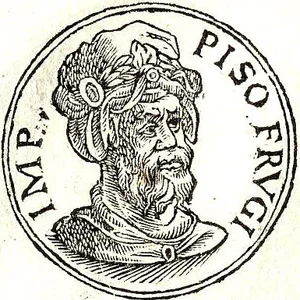

A Roman aristocrat of the 1st century, Gaius Calpurnius Piso was the figurehead of a sweeping conspiracy to overthrow the emperor Nero in 65 AD. The plot was uncovered, failed, and triggered a wave of deadly repression.
Piso(250 — 261)
Piso
Rome antique
6 min read
Frequently asked questions
Key Facts
- Gives his name to the Pisonian conspiracy (conjuratio Pisoniana) plotted against Nero in 65 AD
- The plot brought together senators, knights, and officers of the Praetorian Guard who were discontented with Nero's regime
- The conspiracy was uncovered before it could be carried out, in April 65 AD
- Its exposure led to a brutal crackdown and the forced death of several of Nero's close associates, including the philosopher Seneca
- Piso was forced to commit suicide in 65 AD after the plot failed
Works & Achievements
Free defenses of citizens before the courts that earned Piso his reputation for eloquence and his great popularity.
Generosity toward his friends and support for the arts, making his house a center of aristocratic social life.
Nominal leadership of the vast plot that brought together senators, knights, and praetorians to overthrow Nero — the major act that wrote his name into history.
A document written before his suicide, in which he heaped flattery upon Nero in the hope of protecting his wife Satria Galla.
Anecdotes
Caius Calpurnius Piso was renowned for his eloquence and charm: he defended accused men for free in court and sang while accompanying himself on the cithara, which made him very popular in Rome. This popularity made him the ideal candidate to replace Nero in the eyes of the conspirators.
The conspiracy of 65 was betrayed by a single detail: a freedman named Milichus denounced the plot after catching his master, the senator Flavius Scaevinus, making suspicious preparations — having an old dagger sharpened and bandages made ready. This denunciation triggered the collapse of the entire plot.
The famous philosopher Seneca, Nero's former tutor, was accused of being linked to the Pisonian conspiracy. Forced to commit suicide, he opened his veins with a stoic calm that has remained legendary, dictating his final thoughts to his secretaries.
When Piso learned that the plot had been discovered, his friends urged him to march on the camp of the Praetorians or to harangue the people in an attempt at a coup. Out of caution or weakness he refused, went home, and opened his veins, preferring a quiet death to risky resistance.
The repression that followed was so sweeping that it decimated the senatorial aristocracy: poets such as Lucan, soldiers, senators — all were forced to commit suicide or were executed. The historian Tacitus describes Rome saturated with funerals and denunciations during those dark months.
Primary Sources
A conspiracy that began and grew, to which senators, knights, soldiers, and even women lent their support, as much out of hatred for Nero as out of favor for Piso.
His birth was illustrious; his eloquence served the defense of citizens, his generosity his friends; he had an affable manner and appearance, but no seriousness nor moderation in his pleasures.
He foiled and suppressed the conspiracy of Piso, which formed in Rome.
Piso had the veins of his arms opened. His will was filled with odious flatteries toward Nero, out of love for his wife.
Key Places
Capital of the Empire where Piso led his public life and where the conspiracy was organized and then exposed in 65.
The political and judicial heart of Rome where Piso pleaded cases free of charge, winning popular favor.
A luxurious seaside resort on the Gulf of Naples where Piso owned a villa; one plan considered assassinating Nero there, as a guest in his home.
The great circus of Rome where the conspirators planned to strike Nero during the games dedicated to Ceres.
Barracks of the imperial guard whose support was decisive; the tribune Subrius Flavus, a conspirator, served there.
Typical Objects

A plucked string instrument similar to the lyre, which Piso played to charm his guests. A symbol of Greek culture adopted by the refined Roman aristocracy.

A short double-edged dagger carried by Roman soldiers. It was an old dagger sharpened by the conspirator Scaevinus that aroused suspicion and brought the plot to light.

A drape of white wool reserved for Roman citizens, a mark of status worn at public ceremonies. The purple-bordered toga (toga praetexta) distinguished magistrates.

A wax tablet on a wooden frame used to write letters and wills. Piso recorded his final wishes on one, filled with flattery toward Nero.

A plant ornament symbolizing victory and honor, associated with imperial power. The conspirators hoped to crown Piso with it as the new prince.

A curved bronze scraper used at the baths to remove oil and sweat from the skin. An everyday object for aristocrats who frequented the baths.
School Curriculum
Vocabulary & Tags
Key Vocabulary
Daily Life
Morning
Like every Roman aristocrat, Piso began his day with the salutatio: a crowd of clients came to greet him in the atrium of his home to seek favors and protection. He then dealt with business, correspondence, and political affairs.
Afternoon
The afternoon often took him to the Forum to plead cases or follow trials, then to the baths, the central place of social life where one exercised, bathed, and discussed politics and literature.
Evening
In the evening, guests gathered for the cena, a banquet reclining on couches, where Piso shone through his conversation and sometimes played the cithara. These dinners were also an opportunity to weave the discreet political alliances of the conspiracy.
Food
A wealthy Roman ate bread, olives, cheeses, fruits, vegetables, fish, and meats seasoned with the famous garum sauce. Wine diluted with water accompanied every meal, and banquets featured refined dishes and costly spices.
Clothing
Piso wore a tunic of wool or linen, covered by the toga for public appearances, the mark of the citizen. Rings and fine fabrics signaled his senatorial rank and his wealth.
Housing
He lived in a vast urban domus in Rome, organized around the atrium and the peristyle, adorned with frescoes and mosaics. He also owned a holiday villa at Baiae, on the Bay of Naples.
Historical Timeline
Period Vocabulary
Liens externes & ressources
Références
Œuvres
Plaidoyers judiciaires
vers 40-65 apr. J.-C.
Patronage culturel et libéralités
Ier siècle apr. J.-C.
Organisation de la conjuration de 65
65 apr. J.-C.
Testament final
65 apr. J.-C.