 flip
flipDates Stuffed with Nuts and Honey for Observation Vigils
Dates Stuffed with Nuts and Honey for Observation Vigils
Why this dish? The astronomer observes at night, when others sleep. To sustain the long vigils of scanning the stars and recording their positions, nothing is better than a dense, sweet snack: the Egyptian date, a desert fruit that keeps and travels well, stuffed with nuts and rolled in honey. The scholar's night fuel.
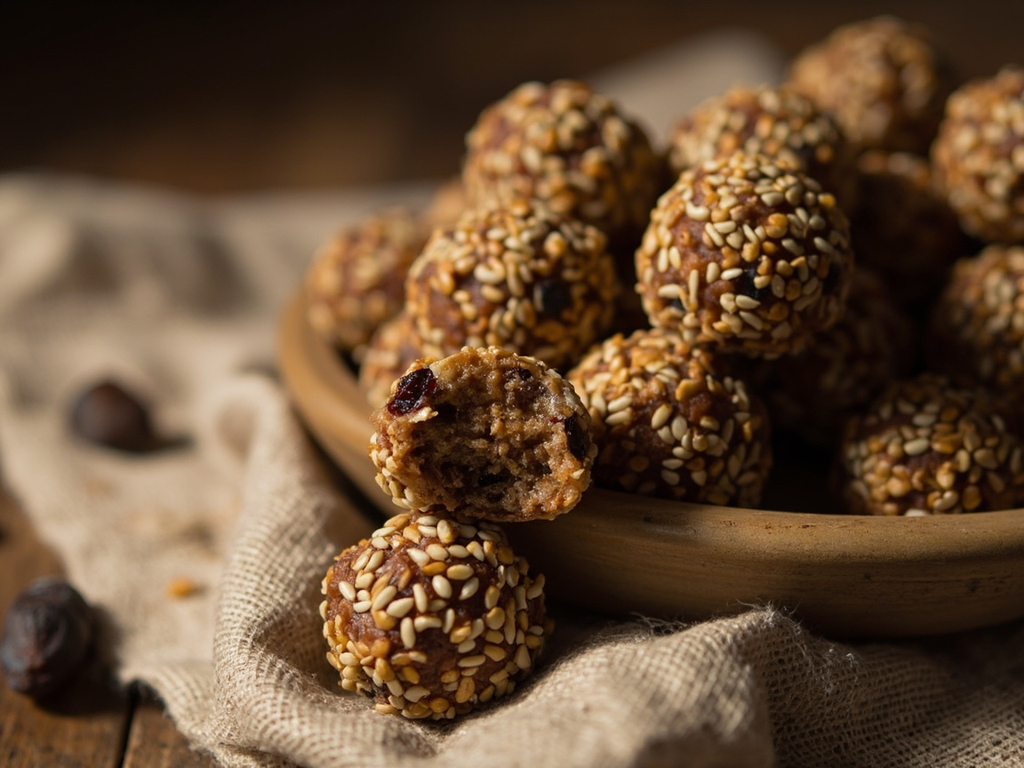
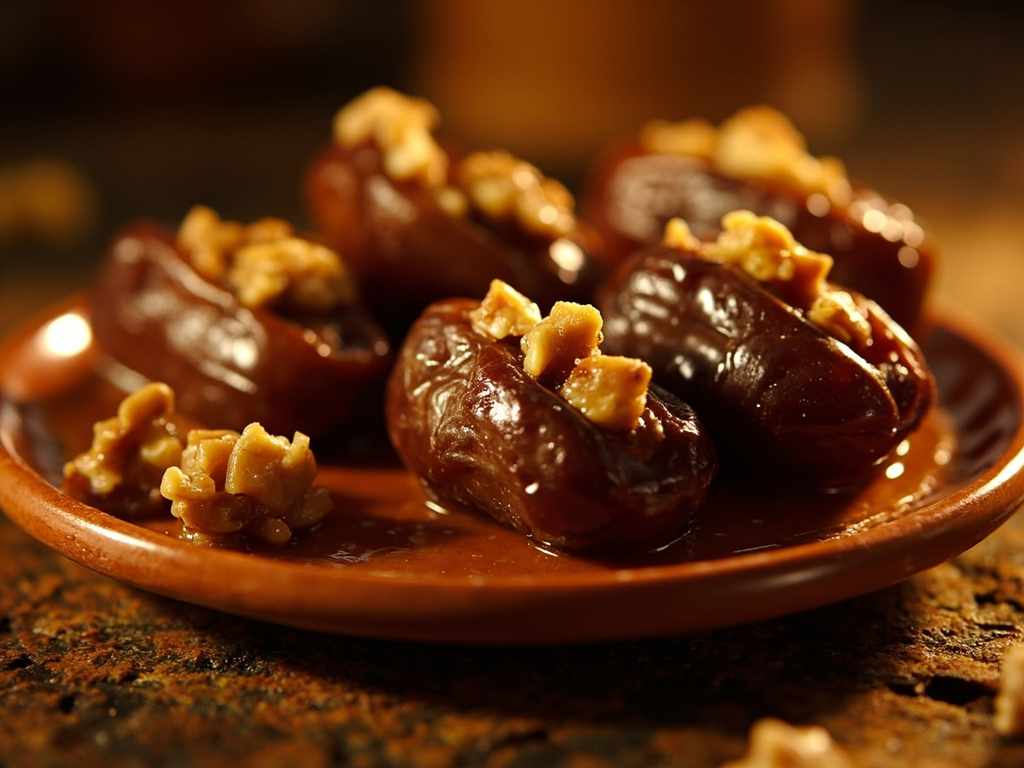
Pitted dates, stuffed with crushed nuts and spices, glazed with honey — a dense, sweet bite that keeps and slips into a pocket. The fuel for long nights of observation.
People think the astronomer is a dreamer; he is above all a watcher. When the Egyptian night unfurls its stars and I record their positions one by one, sleep lurks — so I reach for these dates. I split them, slip in crushed nuts, a grain of pepper, and dip them in heated honey until they gleam like stars. One single date suffices to keep me bent over the armillary sphere for another hour. The desert gives us this fruit that does not perish: take it wherever you will, it will follow you like the star follows the pole.
- •Dates — a good handful (sweet and energizing base)
- •Walnuts (or almonds) — in proportion (stuffing)
- •Honey — for glazing (binding and preservation)
- •Pepper — a pinch (warm contrast)
- •Salt — a pinch (enhances sweetness (dulcia domestica))
Dates Stuffed with Nuts and Honey for Observation Vigils
Pitted dates, stuffed with crushed nuts and spices, glazed with honey — a dense, sweet bite that keeps and slips into a pocket. The fuel for long nights of observation.
Why this dish? The astronomer observes at night, when others sleep. To sustain the long vigils of scanning the stars and recording their positions, nothing is better than a dense, sweet snack: the Egyptian date, a desert fruit that keeps and travels well, stuffed with nuts and rolled in honey. The scholar's night fuel.
People think the astronomer is a dreamer; he is above all a watcher. When the Egyptian night unfurls its stars and I record their positions one by one, sleep lurks — so I reach for these dates. I split them, slip in crushed nuts, a grain of pepper, and dip them in heated honey until they gleam like stars. One single date suffices to keep me bent over the armillary sphere for another hour. The desert gives us this fruit that does not perish: take it wherever you will, it will follow you like the star follows the pole.
Ingredients (period version)
- Dates — a good handful (sweet and energizing base)
- Walnuts (or almonds) — in proportion (stuffing)
- Honey — for glazing (binding and preservation)
- Pepper — a pinch (warm contrast)
- Salt — a pinch (enhances sweetness (dulcia domestica))
Ingredients
- Medjool dates, pitted — 12 (base)
- Walnuts (or almonds) — 60 g, chopped (stuffing)
- Honey — 3 tbsp (glaze)
- Black pepper — 1 pinch (contrast)
- Fine salt — 1 pinch (balance sweetness)
- Sesame seeds (optional) — 1 tbsp (finishing)
Method
- Split each date on one side and remove the pit if any.
- Mix the chopped nuts with a pinch of salt and a pinch of pepper, stuff each date with the mixture.
- Gently warm the honey in a small pan, roll the stuffed dates in it to coat.
- Place on a plate, optionally sprinkle with sesame seeds, and let the honey set.
- Store in an airtight container; they keep and travel well for several days.
How it was made : Apicius describes dulcia domestica: pitted dates stuffed with nuts or pine nuts and pepper, rolled in salt, then cooked in honey. The date, a major fruit of ancient Egypt, was a daily food, festive treat, and travel provision.
The contemporary twist : Rolled in pistachio crumbles and served on a slate board as 'star bites,' they become a refined petit-four to end an ancient-themed meal.
Sources : Apicius, De re coquinaria, Book VII (dulcia domestica) · Andrew Dalby, Food in the Ancient World from A to Z (dates)
Ptolemy · Charactorium