 flip
flipSawīq al-shaʿīr — Toasted Barley Flour for Travelers
Sawīq al-shaʿīr — Toasted Barley Flour for Travelers
Why this dish? According to tradition, Rābiʿa made the pilgrimage to Mecca and traveled to Jerusalem through the desert. Sawīq — grains toasted then ground, to be mixed with water — was THE provision for pilgrims and nomads: light, non-perishable, ready without fire. The food of the road for those who walk toward God.
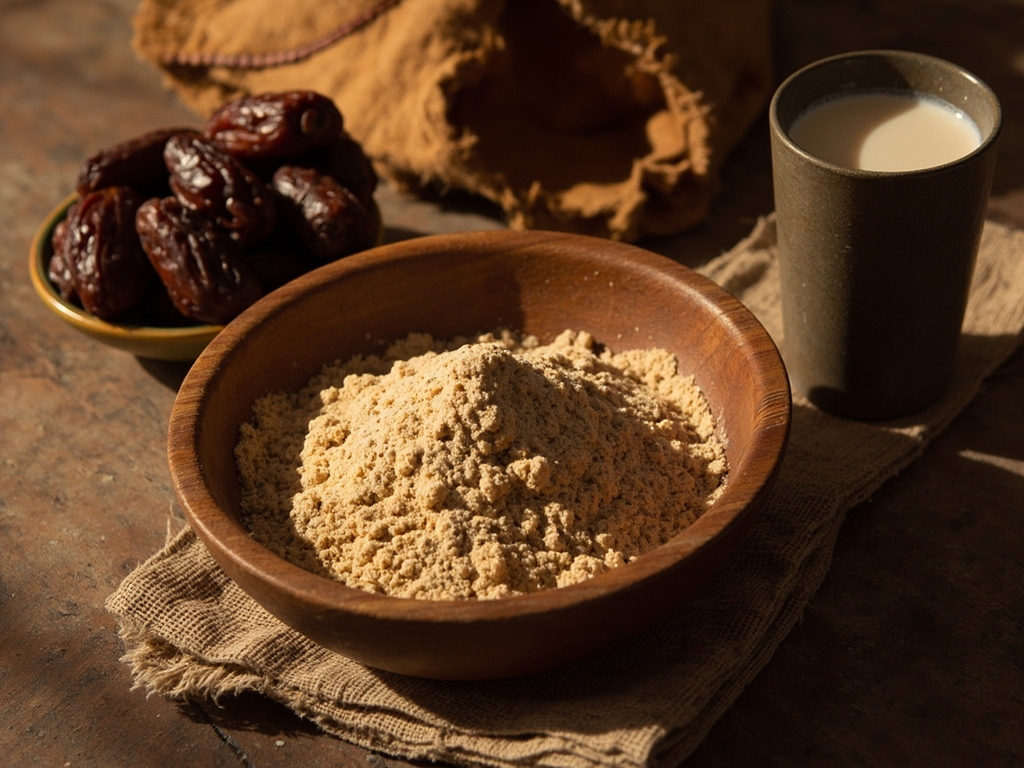
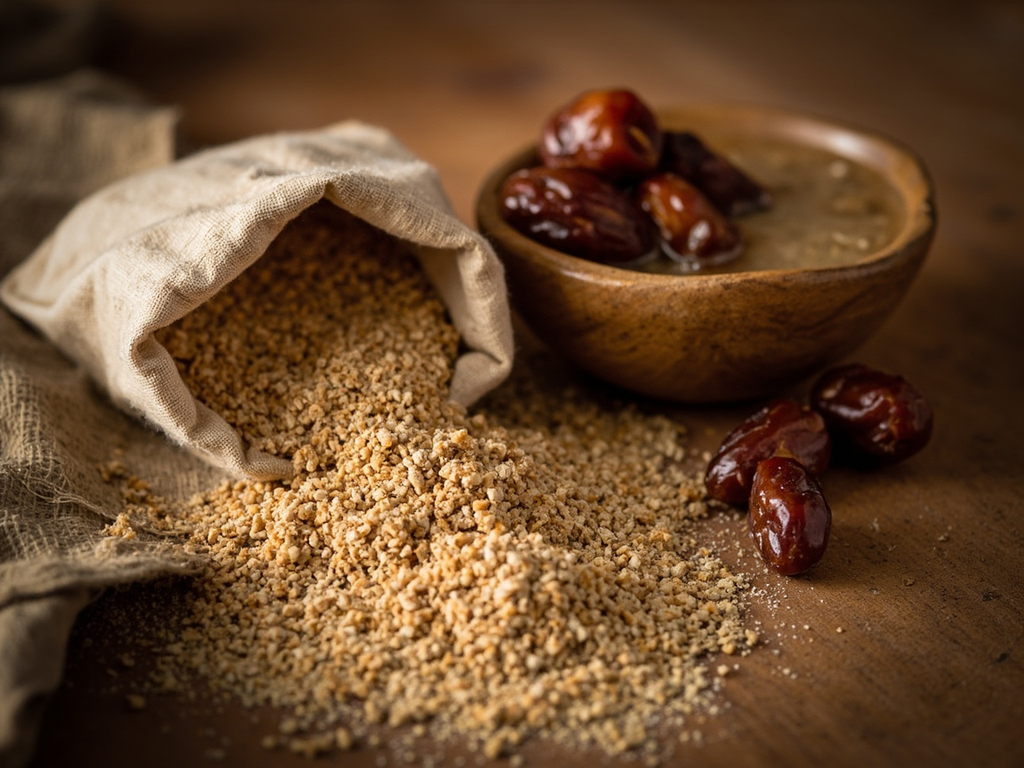
A flour of barley grains first dry-toasted, giving them a nutty, burnt-bread flavor. It is carried in a sack; on the road, it is simply mixed with water (or milk) to obtain a filling porridge, or sweetened with dates. No fire needed on the way.
For the long road of pilgrimage, carry this in your bag. I toast the barley grains on a hot sheet until they smell fragrant and brown, then I grind them into a fine flour. In the heart of the desert, no need for fire: pour a little water from your waterskin, mix with your fingertip, and you are satisfied. I walked thus toward the Sacred House, carrying little more than this and trust in Him who guides the steps. Add a crushed date if fatigue weighs on you — the road is long, but the destination is worth it.
- •Barley grains — one measure (base, toasted then ground)
- •Waterskin water — as needed (reconstitution on the road)
- •Crushed dates — a few (energy and sweetness, optional)
Sawīq al-shaʿīr — Toasted Barley Flour for Travelers
A flour of barley grains first dry-toasted, giving them a nutty, burnt-bread flavor. It is carried in a sack; on the road, it is simply mixed with water (or milk) to obtain a filling porridge, or sweetened with dates. No fire needed on the way.
Why this dish? According to tradition, Rābiʿa made the pilgrimage to Mecca and traveled to Jerusalem through the desert. Sawīq — grains toasted then ground, to be mixed with water — was THE provision for pilgrims and nomads: light, non-perishable, ready without fire. The food of the road for those who walk toward God.
For the long road of pilgrimage, carry this in your bag. I toast the barley grains on a hot sheet until they smell fragrant and brown, then I grind them into a fine flour. In the heart of the desert, no need for fire: pour a little water from your waterskin, mix with your fingertip, and you are satisfied. I walked thus toward the Sacred House, carrying little more than this and trust in Him who guides the steps. Add a crushed date if fatigue weighs on you — the road is long, but the destination is worth it.
Ingredients (period version)
- Barley grains — one measure (base, toasted then ground)
- Waterskin water — as needed (reconstitution on the road)
- Crushed dates — a few (energy and sweetness, optional)
Ingredients
- Hulled barley grains (or barley flour) — 200 g (toasted base)
- Water or milk — to taste for desired texture (reconstitution)
- Pitted dates — 3-4 (sweetness and energy)
- Pinch of salt — 1 (balance)
Method
- Toast the barley grains dry in a pan over medium heat for 8-10 minutes, stirring, until they brown and smell nutty.
- Let cool, then grind finely (coffee grinder or blender). Store this toasted flour in an airtight jar; it keeps for weeks.
- When ready to eat, put 3-4 tablespoons of flour in a bowl with a pinch of salt.
- Gradually add water or milk while stirring until the desired texture (thick drink or porridge).
- Mash in a date or two to sweeten and add energy.
How it was made : Sawīq (toasted then ground barley or wheat) is the classic travel ration of ancient Arabia and Iraq, abundantly cited for caravans, armies, and pilgrims. Toasting stabilizes the grain and makes it consumable without cooking — an instant food before its time. It was mixed with water, milk, or blended with clarified butter and dates for festive days.
The contemporary twist : It is the direct ancestor of energy bars and drinks: present the toasted barley flour in a hiking pouch, to be reconstituted in a cup — the "shake" of the medieval pilgrim.
Sources : Nawal Nasrallah (trad.), Annals of the Caliphs' Kitchens, Brill, 2007 · Peter Heine, Food Culture in the Near East, Middle East and North Africa, Greenwood Press, 2004 · Farīd al-Dīn ʿAṭṭār, Tadhkirat al-Awliyāʾ (Memorial of the Saints), entry on Rābiʿa and her pilgrimage
Rābiʿa al-ʿAdawiyya · Charactorium