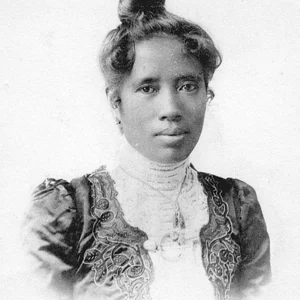

The last queen of Madagascar, Ranavalona III ruled the Merina Kingdom from 1883 to 1897. Despite her diplomatic resistance, she was unable to prevent French colonization. Deposed and exiled, she died in Algiers in 1917, a symbol of lost Malagasy sovereignty.
Ranavalona III(1861 — 1917)
Ranavalona III
Royaume merina
7 min read
Frequently asked questions
Key Facts
- 1883: She ascends to the throne and becomes the last queen of Madagascar
- 1885: Signing of the Treaty of Tamatave, imposing a French protectorate over Madagascar
- 1895: French military expedition — colonial troops seize the capital Antananarivo
- 1896: Madagascar is officially annexed as a French colony
- 1897: Ranavalona III is deposed and exiled, first to Réunion then to Algiers, where she dies in 1917
Works & Achievements
Ranavalona III pursued a policy of active diplomatic resistance, sending delegations to Europe to defend Malagasy sovereignty before the major powers and the international press.
The queen supported the development of education, infrastructure, and modern justice in Madagascar, relying on Protestant missionaries to train an educated Malagasy civil service.
An official delegation was sent to Europe to plead the case for Malagasy independence before the French and British governments, shortly before the military invasion.
A solemn document addressed to the European powers contesting the legality of the French annexation — the first act of institutional resistance to colonization preserved in diplomatic archives.
Ranavalona III continued to conduct herself as the legitimate sovereign throughout her exile, receiving Malagasy delegations and keeping Malagasy national identity alive in the eyes of her people.
Anecdotes
Ranavalona III ascended to the throne at just 22 years old in 1883, having been chosen by Prime Minister Rainilaiarivony, who immediately married her according to Malagasy tradition. She thus became the third consecutive queen to marry this powerful statesman, who held the real political power. This unprecedented situation made her both a symbolic figurehead of royalty and a major political stake.
During the French invasion of 1895, Ranavalona III categorically refused to flee Antananarivo despite the approaching fighting. She remained in her palace, dressed in her royal garments, awaiting the French soldiers with remarkable dignity. This bearing impressed the French officers themselves, who recorded her sovereign composure in their memoirs.
Exiled to the island of Réunion in 1897 following France's annexation of Madagascar, the queen was subsequently transferred to Algiers in 1899. She lived modestly there but always maintained her nobility, receiving delegations of Malagasy compatriots who came to pay their respects — much to the embarrassment of the French colonial authorities.
Ranavalona III died in Algiers on May 23, 1917, far from her homeland. Her remains were not repatriated to Madagascar until 1938, twenty-one years after her death, following a lengthy campaign by the Malagasy people. Her posthumous return was celebrated as an act of national justice, and she was laid to rest in the royal mausoleum of the Rova of Antananarivo.
During her reign, Ranavalona III sought to modernize Madagascar while preserving its independence. She promoted education, supported the Protestant missions that had developed the printing press, and attempted to negotiate directly with European powers to prevent colonization — even sending a diplomatic delegation to Paris and London in 1895.
Primary Sources
Her Majesty the Queen of Madagascar recognizes and accepts the protectorate of France. The French government shall represent Madagascar in all its external relations.
I solemnly protest against the annexation of my kingdom. My people have never consented to becoming French subjects, and I cannot accept the abolition of Malagasy sovereignty.
The queen received us with perfect dignity. She requested to be treated with the respect due to her rank and refused to sign any document that would undermine the sovereignty of Madagascar.
Madagascar and its dependencies are declared French territory. The Malagasy monarchy is abolished. Queen Ranavalona III shall be removed from the territory.
Key Places
Palace complex on the hill of Antananarivo where Ranavalona III lived and ruled. It was here that she received French soldiers in 1895 and where her remains were interred in 1938.
Capital of the Kingdom of Madagascar and the political heart of Merina power. It was in this city that the fate of Malagasy sovereignty played out against French colonization.
Ranavalona III's first place of exile from 1897. She spent two years there in relative isolation before being transferred to Algeria.
The city where Ranavalona III spent the last eighteen years of her life in exile. She died there in 1917 and was buried there until her remains were repatriated in 1938.
Port on the northwest coast of Madagascar where General Duchesne's French expeditionary force landed in 1895. This colonial entry point marked the beginning of the end of Malagasy independence.
Typical Objects

A precious silk cloth worn draped by the queen during official ceremonies. The red and gold lamba symbolized Merina royalty and distinguished Ranavalona III from her subjects.

A gemstone-adorned diadem worn during major ceremonies. Ranavalona III's crown was seized by the French at the time of annexation and sent to France.

A staff of command symbolizing royal authority over the Malagasy peoples. It represented the ancestral power passed down from generation to generation to Merina sovereigns.

The Bible translated into the Malagasy language by British Protestant missionaries was a central object at the Christian court of Ranavalona III. The queen practiced a sincere Protestantism inherited from her predecessor.

An ornate sedan chair used to carry the queen during her public appearances. This traditional mode of transport affirmed royal dignity and ensured the sovereign never had to touch the common ground.

The official seal affixed to decrees and treaties signed by the queen. Its use symbolized the legitimacy of Malagasy sovereignty in the face of French colonial pressure.
School Curriculum
Vocabulary & Tags
Key Vocabulary
Tags
Daily Life
Morning
The queen rose early and participated in the morning Protestant prayer with her court, faithful to the Christian tradition established by her predecessor. She then received reports from her ministers and Prime Minister Rainilaiarivony on the affairs of the kingdom.
Afternoon
Afternoons were devoted to official audiences, royal ceremonies (fomba), and the management of diplomatic affairs, particularly the increasingly strained relations with France. The queen also oversaw the country's modernization efforts.
Evening
Evenings at court included communal meals with dignitaries, traditional Malagasy music, and recitations of ancestral stories (tantara). Ranavalona III placed great importance on ancestral traditions (fady and fanompoana) while also practicing Christianity.
Food
The Merina royal diet centered on rice (vary), the absolute staple of every meal, accompanied by zebu stews (romazava), leafy greens (brèdes), and broth. Royal meals featured more refined dishes such as duck and festive preparations for major ceremonies.
Clothing
Ranavalona III wore the red and gold silk lamba during official ceremonies, a symbol of Merina royalty. In daily life, she also incorporated elements of British Victorian fashion influenced by missionaries, combining long dresses with a lamba draped over the shoulder.
Housing
The queen resided in the Rova of Antananarivo, a palatial complex first built in wood and later in stone, commanding the capital from a hilltop. The Queen's Palace (Manjakamiadana), rebuilt in stone in 1869, included royal apartments, audience halls, and a private Protestant chapel.
Historical Timeline
Period Vocabulary
Visual Style
Style portrait royal de la fin du XIXe siècle, mêlant les codes visuels Merina (soie rouge, ornements dorés) à l'esthétique photographique coloniale, sur fond de paysage des hauts plateaux malgaches.
Sound Ambience
Ambiance sonore mêlant les cérémonies royales Merina, les chants protestants en malgache et les sons naturels des hauts plateaux d'Antananarivo au XIXe siècle.
Liens externes & ressources
Références
Œuvres
Résistance diplomatique à la colonisation française (1883-1895)
1883-1895
Modernisation de l'administration royale
1883-1895
Mission diplomatique à Paris et Londres
1895
Protestation officielle contre l'annexion
1896
Maintien de la dignité royale en exil
1897-1917