 flip
flipBiancomangiare — almond blancmange with capon
Biancomangiare — almond blancmange with capon
Why this dish? At the tables of his patrons — banker Agostino Chigi at the Villa Farnesina, the papal court — Raphael was a guest at the most lavish feasts in Rome. The biancomangiare, white as the ideal of purity he sought in his Madonnas, was THE prestige dish of the banquet: served to princes and distinguished invalids.
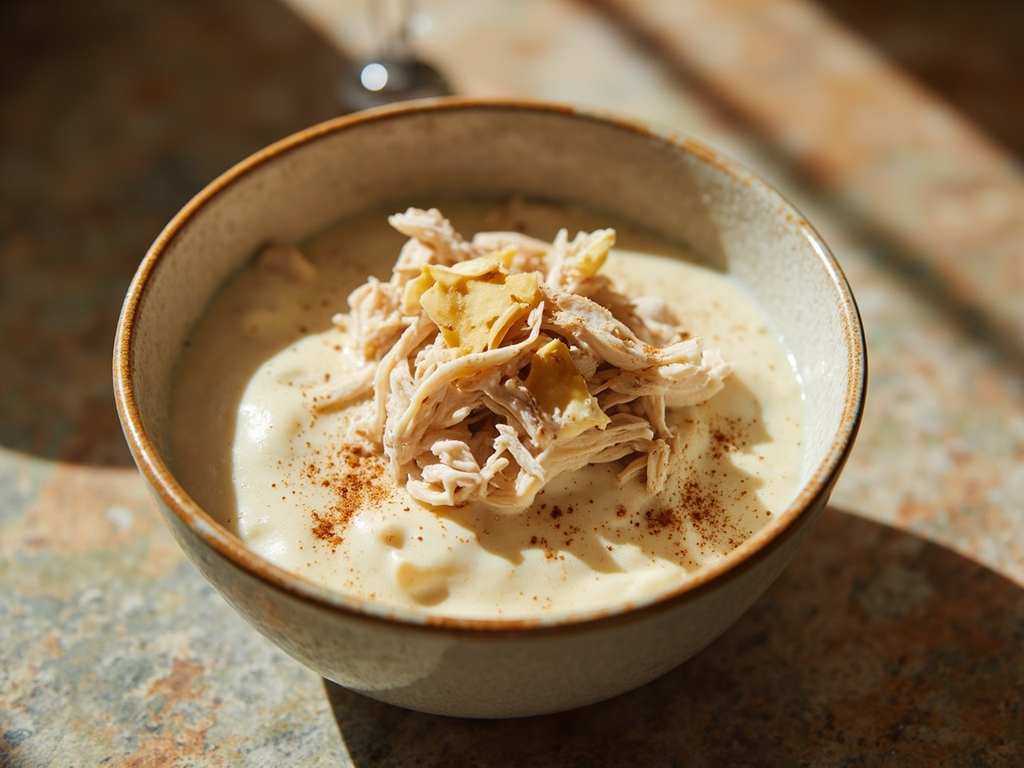
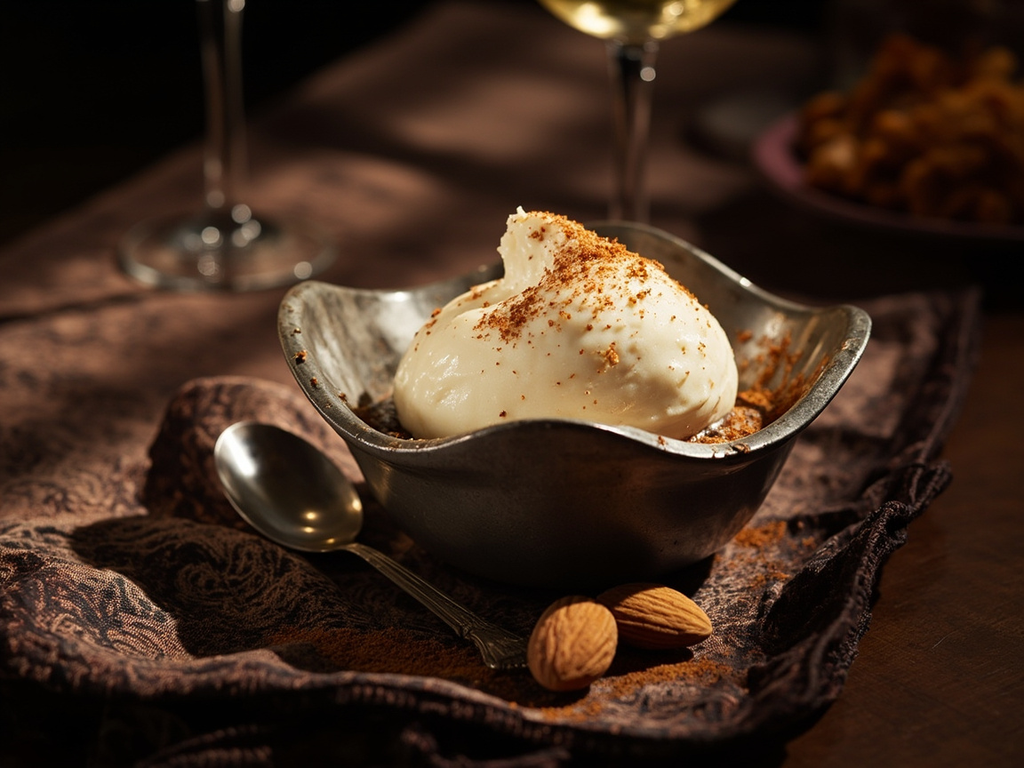
An immaculate white preparation: shredded capon breast slowly cooked in sweetened almond milk, perfumed with rose water, thickened to a velvety cream, and sprinkled with sugar and cinnamon.
At the Farnesina, at the magnificent Chigi's, I saw tables laid where the silver itself seemed to pale before this all-white dish. You grind the almond until it becomes milk, you shred the breast of a capon into it, and you stir, you stir over a low flame, as you smooth a glaze until no roughness remains. A tear of rose water, a veil of sugar and cinnamon on top, and there is a dish worthy of a cardinal — I who love harmony so much recognize my own way: everything is measure and sweetness.
- •Capon breast — the flesh of one breast (shredded protein base)
- •Sweet almonds — a good measure (almond milk)
- •Sugar — to taste (sweetness)
- •Rose water — a few drops (perfume)
- •Starch (or breadcrumbs, or rice flour) — a little (thickener)
- •Cinnamon — a pinch (finishing spice)
Biancomangiare — almond blancmange with capon
An immaculate white preparation: shredded capon breast slowly cooked in sweetened almond milk, perfumed with rose water, thickened to a velvety cream, and sprinkled with sugar and cinnamon.
Why this dish? At the tables of his patrons — banker Agostino Chigi at the Villa Farnesina, the papal court — Raphael was a guest at the most lavish feasts in Rome. The biancomangiare, white as the ideal of purity he sought in his Madonnas, was THE prestige dish of the banquet: served to princes and distinguished invalids.
At the Farnesina, at the magnificent Chigi's, I saw tables laid where the silver itself seemed to pale before this all-white dish. You grind the almond until it becomes milk, you shred the breast of a capon into it, and you stir, you stir over a low flame, as you smooth a glaze until no roughness remains. A tear of rose water, a veil of sugar and cinnamon on top, and there is a dish worthy of a cardinal — I who love harmony so much recognize my own way: everything is measure and sweetness.
Ingredients (period version)
- Capon breast — the flesh of one breast (shredded protein base)
- Sweet almonds — a good measure (almond milk)
- Sugar — to taste (sweetness)
- Rose water — a few drops (perfume)
- Starch (or breadcrumbs, or rice flour) — a little (thickener)
- Cinnamon — a pinch (finishing spice)
Ingredients
- Poached chicken (or capon) breast — 200 g (shredded base)
- Unsweetened almond milk — 500 ml (cooking liquid)
- Sugar — 60 g (sweetness)
- Rice starch (or cornstarch — prefer rice for period accuracy) — 30 g (thickener)
- Rose water — 1 tsp (perfume)
- Cinnamon — for dusting (finish)
Method
- Poach the chicken breast in simmering water, drain, and shred very finely (pound in a mortar for period texture).
- Dissolve the rice starch in a little cold almond milk.
- Heat the remaining almond milk with sugar, add the shredded poultry, then the dissolved starch.
- Cook over low heat, stirring constantly, for 10-15 minutes until a thick, smooth cream forms.
- Remove from heat, perfume with rose water.
- Mound into a white dome, dust with sugar and cinnamon.
How it was made : The *biancomangiare* is one of the most famous dishes across medieval and Renaissance Europe. Maestro Martino, Platina, and later Scappi codified the recipe. Its whiteness (almond, sugar, poultry, sometimes rice) made it a luxury and invalid food, offered to distinguished guests and convalescents.
The contemporary twist : Served as quenelles in a dark bowl, with a saffron thread and a toasted almond sliver: a contrast that would make a chiaroscuro painter smile.
Sources : Maestro Martino, Libro de arte coquinaria, c. 1465 · Bartolomeo Platina, De honesta voluptate, 1474 · Bartolomeo Scappi, Opera, 1570 (Roman codification of the recipe)
Raphael · Charactorium