 flip
flipSweet-and-Sour Mutton Sikbaj
Sweet-and-Sour Mutton Sikbaj
Why this dish? Abu Nuwas sings of the feasts at the court of Harun al-Rashid and al-Amin, where sikbaj — reputedly the favorite dish of caliphs and Sassanid kings before them — reigned on the sufra. This vinegar stew sweetened with honey was the prestige dish that the poet saw paraded between two cups in the majlis.
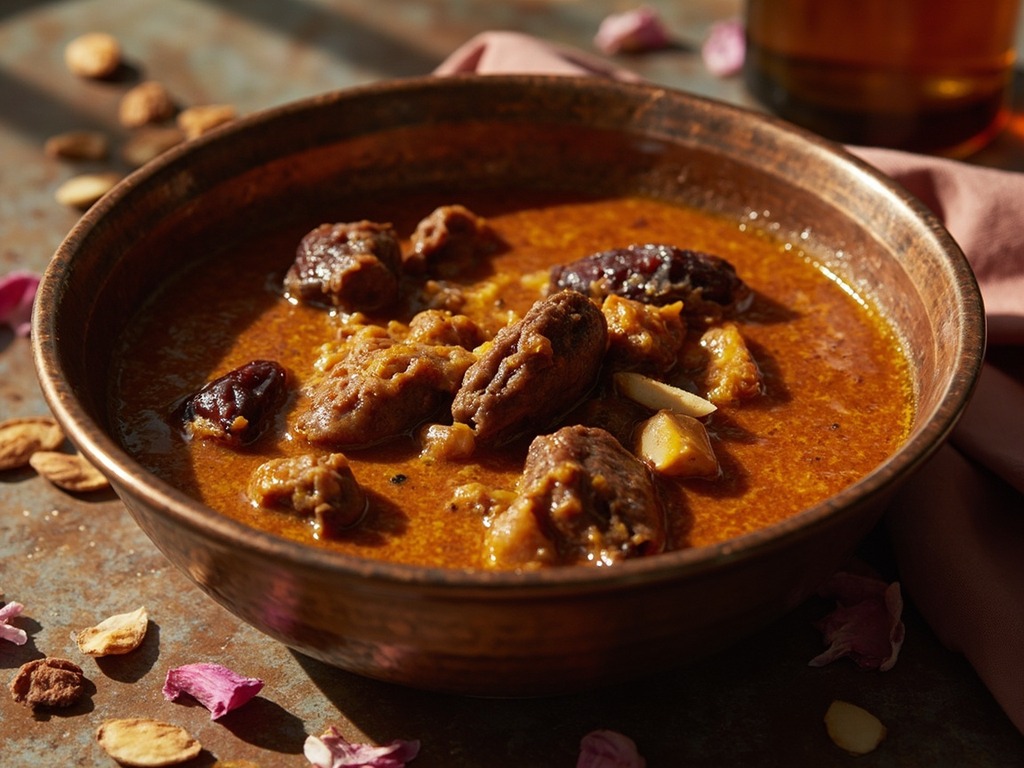
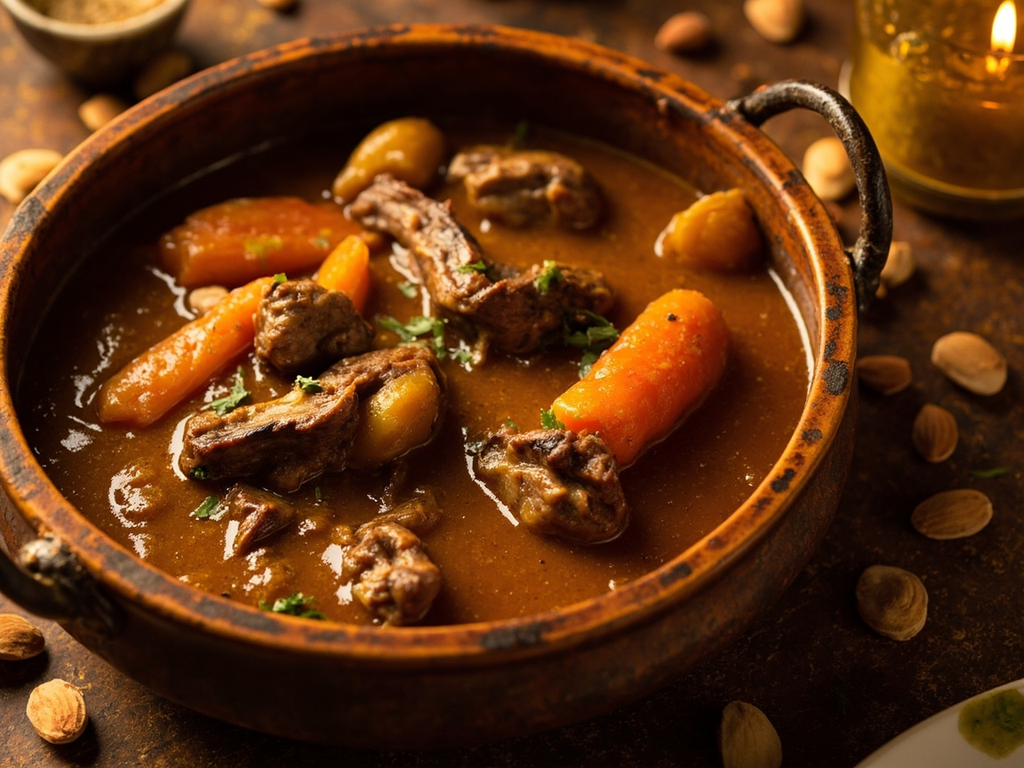
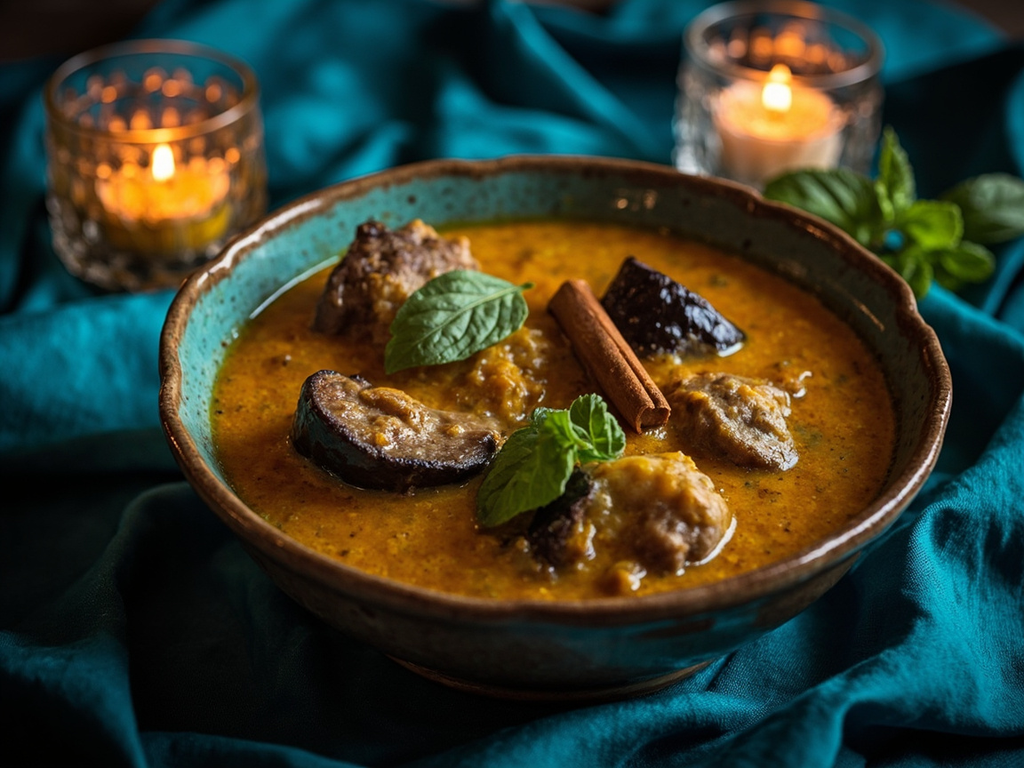
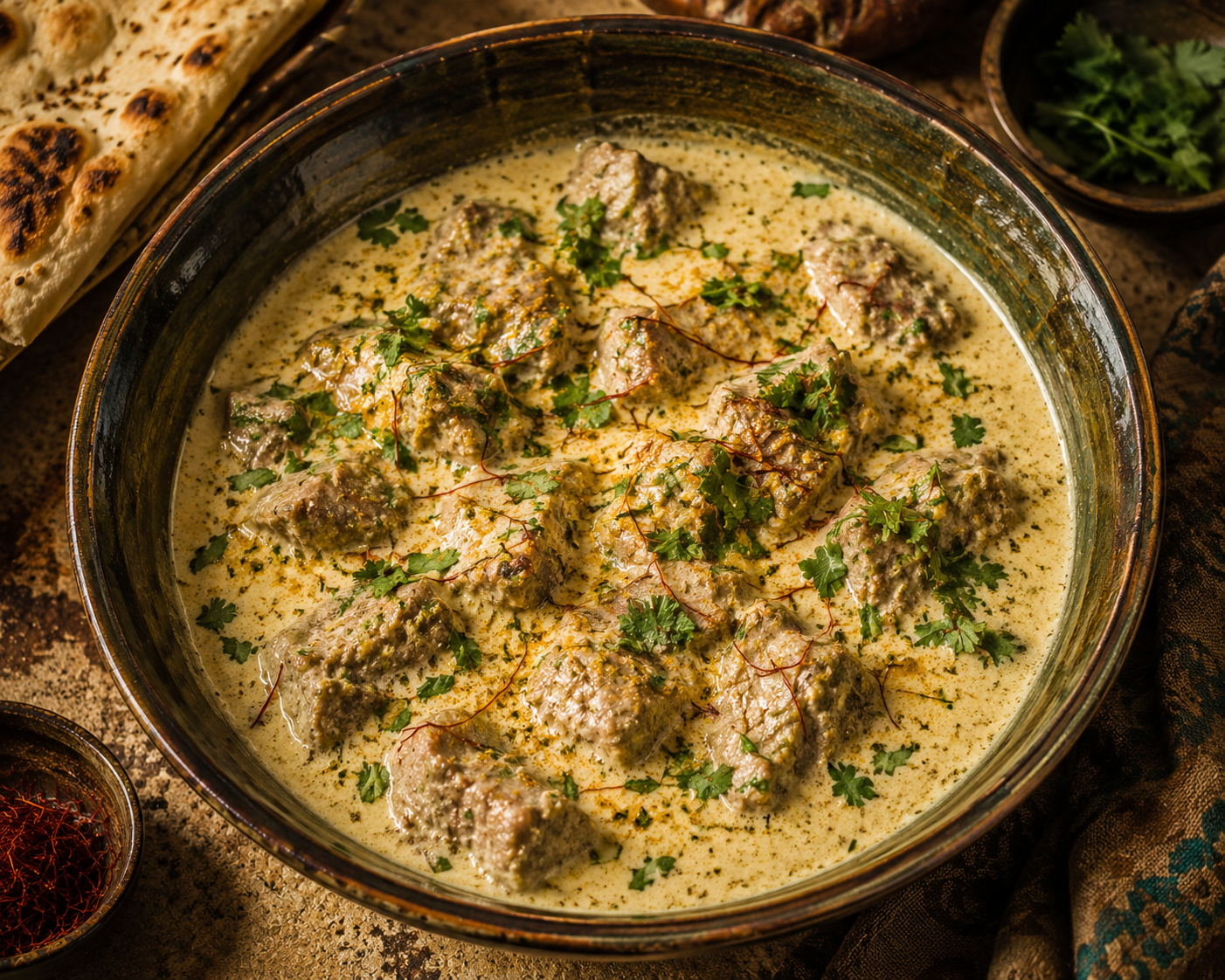
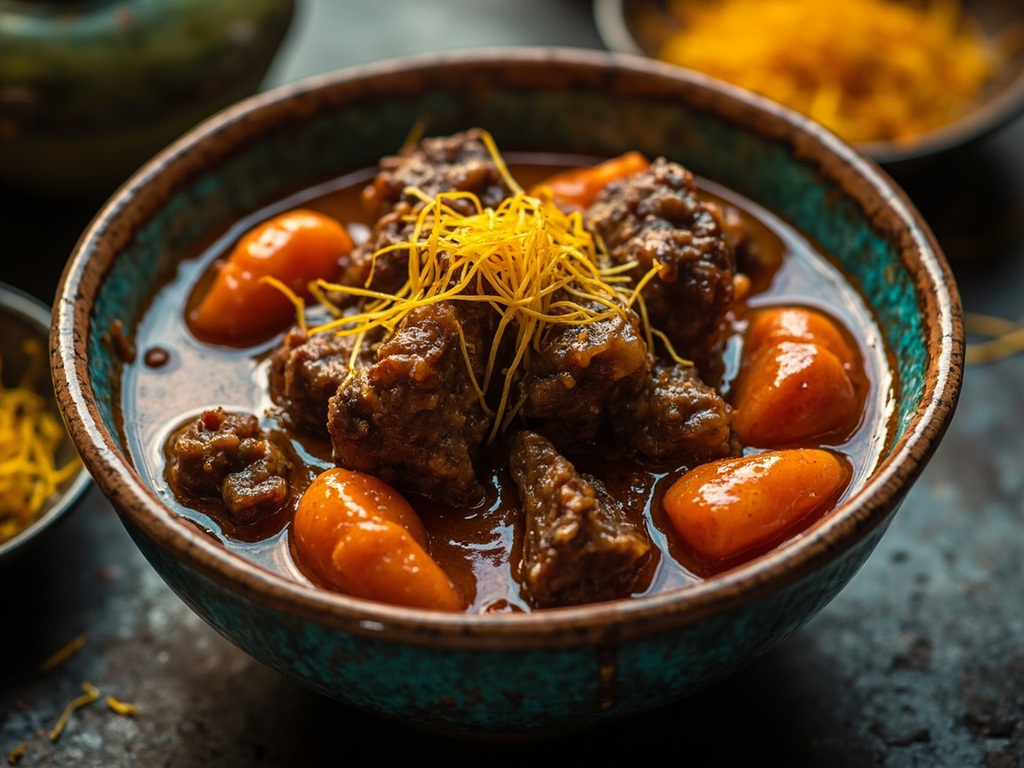
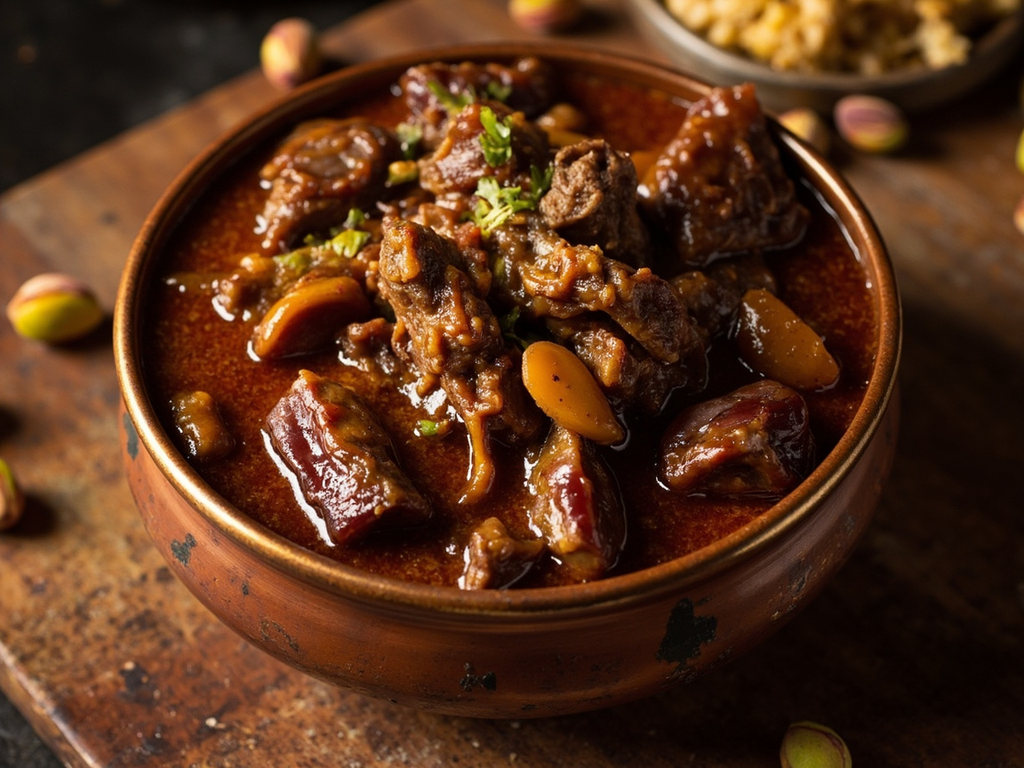
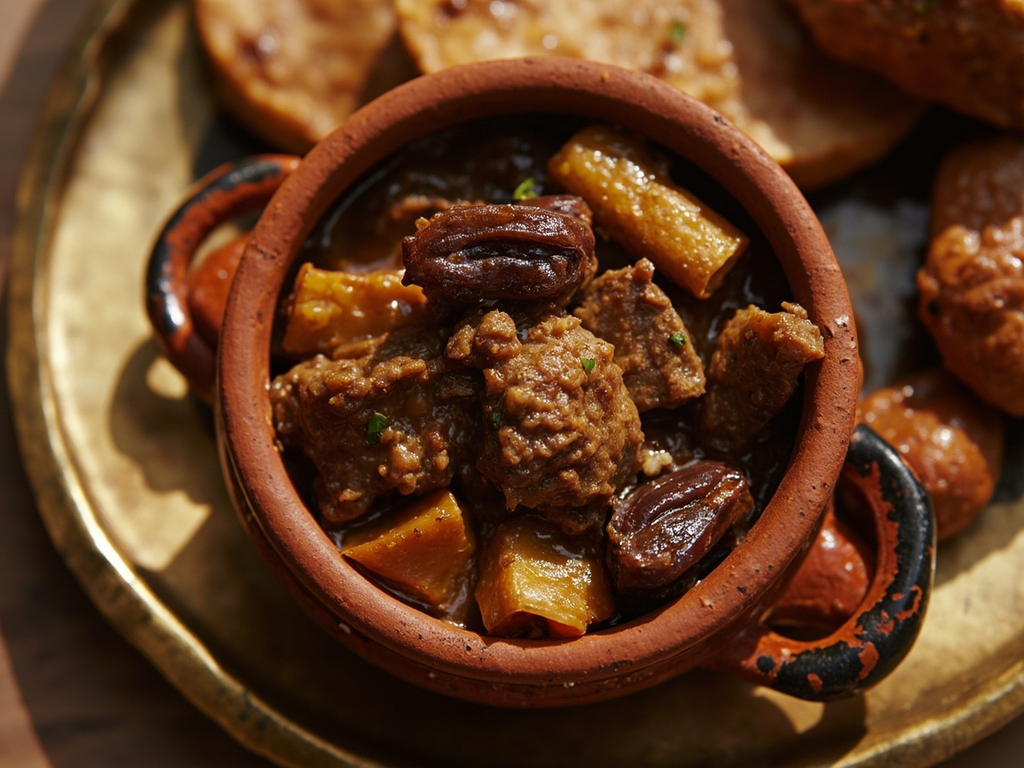
A lamb stew slowly simmered in vinegar, honey, and spices until the meat melts into an amber, glossy sauce. The sourness of vinegar, the sweetness of honey and dates, the scent of cinnamon and saffron: this is the great Abbasid festive dish, brought out to honor a guest.
Approach, guest, and be no prude! Here is the sikbaj served under al-Amin, when Baghdad's night smelled of saffron and wine. Sweat the lamb meat in fat, drown it in vinegar and a dash of honey, throw in cinnamon, dates, and a hint of that murri that would wake the dead — then let the pot sing on the embers. Eat it warm, cup in hand, and you'll understand why I prefer the table of the living to the promises of paradise.
- •Mutton or lamb meat — a nice piece on the bone (base)
- •Wine or date vinegar — a good cup (acidité)
- •Honey — two spoonfuls (douceur)
- •Dates — a handful (douceur et liant)
- •Onions — two (fond)
- •Cinnamon, coriander, saffron — to taste (épices)
- •Murri (fermented condiment) — a dash (umami)
Sweet-and-Sour Mutton Sikbaj
A lamb stew slowly simmered in vinegar, honey, and spices until the meat melts into an amber, glossy sauce. The sourness of vinegar, the sweetness of honey and dates, the scent of cinnamon and saffron: this is the great Abbasid festive dish, brought out to honor a guest.
Why this dish? Abu Nuwas sings of the feasts at the court of Harun al-Rashid and al-Amin, where sikbaj — reputedly the favorite dish of caliphs and Sassanid kings before them — reigned on the sufra. This vinegar stew sweetened with honey was the prestige dish that the poet saw paraded between two cups in the majlis.
Approach, guest, and be no prude! Here is the sikbaj served under al-Amin, when Baghdad's night smelled of saffron and wine. Sweat the lamb meat in fat, drown it in vinegar and a dash of honey, throw in cinnamon, dates, and a hint of that murri that would wake the dead — then let the pot sing on the embers. Eat it warm, cup in hand, and you'll understand why I prefer the table of the living to the promises of paradise.
Ingredients (period version)
- Mutton or lamb meat — a nice piece on the bone (base)
- Wine or date vinegar — a good cup (acidité)
- Honey — two spoonfuls (douceur)
- Dates — a handful (douceur et liant)
- Onions — two (fond)
- Cinnamon, coriander, saffron — to taste (épices)
- Murri (fermented condiment) — a dash (umami)
Ingredients
- Lamb shoulder, cubed — 800 g (base)
- Wine vinegar — 120 ml (acidité)
- Honey — 2 tbsp (douceur)
- Pitted dates — 8 (douceur et liant)
- Sliced onions — 2 (fond)
- Cinnamon stick — 1 (épice)
- Ground coriander — 1 tsp (épice)
- Saffron — 1 pinch (couleur et parfum)
- Soy sauce (as murri substitute) — 1 tsp (umami)
- Salt — to taste (assaisonnement)
Method
- Brown the lamb pieces in a little fat with the sliced onions.
- Add the vinegar, enough water to cover, the cinnamon and coriander.
- Cover and simmer on low heat for 1.5 hours until the meat is tender.
- Add the honey, dates, dissolved saffron, and umami sauce; season with salt.
- Uncover and cook for 20 minutes until the sauce coats and glistens.
- Serve warm in a deep dish, with the amber sauce poured on top.
How it was made : Sikbaj (from Persian "sik", vinegar) is one of the best-documented dishes of Abbasid cuisine: it appears in Ibn Sayyar al-Warraq's Kitab al-Tabikh (10th century), which says it was inherited from Sassanid kings. The meat was often colored with saffron and the sauce thickened by reduction.
The contemporary twist : Serve on saffron-scented semolina and sprinkle with toasted slivered almonds, a courtly tajike twist to open a literary dinner.
Sources : Ibn Sayyār al-Warrāq, Kitāb al-Tabīkh (10th c.) ; Nawal Nasrallah, Annals of the Caliphs' Kitchens (2007)
Abu Nuwas · Charactorium