 flip
flipKhoresht-e fesenjan (Walnut and Pomegranate Molasses Stew)
Khoresht-e fesenjan (Walnut and Pomegranate Molasses Stew)
Why this dish? Khoresht is among the "slow-simmered stews" in Kiarostami's known diet. Fesenjan, sweet-sour and profound, is the holiday stew for distinguished guests — and his profile emphasizes hospitality as a moment of exchange. A reception dish, to serve when you have someone to honor.
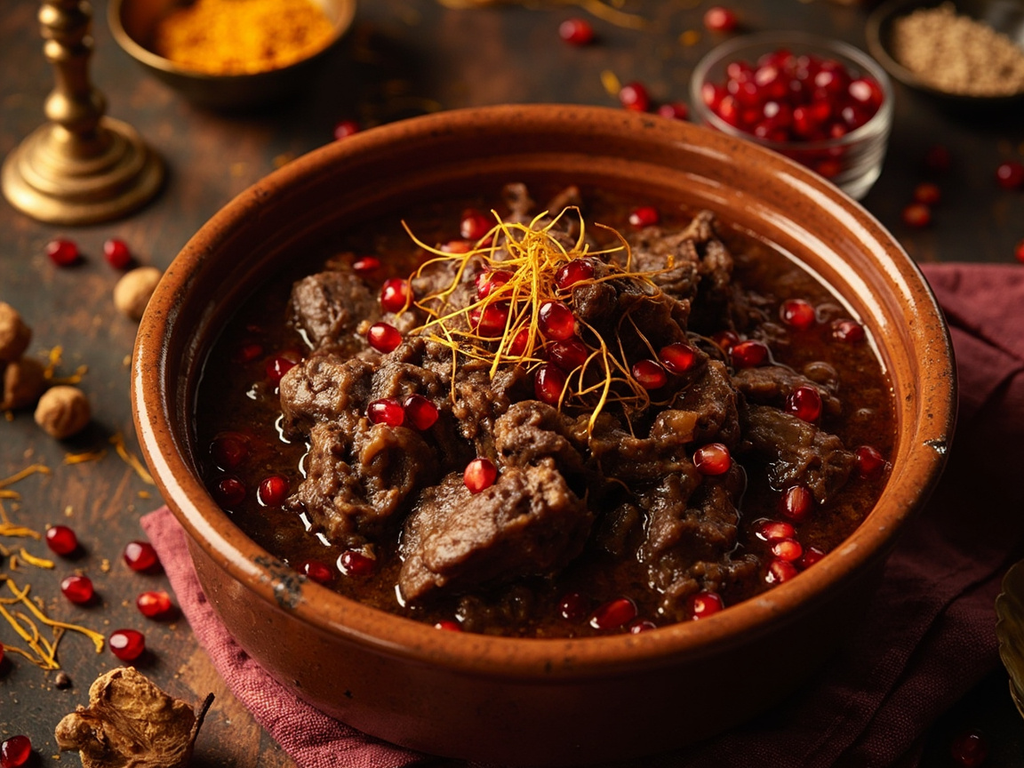
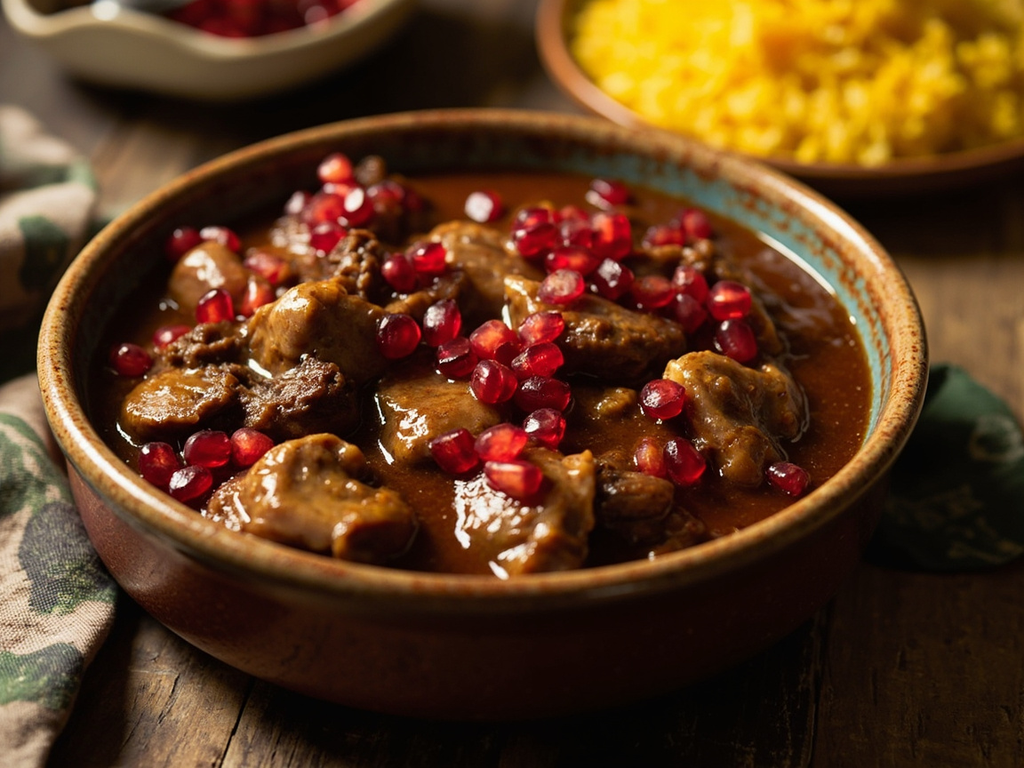
A creamy, dark stew where finely ground walnuts are slowly simmered with pomegranate molasses, creating a unique sweet-sour balance. Poultry (originally duck, often chicken today) or meatballs are added. Served as a topping over chelo.
That one, we didn't make it for nothing: you needed a guest, a reason to rejoice. The walnuts must cook a long time, a very long time, until they release their oil and the sauce darkens — my grandmother said a rushed fesenjan is a failed fesenjan. We taste, add a little pomegranate molasses for acidity, a little sugar to round it off, and we search for that exact point between sour and sweet. It is patient like a shoot: beauty comes at the end, or not at all.
- •Walnut halves — a large amount, finely ground (base of the sauce)
- •Pomegranate molasses (rob-e anar) — to taste (sweet-sour acidity)
- •Duck or hen — one piece (protein)
- •Onion — 1 or 2 (base)
- •Sugar or pomegranate juice — to taste (balance)
Khoresht-e fesenjan (Walnut and Pomegranate Molasses Stew)
A creamy, dark stew where finely ground walnuts are slowly simmered with pomegranate molasses, creating a unique sweet-sour balance. Poultry (originally duck, often chicken today) or meatballs are added. Served as a topping over chelo.
Why this dish? Khoresht is among the "slow-simmered stews" in Kiarostami's known diet. Fesenjan, sweet-sour and profound, is the holiday stew for distinguished guests — and his profile emphasizes hospitality as a moment of exchange. A reception dish, to serve when you have someone to honor.
That one, we didn't make it for nothing: you needed a guest, a reason to rejoice. The walnuts must cook a long time, a very long time, until they release their oil and the sauce darkens — my grandmother said a rushed fesenjan is a failed fesenjan. We taste, add a little pomegranate molasses for acidity, a little sugar to round it off, and we search for that exact point between sour and sweet. It is patient like a shoot: beauty comes at the end, or not at all.
Ingredients (period version)
- Walnut halves — a large amount, finely ground (base of the sauce)
- Pomegranate molasses (rob-e anar) — to taste (sweet-sour acidity)
- Duck or hen — one piece (protein)
- Onion — 1 or 2 (base)
- Sugar or pomegranate juice — to taste (balance)
Ingredients
- Walnut halves — 300 g (base of the sauce)
- Pomegranate molasses — 4 to 6 tbsp (sweet-sour acidity)
- Chicken thighs (or duck breast) — 4 pieces (protein)
- Onion — 1 large, grated (base)
- Sugar — 1 to 2 tbsp (adjust to taste) (balance)
- Turmeric — 1/2 tsp (color and fragrance)
- Water — 500 ml (cooking liquid)
- Salt, pepper — to taste (seasoning)
Method
- Finely grind the walnuts (without making an oily paste). Toast them dry in a pot for 5 minutes to awaken their aroma.
- Add water and let the walnuts simmer on low heat for 45 min to 1 hour, stirring: the sauce thickens and darkens.
- Separately, sauté the grated onion and turmeric, brown the poultry pieces, then add them to the walnut sauce.
- Stir in the pomegranate molasses and sugar. Cover and let simmer for another 45 minutes on very low heat.
- Taste and adjust the sweet-sour balance: more molasses for acidity, a little sugar for roundness. The sauce should coat the spoon and glisten with oil on the surface.
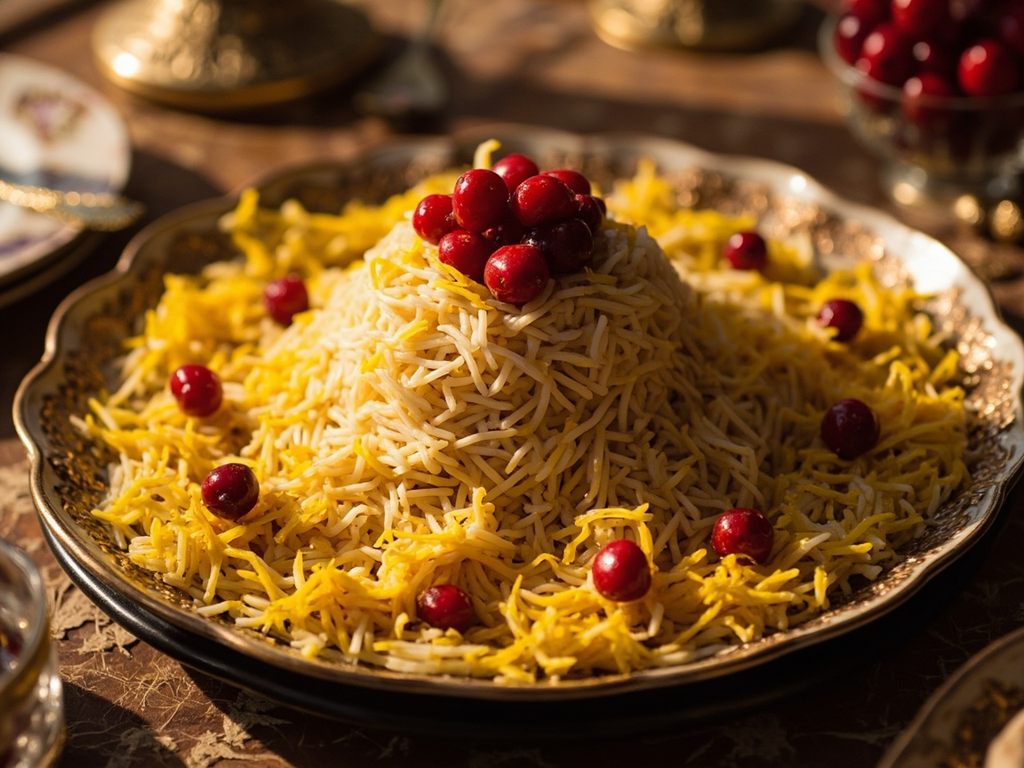
- Serve as a topping next to chelo, never mixed into the rice on the plate.
How it was made : Fesenjan is one of the oldest attested Persian stews; traces of sweet-sour dishes with walnuts and fruit have been found dating back to the Achaemenid era. Traditionally made with wild duck from the northern marshes (especially in Gilan, where Kiarostami filmed), it was cooked for hours over dying embers.
The contemporary twist : An express version uses chicken meatballs and pressure cooking; it is garnished with a few fresh pomegranate arils, rubies on the dark sauce.
Sources : Najmieh Batmanglij, Food of Life · Margaret Shaida, The Legendary Cuisine of Persia
Abbas Kiarostami · Charactorium