 flip
flipIpocrasso — spiced wine from Latium
Ipocrasso — spiced wine from Latium
Why this dish? Rome and Latium provided Raphael with the wines for his table as an established master. *Ipocrasso* — warmly spiced and sweetened wine — closed the banquets of his patrons and accompanied the preserves of the last service. A festive and comforting drink, it was also said to 'warm the stomach'.
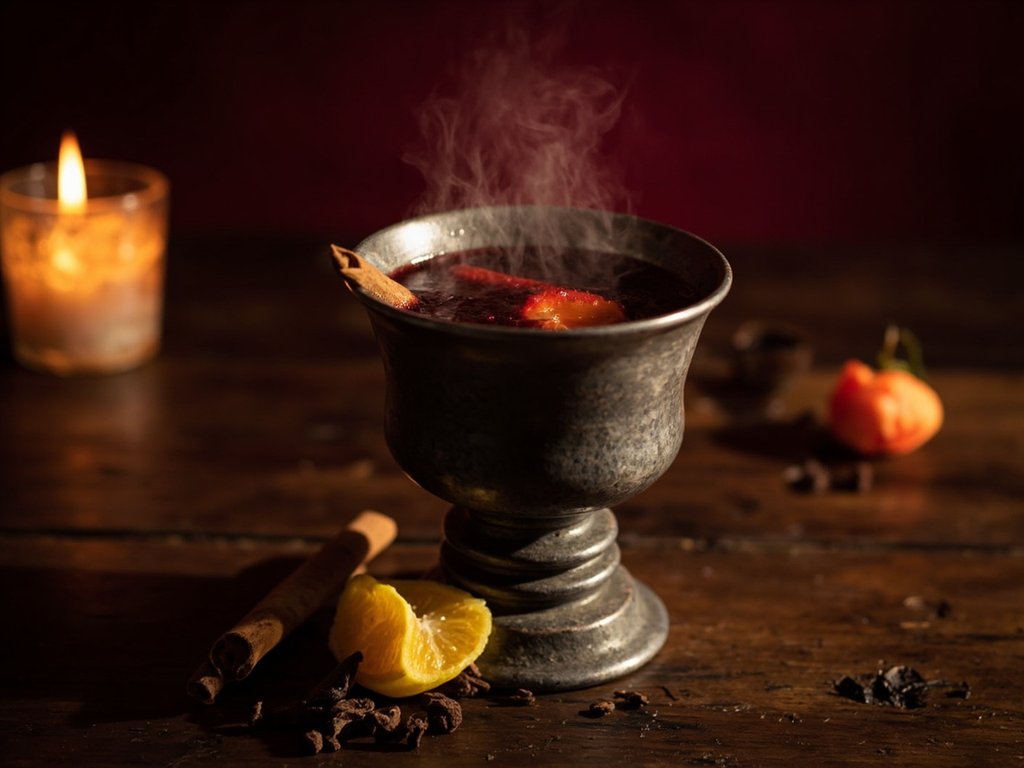
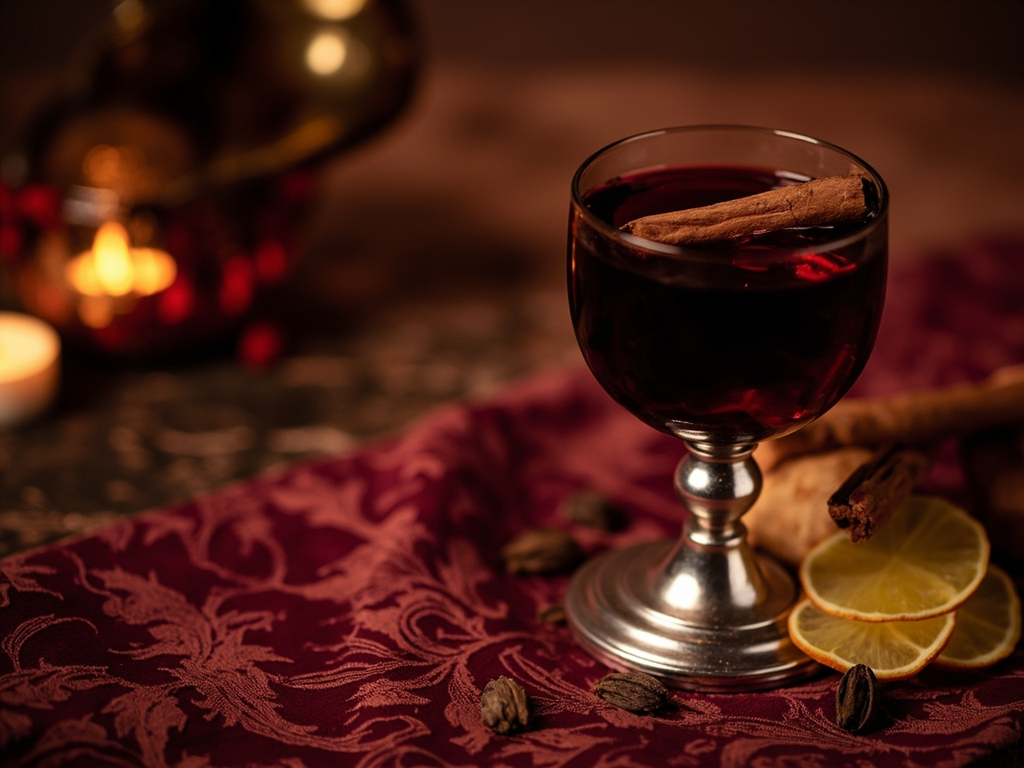
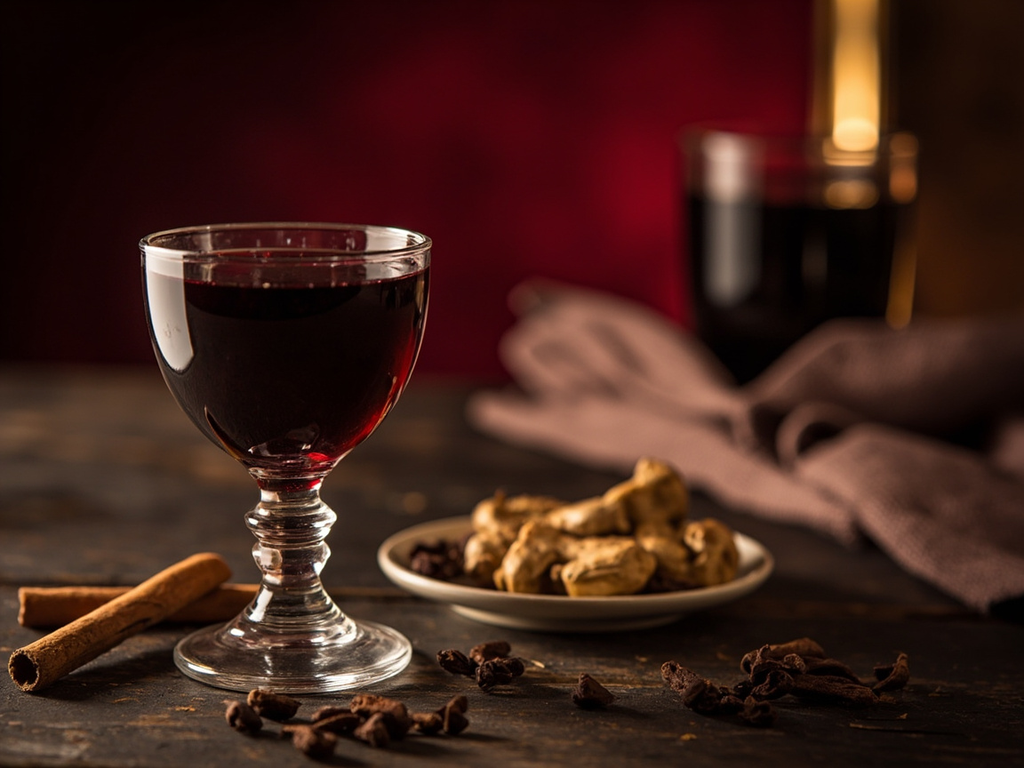
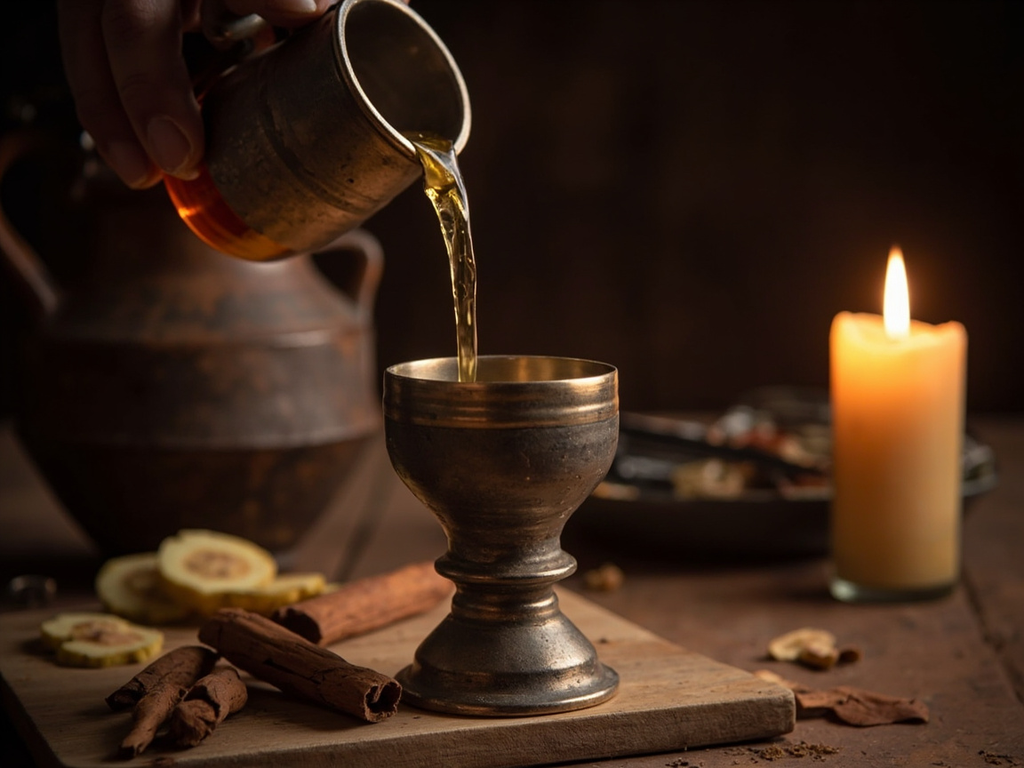
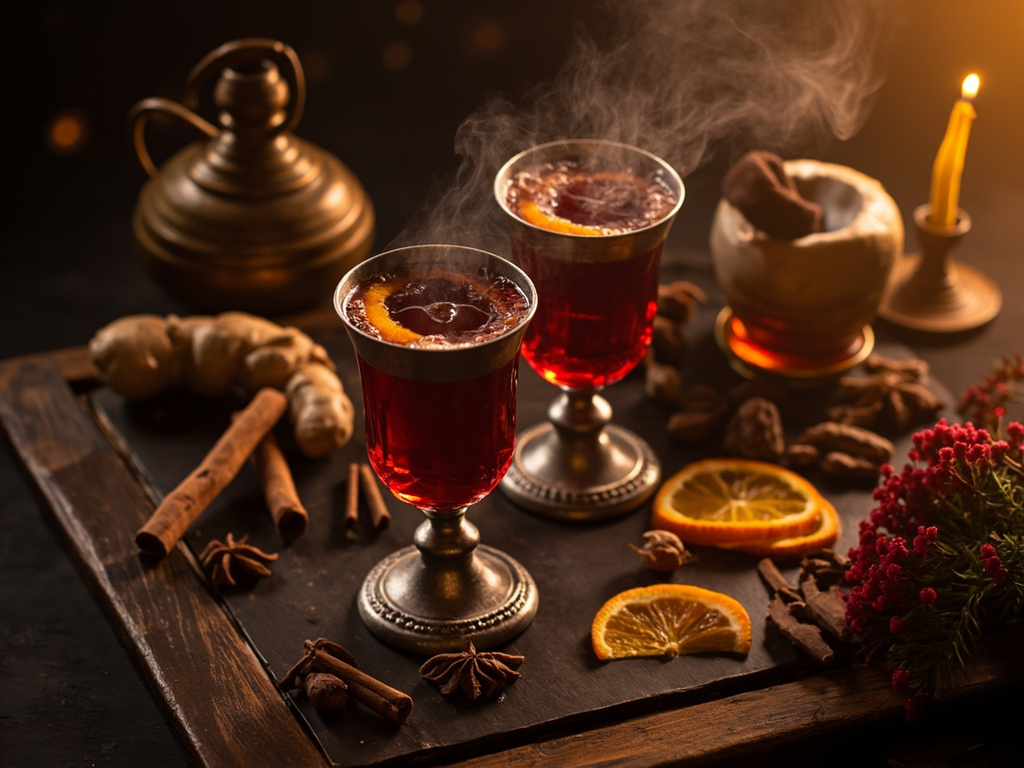
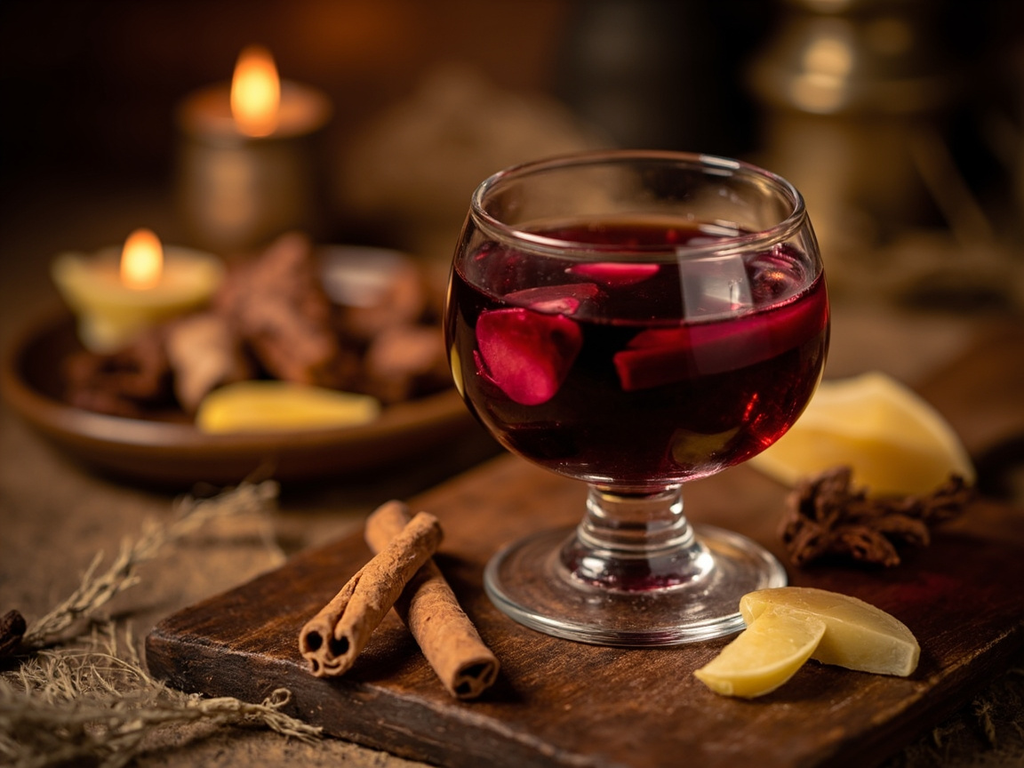
A local red wine infused with cinnamon, ginger, cloves, and grains of paradise, sweetened with honey or sugar, then filtered until clear and fragrant. Served at the end of the meal in small cups.
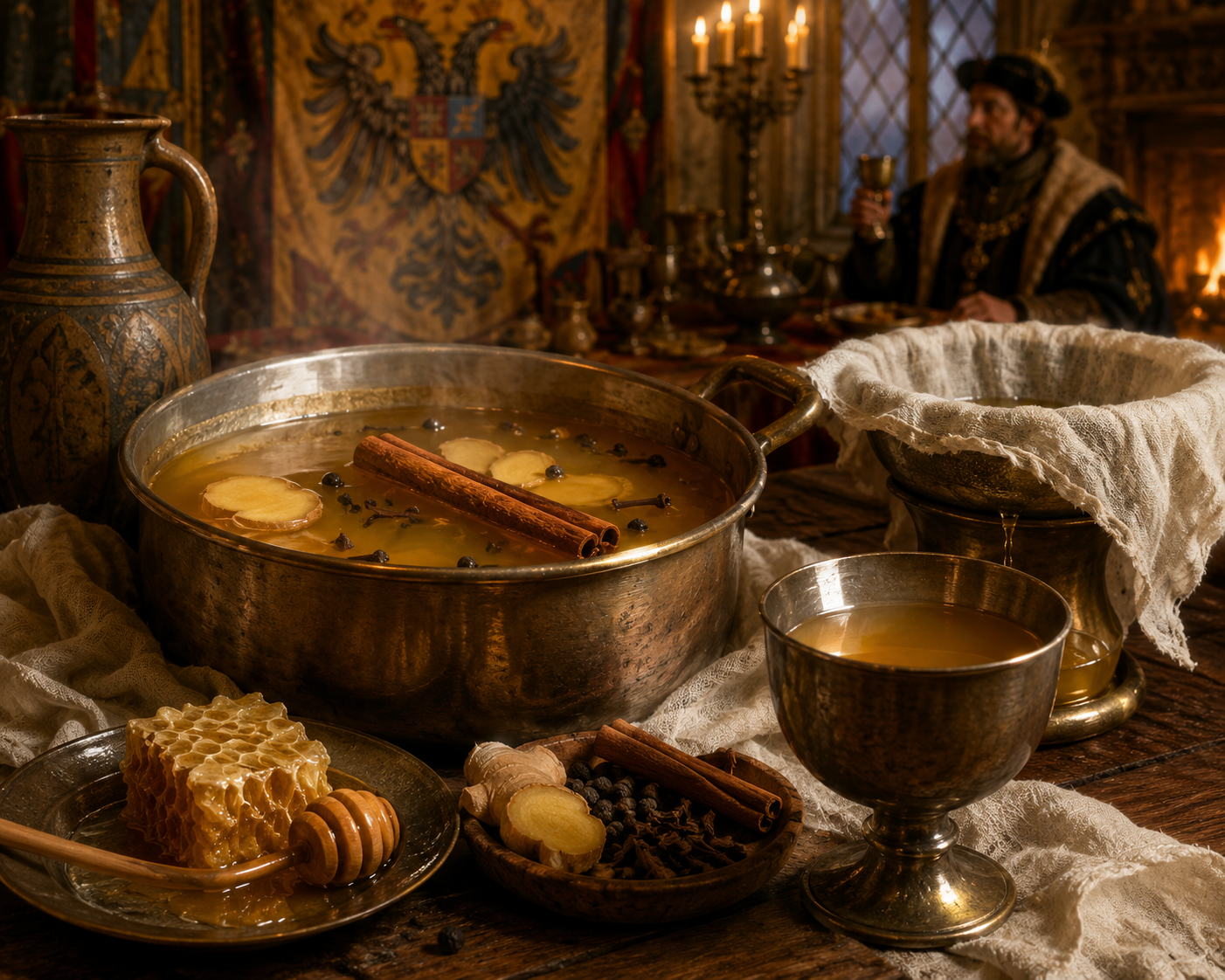
When the torches dimmed and the roasts were cleared, they brought the ipocrasso, and believe me, I did not disdain it. You take a good wine from the hills of Latium, you drown in it pounded cinnamon, ginger, and cloves, honey enough, then you pass it and repass it through a cloth bag until it is clear as a varnish. A cup of this warm nectar, and conversation flows on, light and gilded — that is how in Rome we sealed the stomach and friendship.
- •Red wine from Latium — a good measure (base)
- •Honey or sugar — to taste (sweetness)
- •Cinnamon — one stick (master spice)
- •Ginger — a piece (warmth)
- •Cloves — a few (spice)
- •Grains of paradise (melegueta pepper) — a pinch (period pungent spice)
Ipocrasso — spiced wine from Latium
A local red wine infused with cinnamon, ginger, cloves, and grains of paradise, sweetened with honey or sugar, then filtered until clear and fragrant. Served at the end of the meal in small cups.
Why this dish? Rome and Latium provided Raphael with the wines for his table as an established master. *Ipocrasso* — warmly spiced and sweetened wine — closed the banquets of his patrons and accompanied the preserves of the last service. A festive and comforting drink, it was also said to 'warm the stomach'.
When the torches dimmed and the roasts were cleared, they brought the ipocrasso, and believe me, I did not disdain it. You take a good wine from the hills of Latium, you drown in it pounded cinnamon, ginger, and cloves, honey enough, then you pass it and repass it through a cloth bag until it is clear as a varnish. A cup of this warm nectar, and conversation flows on, light and gilded — that is how in Rome we sealed the stomach and friendship.
Ingredients (period version)
- Red wine from Latium — a good measure (base)
- Honey or sugar — to taste (sweetness)
- Cinnamon — one stick (master spice)
- Ginger — a piece (warmth)
- Cloves — a few (spice)
- Grains of paradise (melegueta pepper) — a pinch (period pungent spice)
Ingredients
- Full-bodied red wine (a Lazio or Mediterranean red) — 75 cl (base)
- Honey — 80 g (or 80 g sugar) (sweetness)
- Cinnamon — 1 stick (master spice)
- Fresh ginger — 4-5 slices (warmth)
- Cloves — 4 (spice)
- Grains of paradise (or long pepper as substitute) — a pinch (mild heat)
Method
- Gently heat the wine with honey without boiling.
- Add cinnamon, ginger, cloves, and grains of paradise; infuse over very low heat for 20-30 minutes.
- Filter several times through a fine cloth until clear.
- Serve warm in small cups (non-alcoholic version: replace wine with heated red grape juice).
How it was made : *Ypocras* (*ipocrasso*) was drunk throughout Europe from the late Middle Ages to the Renaissance. It was filtered through a 'Hippocratic sleeve', hence its name. Grains of paradise and long pepper were common spices then, now rarer.
The contemporary twist : Served chilled in summer in small frosted glasses, under the name 'Farnesina cup': the coolness reveals cinnamon and ginger differently.
Sources : Bartolomeo Platina, De honesta voluptate, 1474 · Le Ménagier de Paris, c. 1393 (ypocras recipe, pan-European diffusion)
Raphael · Charactorium