 flip
flipIppocrasso (spiced hypocras wine)
Ippocrasso (spiced hypocras wine)
Why this dish? Chigi took pride in his Tuscan and Greek wines. To close his banquets, ippocrasso was served, this spiced wine filtered through 'Hippocrates's sleeve': liquid luxury where sugar and spices from the Levant — the very trade routes that made his fortune — were drunk in full cups.
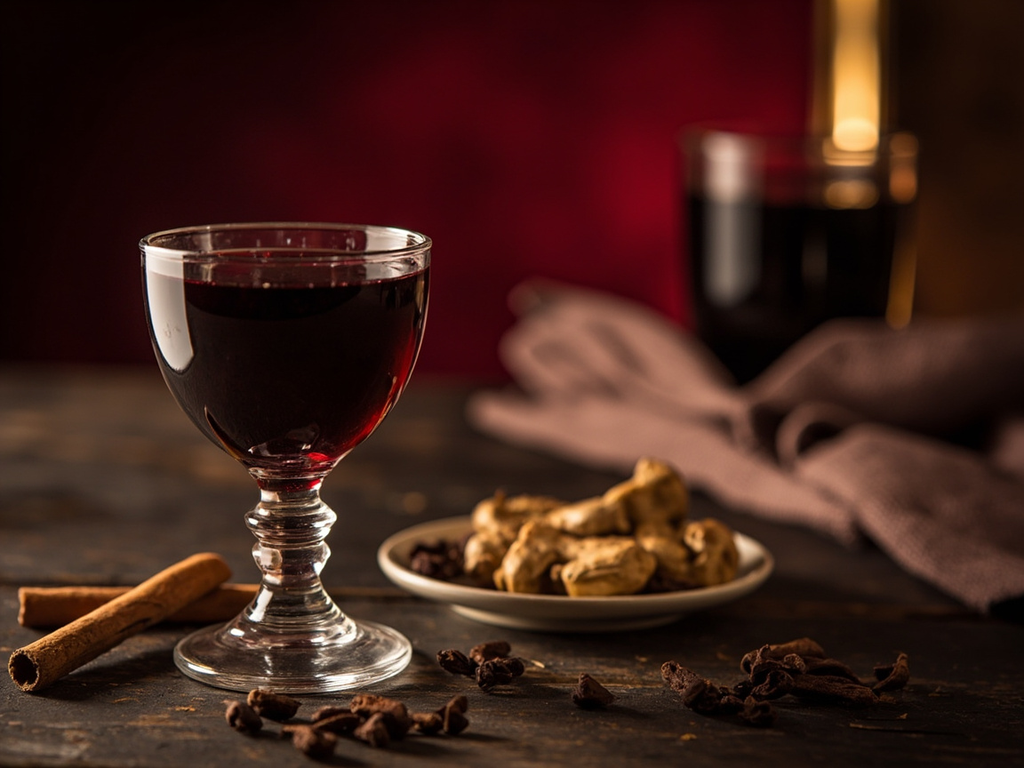
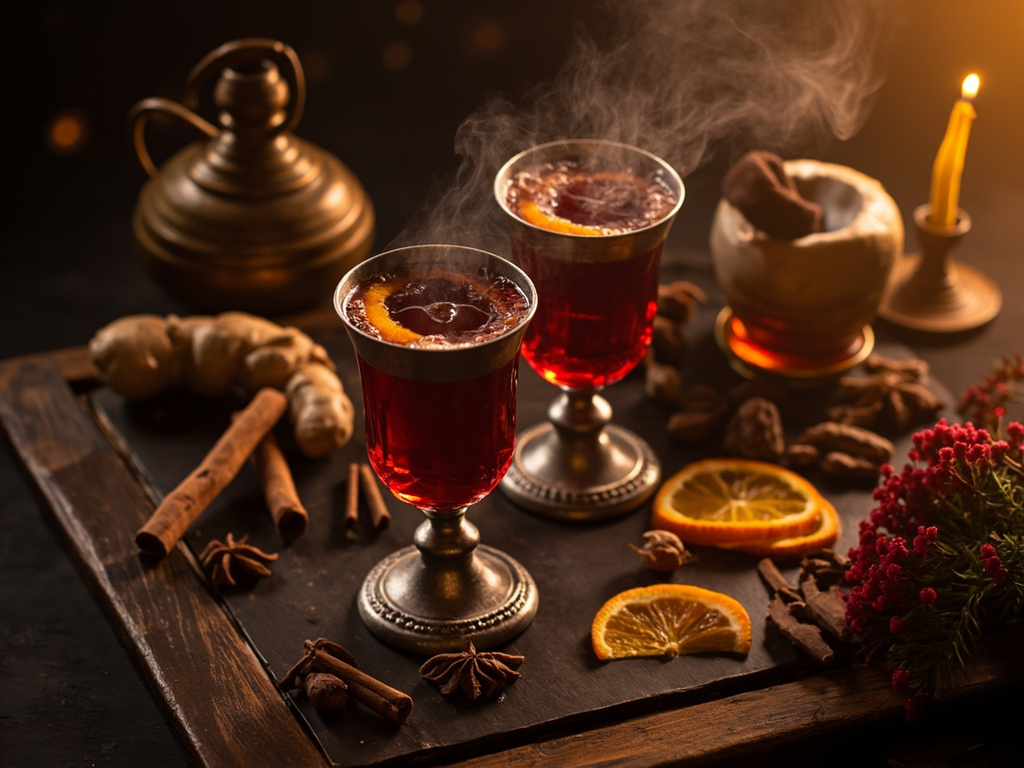
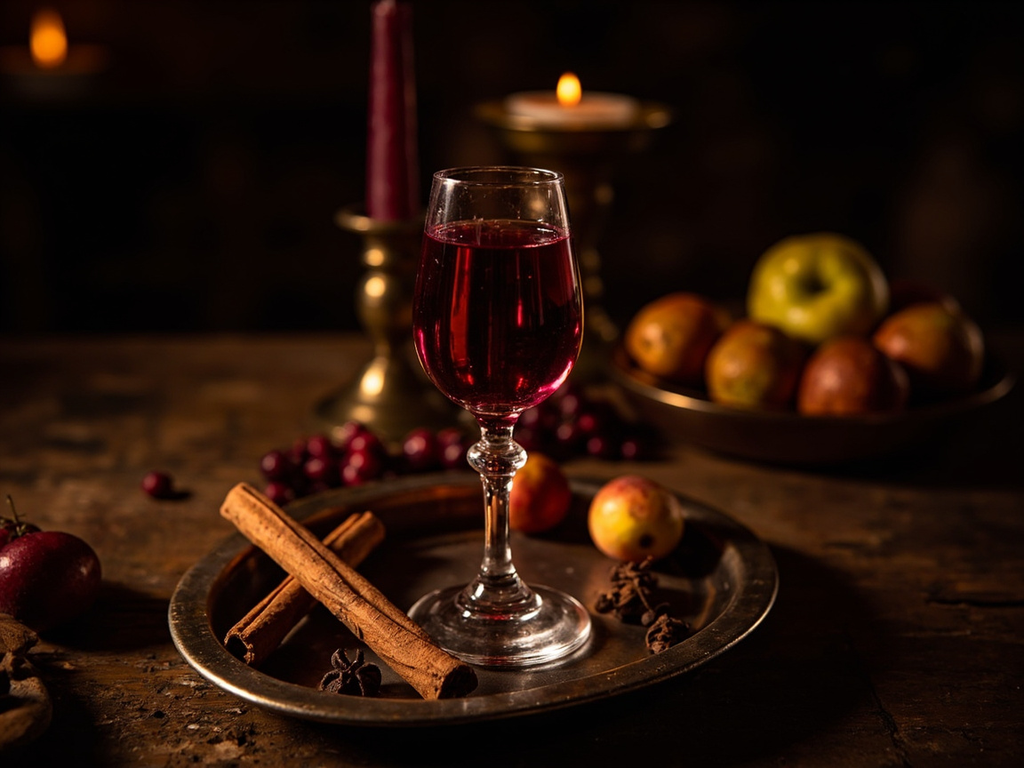
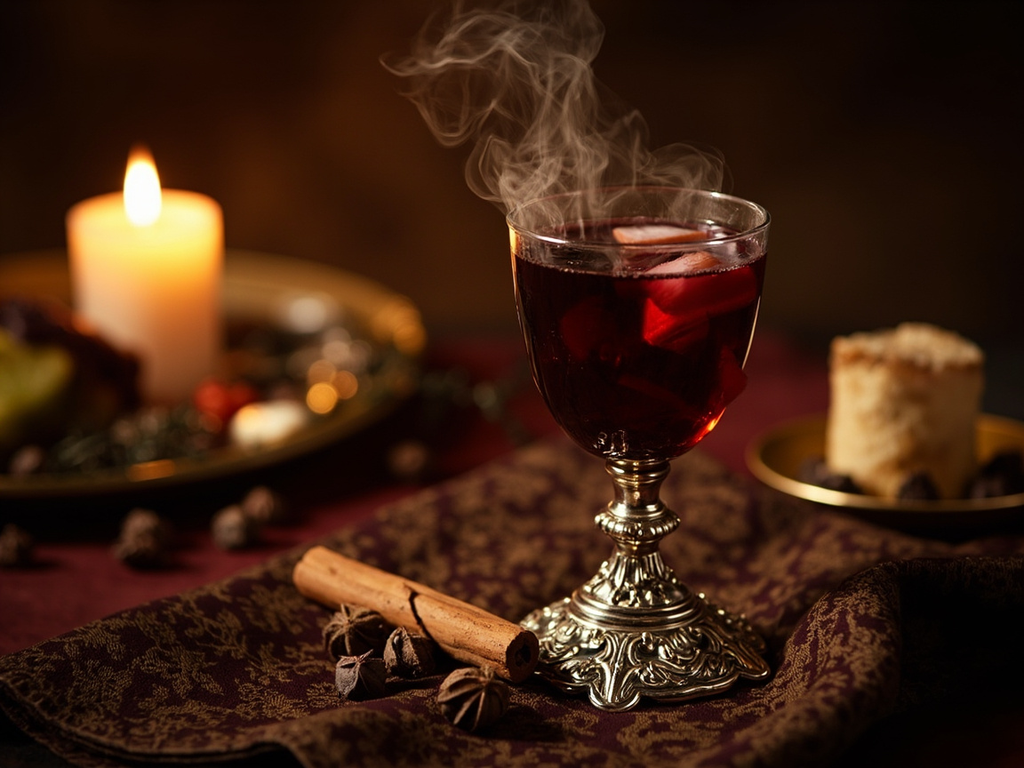
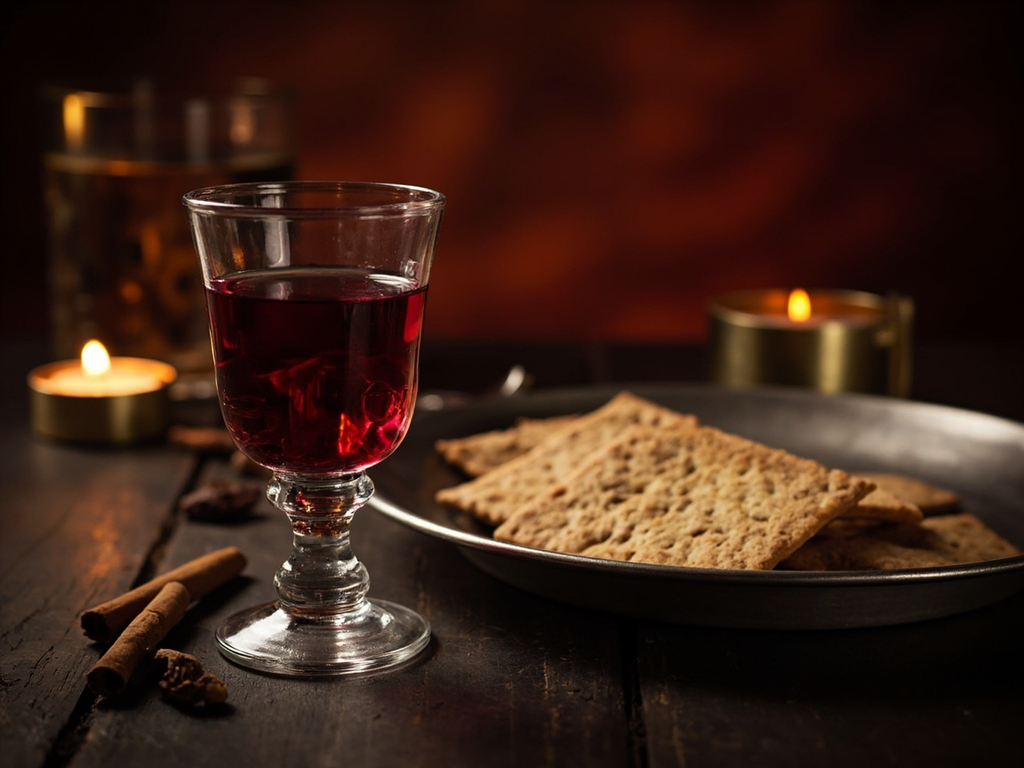
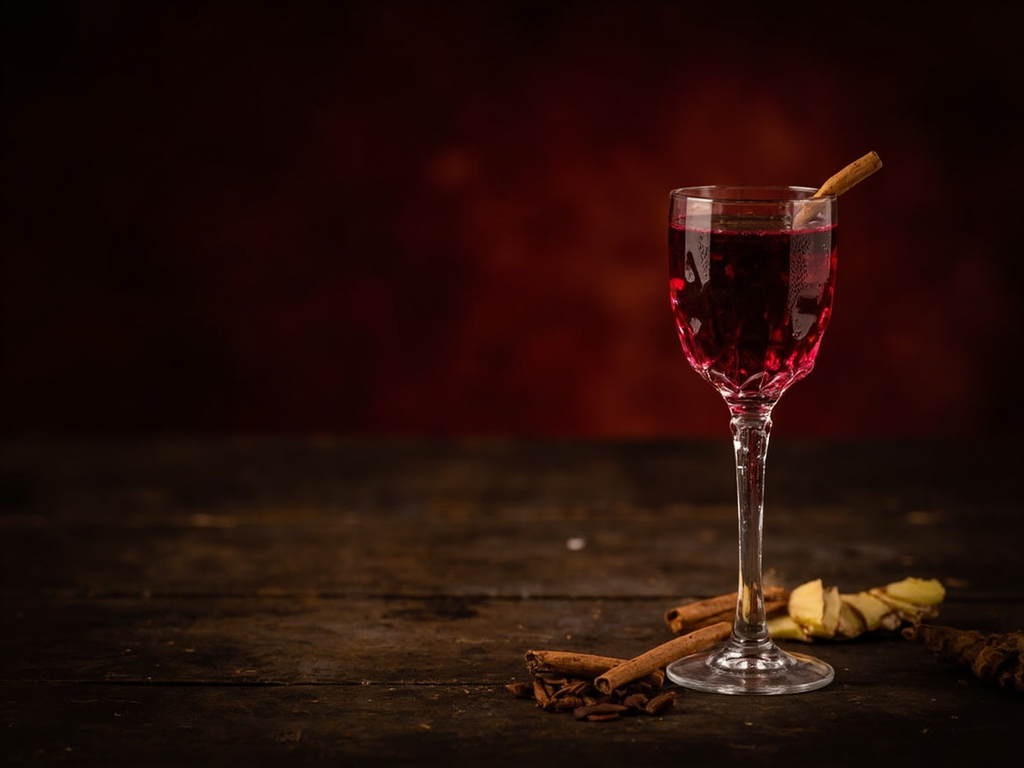
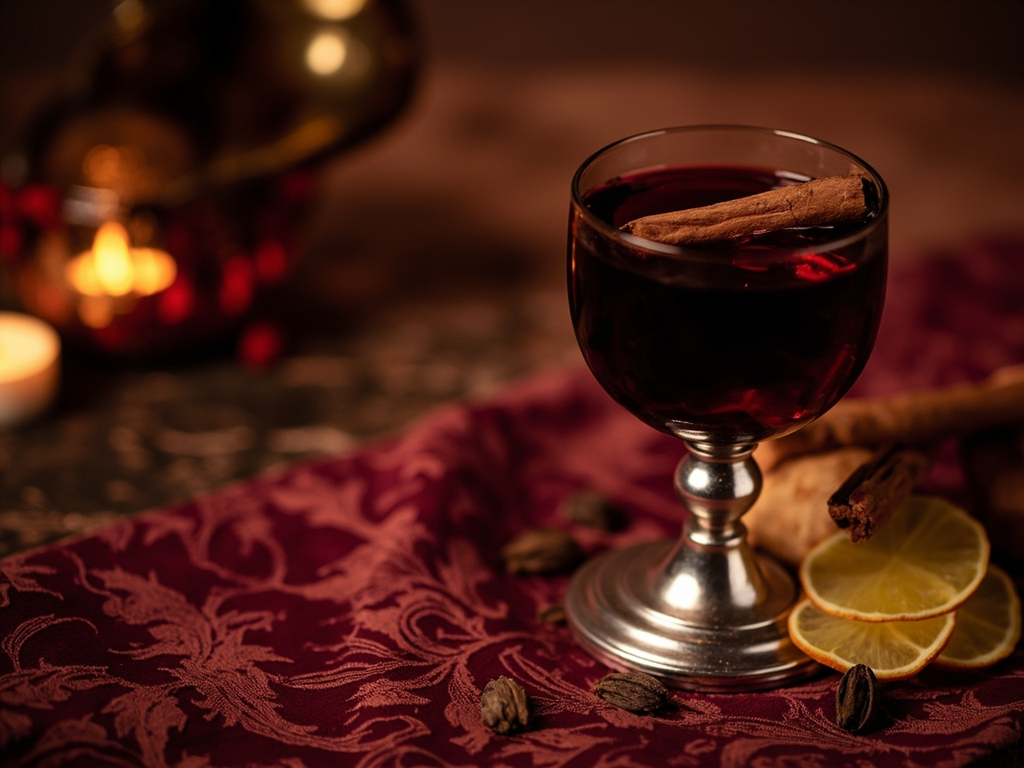
Red wine heated and infused with cinnamon, ginger, cloves, and grains of paradise, sweetened with sugar, then filtered until clear. A digestive and warming drink that perfumed the end of grand Renaissance meals.
When the courses end and the lutes fall silent, comes the hour of ippocrasso. I want my Greek or Tuscan wine, the best from my cellars, warmed without boiling — otherwise it loses its soul — with cinnamon, ginger, cloves, and those grains of paradise that cost a fortune. A good dose of sugar, then we pass it again and again through Hippocrates's sleeve until it is clear as a ruby. Drink, my friends: it rejoices the heart and warms friendship.
- •Red wine from Tuscany or Greece — a pitcher (base)
- •Cinnamon — one stick (master spice)
- •Ginger — a piece (warmth)
- •Cloves — a few (perfume)
- •Grains of paradise (or pepper) — a pinch (noble pungency)
- •Sugar — a generous hand (sweetness)
Ippocrasso (spiced hypocras wine)
Red wine heated and infused with cinnamon, ginger, cloves, and grains of paradise, sweetened with sugar, then filtered until clear. A digestive and warming drink that perfumed the end of grand Renaissance meals.
Why this dish? Chigi took pride in his Tuscan and Greek wines. To close his banquets, ippocrasso was served, this spiced wine filtered through 'Hippocrates's sleeve': liquid luxury where sugar and spices from the Levant — the very trade routes that made his fortune — were drunk in full cups.
When the courses end and the lutes fall silent, comes the hour of ippocrasso. I want my Greek or Tuscan wine, the best from my cellars, warmed without boiling — otherwise it loses its soul — with cinnamon, ginger, cloves, and those grains of paradise that cost a fortune. A good dose of sugar, then we pass it again and again through Hippocrates's sleeve until it is clear as a ruby. Drink, my friends: it rejoices the heart and warms friendship.
Ingredients (period version)
- Red wine from Tuscany or Greece — a pitcher (base)
- Cinnamon — one stick (master spice)
- Ginger — a piece (warmth)
- Cloves — a few (perfume)
- Grains of paradise (or pepper) — a pinch (noble pungency)
- Sugar — a generous hand (sweetness)
Ingredients
- Full-bodied red wine — 1 bottle (750 ml) (base)
- Cinnamon stick — 1 (spice)
- Fresh ginger — 3 thin slices (warmth)
- Cloves — 4 (perfume)
- Grains of paradise or black pepper — 1/2 teaspoon (pungency)
- Sugar — 80 g (adjust to taste) (sweetness)
Method
- Pour the wine into a saucepan, add sugar and all spices.
- Heat very gently without ever boiling (the alcohol and aromas must remain); keep warm for 15–20 minutes to infuse.
- Taste and adjust sugar as desired.
- Filter carefully through a fine cloth (Hippocrates's sleeve) until the wine is clear.
- Serve warm in small cups.
How it was made : Hypocras (ippocrasso) was the quintessential spiced drink of the late Middle Ages and Renaissance, served at the close of banquets. Its name comes from the conical cloth filter, 'Hippocrates's sleeve,' through which it was clarified. It was flavored according to one's purse: the richest used Ceylon cinnamon, cloves, and grains of paradise imported at great expense.
The contemporary twist : Non-alcoholic version: replace wine with red grape juice and a splash of vinegar, same spices — a family-friendly 'hypocras' for winter evenings.
Sources : Le Ménagier de Paris (1393) — recipe for hypocras · Common practice of Italian Renaissance banquets
Agostino Chigi · Charactorium