 flip
flipYaqona (ceremonial kava)
Yaqona (ceremonial kava)
Why this dish? *Yaqona* (kava) was at the heart of Cakobau's political life. No alliance was sealed, no council held without the kava ceremony. It was while drinking *yaqona* that Cakobau received British envoys and that the cession of Fiji was negotiated in 1874. The *tanoa* (kava bowl) is one of his emblematic objects.
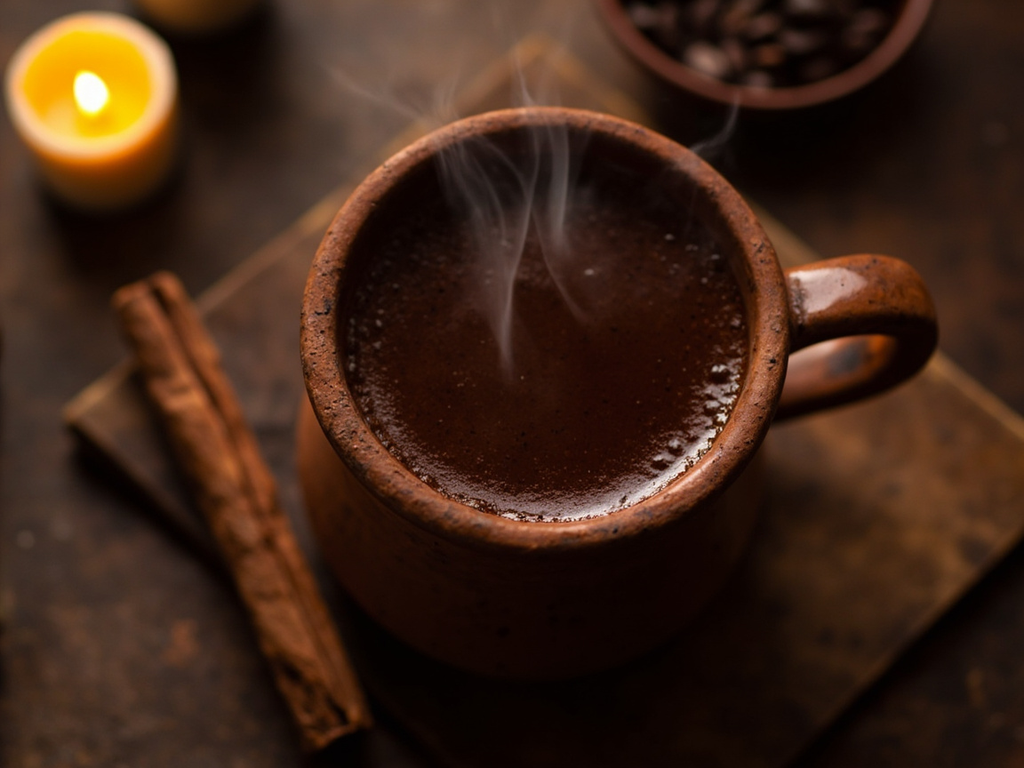
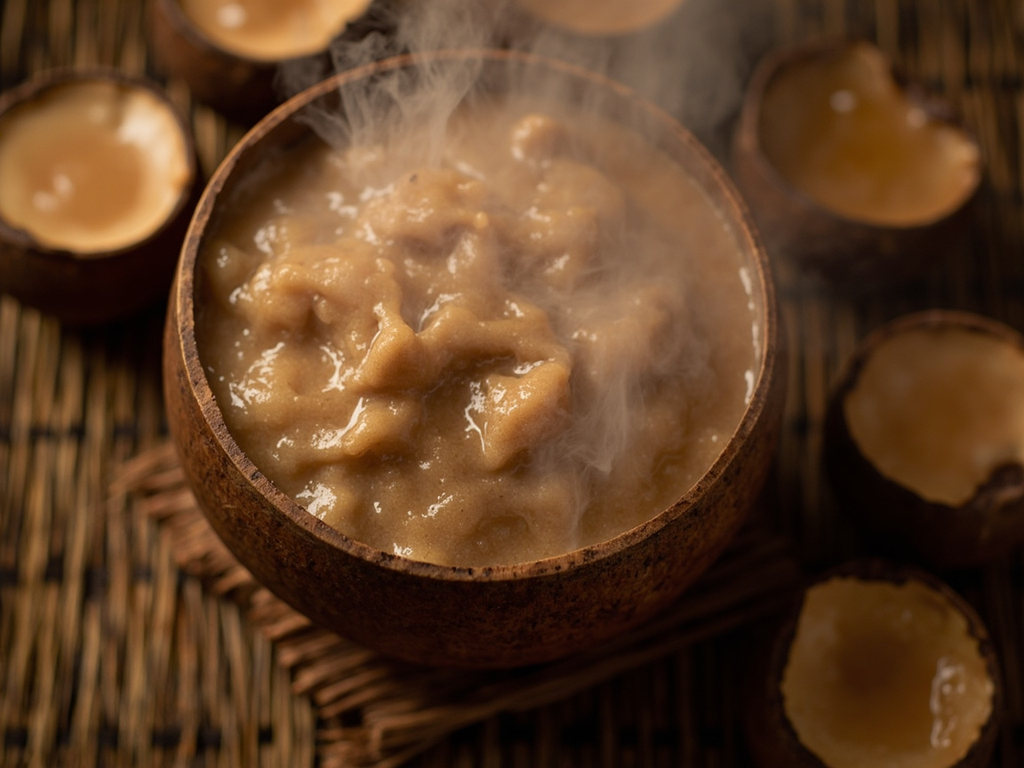
An earthy, slightly bitter drink made from dried and pounded kava root, diluted in water and strained. It causes a mild numbing of the mouth and a relaxing effect. *Yaqona* is not alcohol but a fundamental social and diplomatic beverage in Fiji.
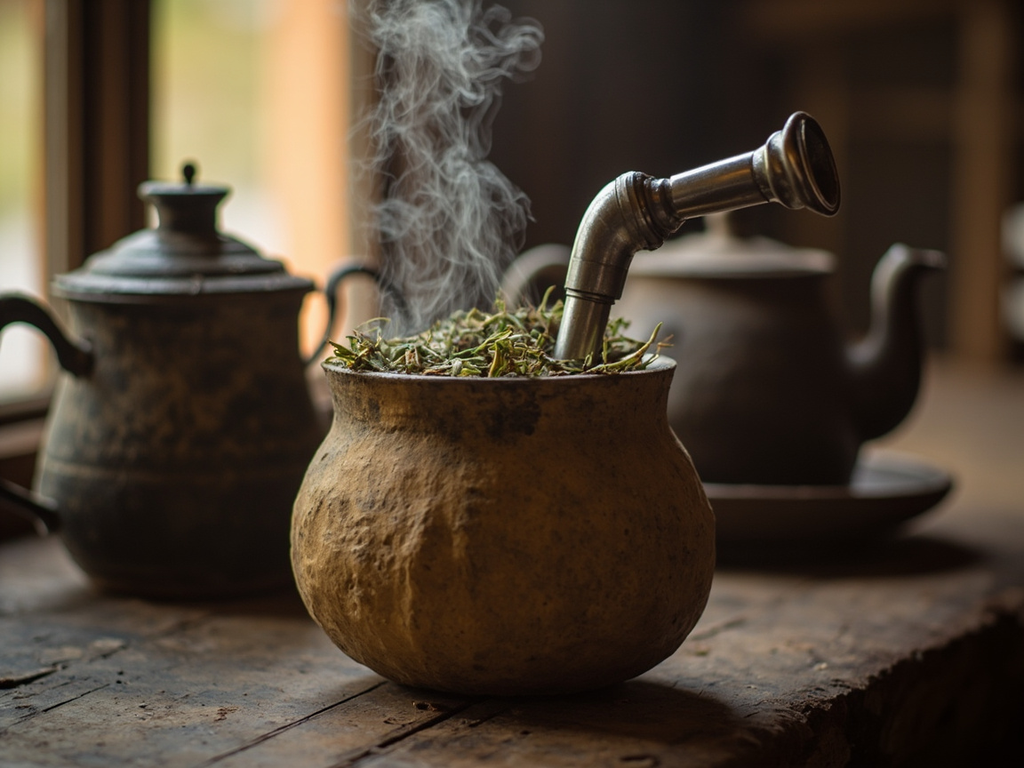
Nothing begins at Bau without the *tanoa*. When I receive a chief, the *yaqona* is brought first — it is the word before the word, the respect before the request. My men pound the root with force, the women strain and mix. The first cup is for me, the *Vunivalu*. The second for my guest. Only then can we speak of war or peace. The day I received the English to cede my islands to them, it was *yaqona* that opened the path.
- •Dried kava root (waka — lateral roots) — A good handful (Beverage base)
- •Fresh water — As needed for desired strength (Diluent)
- •Pandanus or hibiscus fiber (for straining) — One piece (Filter)
Yaqona (ceremonial kava)
An earthy, slightly bitter drink made from dried and pounded kava root, diluted in water and strained. It causes a mild numbing of the mouth and a relaxing effect. *Yaqona* is not alcohol but a fundamental social and diplomatic beverage in Fiji.
Why this dish? *Yaqona* (kava) was at the heart of Cakobau's political life. No alliance was sealed, no council held without the kava ceremony. It was while drinking *yaqona* that Cakobau received British envoys and that the cession of Fiji was negotiated in 1874. The *tanoa* (kava bowl) is one of his emblematic objects.
Nothing begins at Bau without the *tanoa*. When I receive a chief, the *yaqona* is brought first — it is the word before the word, the respect before the request. My men pound the root with force, the women strain and mix. The first cup is for me, the *Vunivalu*. The second for my guest. Only then can we speak of war or peace. The day I received the English to cede my islands to them, it was *yaqona* that opened the path.
Ingredients (period version)
- Dried kava root (waka — lateral roots) — A good handful (Beverage base)
- Fresh water — As needed for desired strength (Diluent)
- Pandanus or hibiscus fiber (for straining) — One piece (Filter)
Ingredients
- Kava powder (noble, Fijian variety if possible) — 30 g (about 4 tbsp) (Beverage base)
- Fresh water — 1 liter (Diluent)
- Cheesecloth or fine cloth (muslin type) — 1 square 30 cm (Filter)
Method
- Place the kava powder in the center of the cloth. Gather the edges to form a pouch.
- Immerse the pouch in a large bowl containing 1 liter of fresh water (never hot).
- Knead and squeeze the pouch firmly in the water for 5 to 10 minutes, regularly wringing and re-submerging. The water should become cloudy and brown, like clay water.
- Remove the pouch and wring it one last time. Discard the grounds.
- Serve in small bowls (*bili*) or half coconut shells. Drink in one gulp, followed by a clap of the hands (*cobo*).
- Note: kava slightly numbs the tongue and lips; this is normal. Do not consume with alcohol.
How it was made : In Fiji, kava root was traditionally chewed by young men or women to reduce it to pulp before straining — a practice gradually replaced by pounding under missionary influence in the 19th century. The *yaqona* ceremony (*sevusevu*) follows strict protocol: serving order by rank, ritual formulas, hand claps. It remains alive in Fiji today.
The contemporary twist : Present the *yaqona* in a miniature wooden *tanoa*, with polished half coconut shells as cups, to recreate the atmosphere of a Fijian kava circle.
Sources : Singh, Yadhu N., Kava: An Overview, Journal of Ethnopharmacology, 1992 · Lebot, Vincent, Merlin, Mark, and Lindstrom, Lamont, Kava: The Pacific Elixir, Yale University Press, 1992 · Derrick, R.A., A History of Fiji, Government Press, Suva, 1946
Ratu Seru Cakobau · Charactorium