 flip
flipPain Perdu du Matin
Pain Perdu du Matin
Why this dish? Desnos lived as a modest Parisian, where nothing was wasted. Yesterday's bread, hardened, never ended up in the trash: soaked in milk and egg, it became a treat. A poet's dish, precisely—it turns scraps into wonders, just as he turned worn-out words into new games.
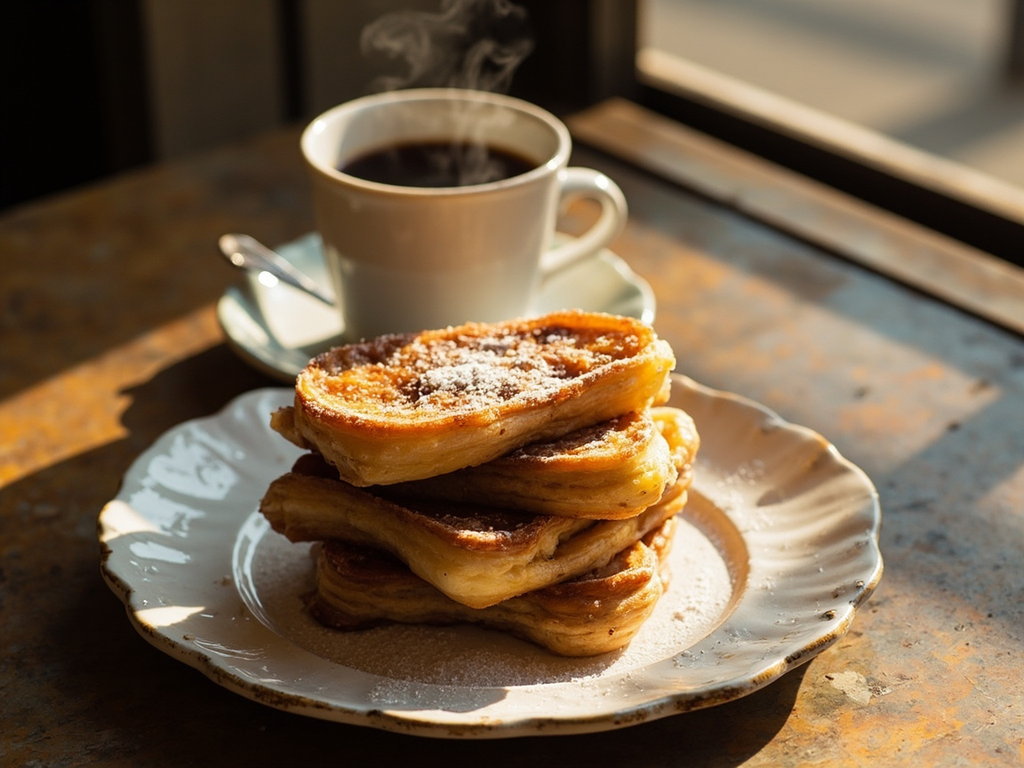
Slices of stale bread revived in a bath of sweetened milk and beaten egg, browned in butter in the pan until the outside is crispy and the inside melting. The little luxury of poor Sundays.
Comrade, never throw away your stale bread—it's a crime against poetry! At home we called it pain perdu, but lost for whom? Found, yes, resurrected in milk and egg like a rhyme we thought was dead. My mother would brown it in butter while singing, and the smell rose up the stairs better than any advertisement. You bite into it hot, the sugar crackles, the inside melts—and you're rich for pennies.
- •Stale bread (baguette or country loaf) — a few thick slices (base, recovery of yesterday's bread)
- •Whole milk — one bowl (soften the crumb)
- •Eggs — two or three (golden binder)
- •Sugar — a generous pinch (sweetness)
- •Butter — a knob (cooking, browning)
Pain Perdu du Matin
Slices of stale bread revived in a bath of sweetened milk and beaten egg, browned in butter in the pan until the outside is crispy and the inside melting. The little luxury of poor Sundays.
Why this dish? Desnos lived as a modest Parisian, where nothing was wasted. Yesterday's bread, hardened, never ended up in the trash: soaked in milk and egg, it became a treat. A poet's dish, precisely—it turns scraps into wonders, just as he turned worn-out words into new games.
Comrade, never throw away your stale bread—it's a crime against poetry! At home we called it pain perdu, but lost for whom? Found, yes, resurrected in milk and egg like a rhyme we thought was dead. My mother would brown it in butter while singing, and the smell rose up the stairs better than any advertisement. You bite into it hot, the sugar crackles, the inside melts—and you're rich for pennies.
Ingredients (period version)
- Stale bread (baguette or country loaf) — a few thick slices (base, recovery of yesterday's bread)
- Whole milk — one bowl (soften the crumb)
- Eggs — two or three (golden binder)
- Sugar — a generous pinch (sweetness)
- Butter — a knob (cooking, browning)
Ingredients
- Thick stale bread — 6 slices (base)
- Whole milk — 250 ml (soaking)
- Eggs — 2 (binder)
- Sugar — 2 tbsp (sweetness)
- Butter — 30 g (cooking)
- Vanilla sugar or cinnamon — 1 packet (optional) (flavoring)
Method
- Beat the eggs with the sugar (and vanilla sugar) in a shallow dish, add the milk and mix.
- Dip each slice of bread into the mixture, 30 seconds per side, without soaking through.
- Melt the butter in a frying pan over medium heat.
- Brown the slices 2 to 3 minutes on each side until nicely colored.
- Serve immediately, sprinkled with a little sugar, with a large coffee.
How it was made : A poverty dish of domestic economy attested since the Middle Ages under a thousand names, pain perdu was in early 20th-century working-class Paris the breakfast or snack of modest families: bread, a sacred commodity, was never thrown away. During the Occupation, when bread was rationed from 1940, every last crust became precious.
The contemporary twist : Stacked, drizzled with honey and grated orange zest—renamed Le Pain Retrouvé, a wink to the poet who never lost anything.
Sources : Auguste Escoffier, Le Guide culinaire, 1903 · Cuisine populaire parisienne, tradition orale
Robert Desnos · Charactorium