 flip
flipFlemish Carbonade with Bière de Garde
Flemish Carbonade with Bière de Garde
Why this dish? Calmette founded the Pasteur Institute of Lille in 1895 and worked there for nearly forty years, until 1919. In the North of breweries and estaminets, carbonade braised in brown beer was THE winter evening dish — the one a doctor returning late from the laboratory would find steaming on the table.
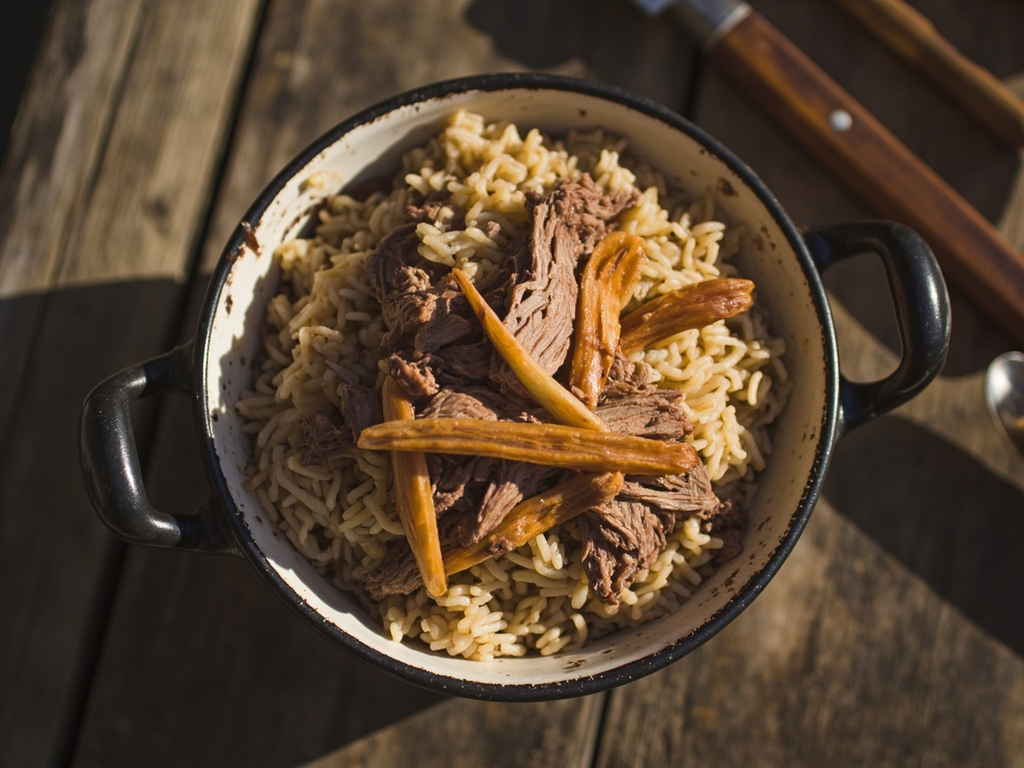
Tender beef long-braised in brown beer with onions, thickened with mustard-spread gingerbread and sweetened with brown sugar. Bittersweet, comforting, deeply Northern.
You see, when I left the laboratory long after the bells had rung, it was this scent of brown beer and onion that awaited me. The secret, I assure you, lies in two things: a bière de garde from our breweries, never a bland lager, and a slice of gingerbread spread with mustard that melts into the sauce to thicken it. Nothing is rushed; you let it simmer as you let a culture take its time in the incubator. It is patient chemistry, and patience, believe me, is the first virtue of the scientist as well as the cook.
- •Beef for braising (chuck, shin) — a fine piece (stewing meat)
- •Brown bière de garde from the North — enough to cover (braising liquid)
- •Onions — several (aromatic base)
- •Gingerbread — a few slices (thickener and spice)
- •Mustard — to spread (sharpness)
- •Brown sugar — a spoonful (sweet-sour balance)
- •Lard — a knob (cooking fat)
Flemish Carbonade with Bière de Garde
Tender beef long-braised in brown beer with onions, thickened with mustard-spread gingerbread and sweetened with brown sugar. Bittersweet, comforting, deeply Northern.
Why this dish? Calmette founded the Pasteur Institute of Lille in 1895 and worked there for nearly forty years, until 1919. In the North of breweries and estaminets, carbonade braised in brown beer was THE winter evening dish — the one a doctor returning late from the laboratory would find steaming on the table.
You see, when I left the laboratory long after the bells had rung, it was this scent of brown beer and onion that awaited me. The secret, I assure you, lies in two things: a bière de garde from our breweries, never a bland lager, and a slice of gingerbread spread with mustard that melts into the sauce to thicken it. Nothing is rushed; you let it simmer as you let a culture take its time in the incubator. It is patient chemistry, and patience, believe me, is the first virtue of the scientist as well as the cook.
Ingredients (period version)
- Beef for braising (chuck, shin) — a fine piece (stewing meat)
- Brown bière de garde from the North — enough to cover (braising liquid)
- Onions — several (aromatic base)
- Gingerbread — a few slices (thickener and spice)
- Mustard — to spread (sharpness)
- Brown sugar — a spoonful (sweet-sour balance)
- Lard — a knob (cooking fat)
Ingredients
- Beef chuck, cut into large cubes — 1 kg (stewing meat)
- Brown beer (bière de garde) — 50 cl (braising liquid)
- Sliced onions — 500 g (aromatic base)
- Gingerbread — 2 slices (thickener and spice)
- Mustard — 2 tbsp (sharpness)
- Brown sugar — 1 tbsp (sweet-sour balance)
- Butter or lard — 30 g (cooking fat)
- Salt, pepper, bay leaf — to taste (seasoning)
Method
- Sear the beef cubes on all sides in hot butter, in batches, then set aside.
- Cook the sliced onions over low heat until golden, scraping up the browned bits.
- Return the meat, sprinkle with brown sugar, pour in the brown beer to cover, add the bay leaf.
- Spread the gingerbread slices with mustard and place them on top; they will melt and thicken the sauce.
- Cover and simmer for 2.5 to 3 hours over very low heat, until the meat shreds with a fork.
- Adjust salt and pepper. Serve with fries or steamed potatoes.
How it was made : In the estaminets of the North and Flanders, carbonade was made with local beer — each brewery had its own — and stale bread or gingerbread was used to thicken the sauce without waste. It was kept warm for hours on the corner of the stove.
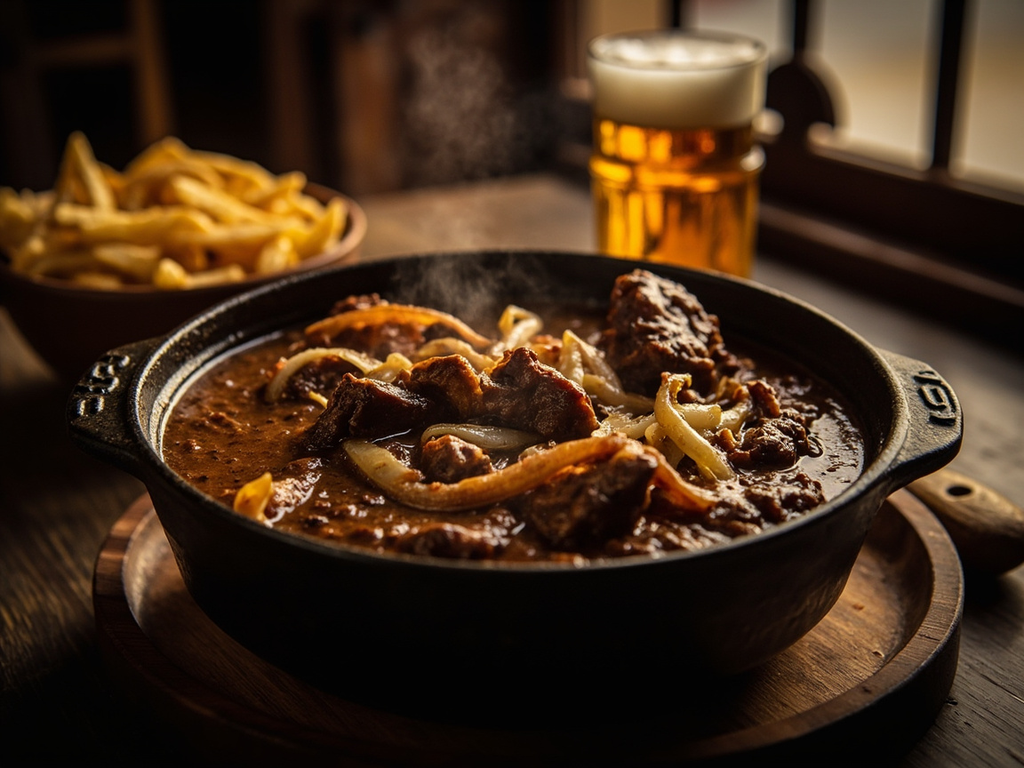
The contemporary twist : Serve it in individual cast-iron cocottes with a cone of homemade fries planted on top and a toasted cube of gingerbread — a nod to the original thickener.
Sources : Madame E. Saint-Ange, Le Livre de cuisine de Madame Saint-Ange (1927)
Albert Calmette · Charactorium