 flip
flipRillettes au Pot du Bistrot
Rillettes au Pot du Bistrot
Why this dish? Desnos's record reminds us: he ate simply, cheeses and bistro charcuterie. Rillettes, pork long-cooked in its own fat and preserved under its own fat, were the quintessential popular pork product—a pot that keeps, spread on bread at the counter with a few cornichons and a glass of red.
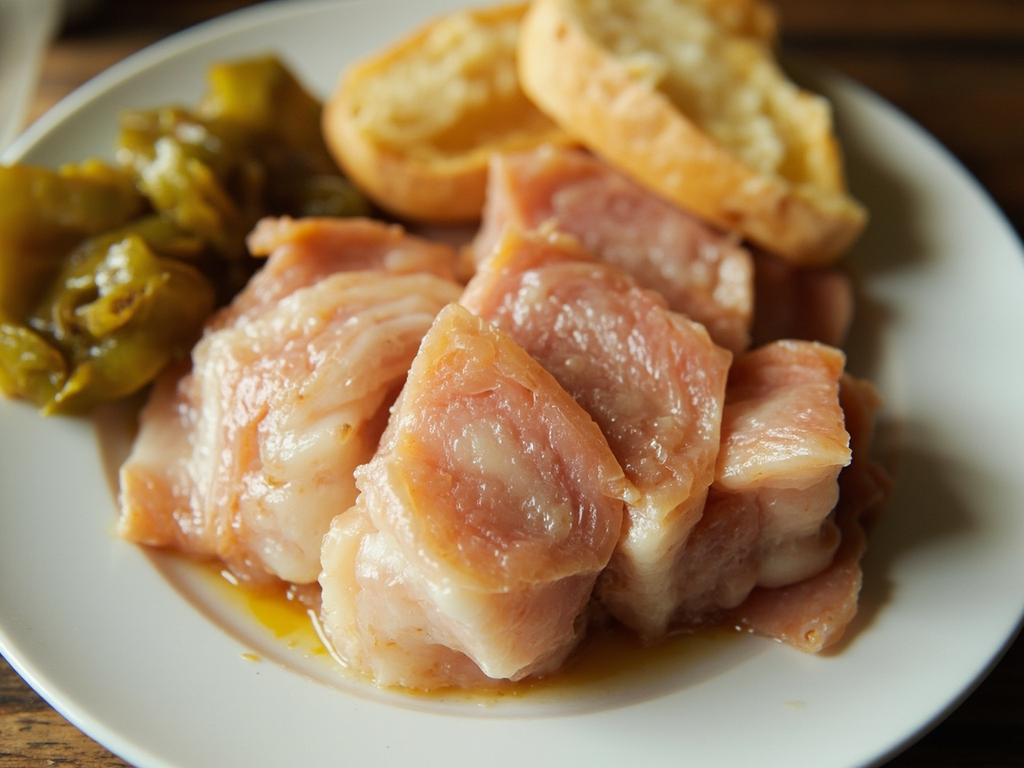
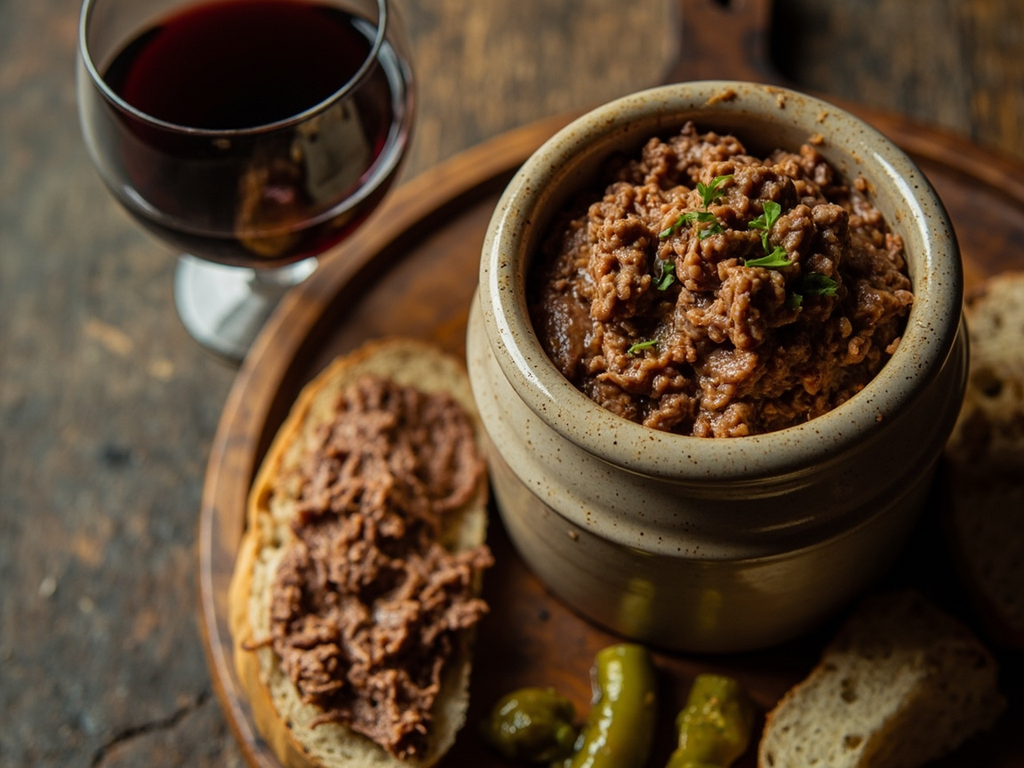
Pork cooked for hours in its own fat until it shreds, salted and preserved in a pot. A rillettes tartine, tangy cornichons, country bread: the rustic happiness of the counter.
Rillettes are the wisdom of the pig made into a tartine! You let the meat simmer for hours, very gently, in its own fat, until it falls apart like a secret you can no longer keep. You pack it into a pot, pour the fat over it to protect it, and it waits for you patiently in the cool for weeks. You spread it thick on country bread, crunch a tart cornichon alongside, a glug of red, and you're as happy as a poet paid in advance.
- •Pork shoulder and belly — good fatty pieces (meat to confit)
- •Lard / pork fat — enough to cover (cooking and preservation)
- •Salt — by hand (seasoning, preservation)
- •Pepper, thyme, bay leaf — to taste (flavoring)
Rillettes au Pot du Bistrot
Pork cooked for hours in its own fat until it shreds, salted and preserved in a pot. A rillettes tartine, tangy cornichons, country bread: the rustic happiness of the counter.
Why this dish? Desnos's record reminds us: he ate simply, cheeses and bistro charcuterie. Rillettes, pork long-cooked in its own fat and preserved under its own fat, were the quintessential popular pork product—a pot that keeps, spread on bread at the counter with a few cornichons and a glass of red.
Rillettes are the wisdom of the pig made into a tartine! You let the meat simmer for hours, very gently, in its own fat, until it falls apart like a secret you can no longer keep. You pack it into a pot, pour the fat over it to protect it, and it waits for you patiently in the cool for weeks. You spread it thick on country bread, crunch a tart cornichon alongside, a glug of red, and you're as happy as a poet paid in advance.
Ingredients (period version)
- Pork shoulder and belly — good fatty pieces (meat to confit)
- Lard / pork fat — enough to cover (cooking and preservation)
- Salt — by hand (seasoning, preservation)
- Pepper, thyme, bay leaf — to taste (flavoring)
Ingredients
- Pork shoulder — 600 g (meat)
- Fresh pork belly — 400 g (fat)
- Lard — 150 g (confit and seal)
- Salt — 15 g (seasoning)
- Pepper — 2 g (spice)
- Thyme and bay leaf — 1 sprig + 1 leaf (flavoring)
- Water — 1 glass (initial cooking liquid)
- Cornichons — for serving (acidity)
Method
- Cut the meat into large cubes. Place in a pot with the lard, salt, pepper, thyme, bay leaf, and a glass of water.
- Cook covered over very low heat for 3 to 4 hours, stirring occasionally, until the meat falls apart.
- Remove thyme and bay leaf. Shred the meat with a fork in its fat, adjust salt.
- Pack into pots, pour a little melted fat on top to seal, let cool.
- Keep refrigerated. Serve at room temperature on country bread with cornichons.
How it was made : Rillettes (from Le Mans, Tours) are an age-old peasant preservation technique: confiting pork in its fat allowed the meat to keep for weeks without refrigeration. In the early 20th century, they filled bistro counters and workers' baskets. During the Occupation, rationed pork made this pot even more precious.
The contemporary twist : Served in a verrine with a thin layer of peppered fat, warm toasted bread, and homemade pickles—bistro pork spread as an appetizer board.
Sources : Auguste Escoffier, Le Guide culinaire, 1903 · Jean-Pierre Coffe, Le Vrai Vivre, tradition charcutière française
Robert Desnos · Charactorium