
The Roc is a fabulous bird of gigantic size from Persian and Arab folklore, made popular by the tales of the One Thousand and One Nights. Powerful enough to carry off an elephant in its talons, it embodies the boundless excess of Eastern marvels.
Roc
Roc
7 min read
Frequently asked questions
Key Facts
- Appears in the voyages of Sinbad the Sailor, within the One Thousand and One Nights (a medieval compilation, with Arabic manuscripts dating from the 9th century onward)
- Described as able to lift and carry off an elephant in its talons
- Mentioned by medieval travelers such as Marco Polo (13th century), who placed it near Madagascar
- Its gigantic eggs and feathers are a recurring marvelous motif in Arabo-Persian literature
- Inspired the Western imagination concerning giant birds and far-off fabulous creatures
Works & Achievements
Collection of tales in which the Roc plays a central role (2nd and 5th voyages); the main source of its worldwide fame.
Collection of sailors' tales that codified the wonders of the Indian Ocean, including giant birds.
Illustrated cosmography describing the rukh; a model for the fantastical bestiaries of the Muslim world.
Travel account that spread across Europe the image of the Roc, capable of carrying off an elephant.
Travel narrative evoking the terror the rukh inspired in the sailors of the China Sea.
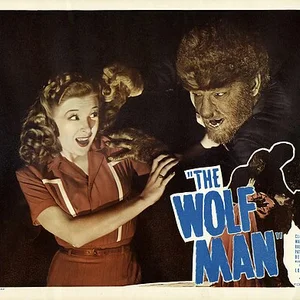
Famous film adaptation that gave the Roc a lasting visual image in the 20th century.
Anecdotes
In Sinbad the Sailor's second voyage (The Thousand and One Nights), the hero, marooned on an island, spots a vast, smooth white dome in the distance. Drawing closer, he realizes it is a Roc's egg. When the bird returns to brood, Sinbad ties his turban to one of its legs and lets himself be carried off into the air to escape the deserted island.
Around 1298, the Venetian merchant Marco Polo reports in his account that the Roc supposedly lived near Madagascar and was powerful enough to seize an elephant in its talons, lift it high into the air, then drop it to devour it. He claims that envoys of the Great Khan even brought back a “feather” from the bird — most likely a raffia palm frond.
In Sinbad's tale, cunning merchants exploit the Roc: they hurl large chunks of meat to the bottom of a valley full of unreachable diamonds. The precious stones stick to the meat, which the birds carry up to their nests, where the men need only gather the diamonds.
Historians today believe the legend of the Roc grew out of the real existence of the Aepyornis, a giant bird of Madagascar (now extinct) whose eggs could stand more than 30 centimetres tall. Sailors who saw these enormous eggs may well have imagined a bird capable of lifting an elephant.
In the 14th century, the great traveler Ibn Battuta tells of glimpsing a dark mass floating on the horizon in the China Sea. The terrified sailors believed it was the Roc swooping down on their ship and began to pray — before the wind carried them clear of the danger.
Primary Sources
I saw in the distance something white of prodigious size... The sky suddenly darkened as if a great cloud had covered it: it was a bird of extraordinary size, the roc, coming to cover its egg.
They say that this bird, which they call the ruc, is so great and so strong that it seizes an elephant in its talons, lifts it high into the air, then lets it fall to the ground so that it is dashed to pieces, and then it feeds on its flesh.
The rukh is a bird so immense that it carries off the elephant as the kite carries off the mouse; it is said to build its nest on the inaccessible peaks of the mountains.
The sailors of Siraf and Oman report that off the islands there lives a monstrous bird whose outspread wing blots out the sun and which no ship can withstand.
We saw at sea a mountain in the air; the passengers began to weep and to commend themselves to God, saying: it is the rukh, if it sees us, we are lost.
Key Places
Large island in the Indian Ocean where Marco Polo placed the Roc. It is also the homeland of the Aepyornis, the extinct elephant bird that may have inspired the legend.
Great port of Abbasid Iraq from which Sinbad the Sailor set sail on his voyages to distant seas filled with wonders.
Capital of the Abbasid Caliphate and heart of literary culture, where the tales of the One Thousand and One Nights were compiled and told.
Legendary valley, guarded by serpents and flown over by Rocs, where Sinbad gathers diamonds. Often associated with the island of Ceylon (Sri Lanka).
Cosmic mountain of Arab-Persian traditions, said to encircle the world. Mythical home of fabulous birds such as the Roc and the Simurgh.
Typical Objects

An egg as large as a building's dome, described by Sinbad as a white mass fifty paces around. It embodies the sheer immensity of the fabled bird.

An enormous feather brought back, according to Marco Polo, by envoys to the Great Khan; it was probably a raffia palm frond mistaken for a feather.

A long cloth wound around the head, a common garment of the Eastern sailor. Sinbad uses it to tie himself to the Roc's leg and fly off the desert island.

Precious stones heaped at the bottom of a valley guarded by serpents, which merchants retrieve with the help of the Rocs in Sinbad's tale.

Large chunks of meat thrown into the valley of diamonds: the stones cling to them and the Rocs carry them up to their nests, where the men gather them.

An Arab trading dhow plying the Indian seas; in the tales, sailors dread that the Roc may swoop down on their vessel or pelt it with boulders.
School Curriculum
Vocabulary & Tags
Key Vocabulary
Tags
Daily Life
Morning
At dawn, the Roc leaves its eyrie perched atop inaccessible peaks and soars above the islands of the Indian Ocean. It spots its prey from among the clouds, its immense shadow gliding across the sea.
Afternoon
In the heat of the day, it swoops down on its prey: according to the texts, it seizes an elephant or a rhinoceros in its talons, lifts it high into the air, then lets it fall to be dashed upon the rocks.
Evening
As evening falls, it returns to its nest built on a mountaintop or on Mount Qaf, where its giant egg rests. In the tales, it is this evening homecoming that Sinbad watches for in order to flee the island.
Food
A colossal carnivore, the Roc feeds, so the stories say, on elephants, rhinoceroses, and great serpents. Its power places it at the absolute pinnacle of imaginary predators.
Clothing
The Roc wears no clothing: its “attire” is a colossal plumage with wings so vast they blot out the sun, and talons likened to great tree trunks.
Housing
It nests on steep, inaccessible peaks, or on the mythical Mount Qaf that girdles the world. Its nest shelters an egg as large as a dome, a landmark that sailors avoid at all costs.
Historical Timeline
Period Vocabulary
Liens externes & ressources
Références
Œuvres
Les Mille et Une Nuits — Voyages de Sinbad le marin
IXe-XIVe siècle
Kitab Aja'ib al-Hind (Livre des merveilles de l'Inde), Buzurg ibn Shahriyar
Xe siècle
Aja'ib al-makhluqat (Les Merveilles de la Création), Al-Qazwini
vers 1270
Le Devisement du monde, Marco Polo
vers 1298
Rihla (Voyages), Ibn Battuta
vers 1355