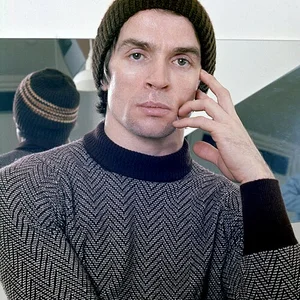

A principal dancer and choreographer of Soviet origin, Rudolf Nureyev (1938-1993) was one of the greatest classical dancers of the 20th century. After defecting to the West in 1961, he revolutionized the role of the male dancer and directed the Paris Opera Ballet.
Rudolf Nureyev(1938 — 1993)
Rudolf Nureyev
Autriche, Union soviétique
7 min read
Frequently asked questions
Key Facts
- Born in 1938 on a train near Irkutsk (USSR), trained at the Kirov Theatre in Leningrad
- Chose freedom at Le Bourget Airport in Paris on 16 June 1961, the first major defection of a Soviet artist during the Cold War
- From 1962, formed a legendary stage partnership with the British ballerina Margot Fonteyn at London's Royal Ballet
- Director of dance at the Paris National Opera from 1983 to 1989, where he trained a new generation of principal dancers
- Died of AIDS in 1993 in Paris, having transformed the perception of the male dancer in ballet
Works & Achievements
The first great triumph of the Nureyev-Fonteyn duo at the Royal Ballet, which sealed their legendary partnership.
Nureyev introduced the West to this masterpiece of the Russian repertoire, restaging its famous “Kingdom of the Shades” act.
A personal version of the ballet set to Prokofiev's music, in which he brought out the dramatic depth of the roles.
A virtuoso production that he also brought to the screen, showcasing his flair for total spectacle.
A reinterpretation in which the prince's role grows in importance, illustrating his revolution of the male dancer.
An adaptation in which he heightened the psychological dimension and the richness of the male variations.
Reform of the repertoire and the launching of young talents such as Sylvie Guillem and Laurent Hilaire.
His last great staging at the Paris Opera, presented when he was already gravely ill.
Anecdotes
Rudolf Nureyev was literally born on the move: on 17 March 1938, his mother was travelling aboard the Trans-Siberian Railway near Lake Baikal when the child was born on the train. The future dancer, who spent his life on the roads of the world, thus began his existence in the middle of a journey.
On 16 June 1961, at Le Bourget airport, Nureyev escaped his KGB minders, who wanted to send him back to Moscow by force. He rushed toward two French policemen, repeating that he wanted to remain free: this “leap to freedom” made headlines and became one of the most famous defections of the Cold War.
His meeting with the English ballerina Margot Fonteyn, almost twenty years his senior, gave rise to one of the most legendary partnerships in the history of ballet. Their chemistry on stage, notably in “Giselle” and “Romeo and Juliet,” was so intense that audiences would sometimes call them back for dozens of curtain calls amid the applause.
Nureyev established the idea that the male dancer was not merely the ballerina's support, but a star in his own right. He enriched and added complexity to men's roles in classical ballets, multiplying leaps and virtuoso variations to give them as much brilliance as those of the female dancers.
Stricken with AIDS, he kept working almost until the end. In October 1992, gravely ill, he still directed the premiere of his version of “La Bayadère” at the Paris Opera and greeted the audience; he died a few months later, on 6 January 1993.
Primary Sources
Autobiographical account published shortly after his defection to the West, in which Nureyev recounts his impoverished childhood in Ufa, his late start in training, and his admission to the Kirov school in Leningrad.
International newspapers report that the young Soviet Kirov dancer requested asylum from the French police at Le Bourget airport, refusing to board the plane to Moscow.
In numerous interviews, Nureyev affirms that dance was for him an absolute, and that the freedom to dance mattered more to him than anything else.
Key Places
A city in the Urals where Nureyev grew up in a modest Tatar family and discovered dance at the local theatre. It was there that he took his first lessons before Leningrad.
The prestigious dance school in Leningrad (Saint Petersburg) where Nureyev trained under Alexander Pushkin before joining the Kirov Ballet.
This is where Nureyev defected on 16 June 1961, escaping the KGB to seek the protection of the French police.
Home of the Royal Ballet, where Nureyev formed a legendary partnership with Margot Fonteyn during the 1960s.
Nureyev directed the Paris Opera Ballet here from 1983 to 1989, renewing the repertoire and bringing a generation of young dancers to prominence.
Nureyev rests here beneath a famous tomb adorned with a mosaic imitating an oriental carpet, a tribute to his origins and his nomadic life.
Typical Objects

Soft leather or canvas shoes that hug the dancer's foot and allow leaps, point work, and silent landings. A daily working tool, Nureyev wore out entire pairs during rehearsals.

A form-fitting outfit that reveals the dancer's body line and musculature. Nureyev boldly made it standard, showcasing the physical power of the male dancer.

Sumptuous costumes from the great classical ballets: tutus for the ballerinas, embroidered leotards and capes for the princes. They transport the audience into the world of “Giselle” or “Swan Lake.”

A long horizontal rail fixed to a studio wall, on which the dancer leans for warm-up and stretching exercises. Nureyev devoted long hours to it every day.

Works by Tchaikovsky, Adam, or Minkus set the rhythm of each ballet and guide the choreography. Nureyev knew these scores intimately and reworked them for his own versions.

In the city, Nureyev cultivated a flamboyant look, cap or beret, long scarves and loose coats, the image of the adored star dancer of the 1960s and 1970s.
School Curriculum
Vocabulary & Tags
Key Vocabulary
Daily Life
Morning
A principal dancer's day began early with a long warm-up at the barre, followed by the obligatory daily class to keep the body in shape. Nureyev, a perfectionist, tirelessly worked on his jumps, balances, and flexibility there.
Afternoon
The afternoon was devoted to rehearsing the ballets, alone or with his partners, under the watchful eye of the ballet masters. When he directed the Paris Opera, he added staging work and the management of the companies to this.
Evening
In the evening came the trial of the performance, before packed houses and a passionate audience. After the show, the tireless Nureyev loved to prolong his nights among friends, with dinners and the social life of the great capitals.
Food
Like any top-level dancer, he had to watch his diet to stay lean and muscular, while making up for enormous physical exertion. He did, however, enjoy fine food and the pleasures of the table during his Parisian dinners.
Clothing
At work, rehearsal tights and a leotard, quickly soaked with sweat; on stage, sumptuous costumes. About town, he cultivated an eccentric elegance — scarves, boots, loose coats, and berets that made him an icon.
Housing
A wealthy star and a great collector, Nureyev owned several residences, including an apartment on the Quai Voltaire in Paris overlooking the Seine and a small island he had bought. He filled them with rugs, paintings, and works of art.
Historical Timeline
Period Vocabulary
Liens externes & ressources
Références
Œuvres
Giselle (avec Margot Fonteyn)
1962
La Bayadère (mise en scène)
1963
Roméo et Juliette (chorégraphie)
1977
Le Lac des cygnes (version revisitée)
1964
Casse-Noisette (chorégraphie)
1967
Direction du Ballet de l'Opéra de Paris
1983-1989