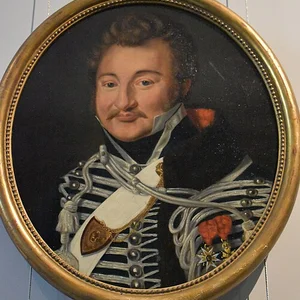

King of France from 1226 to 1270, Louis IX is a major figure of the Middle Ages. Renowned for his piety and his sense of justice, he was canonized in 1297. He led two crusades and died in Tunis in 1270.
Saint Louis
Saint Louis
6 min read
Frequently asked questions
Key Facts
- Comes to the throne in 1226 at the age of 12, under the regency of his mother Blanche of Castile
- Has the Sainte-Chapelle built in Paris (1241-1248) to house the Crown of Thorns
- Leads the Seventh Crusade (1248-1254) and is taken prisoner in Egypt in 1250
- Dispenses justice under the oak of Vincennes, a symbol of the king as righteous judge
- Dies of the plague (or dysentery) outside Tunis in 1270 during the Eighth Crusade; canonized in 1297
Works & Achievements
A jewel of Gothic architecture built to house the relics of the Passion, a model of royal art.
Reforms banning the abuses of bailiffs and seneschals, the judicial duel, and regulating royal justice.
The introduction of a strong silver coin that unified and stabilized trade throughout the kingdom.
A Parisian institution welcoming the blind, a testament to royal charity.
A diplomatic agreement settling the status of English possessions in France and easing a long-standing conflict.
A treaty that lastingly fixed the border between France and the Kingdom of Aragon.
A text of moral and political advice written for his heir, a mirror of the “good Christian king.”
Anecdotes
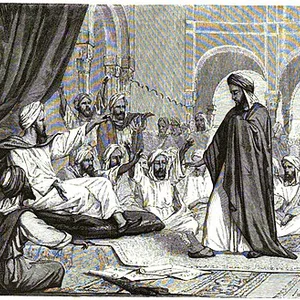
According to his friend and biographer Jean de Joinville, Saint Louis sometimes dispensed justice himself, sitting under a great oak tree in the woods of Vincennes. Any subject could come and lay out his complaint without going through intermediaries: this image became the very symbol of the just king.
At the age of twelve, Louis IX became king upon the death of his father Louis VIII in 1226. His mother, Blanche of Castile, took over the regency and crushed several revolts by the great lords: she remained a trusted advisor even after her son came of age.
To house the relics of Christ's Passion — including the Crown of Thorns purchased from the emperor of Constantinople —, Louis IX had the Sainte-Chapelle built in Paris in less than seven years. Its immense stained-glass windows tell the story of the Bible.
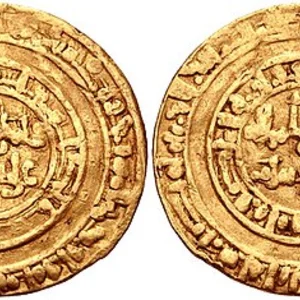
During the Seventh Crusade, Louis IX was taken prisoner in Egypt in 1250 after the defeat at Mansurah. An enormous ransom had to be paid and the city of Damietta surrendered to free him and part of his army.
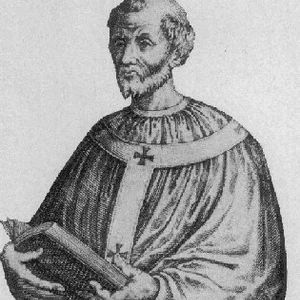
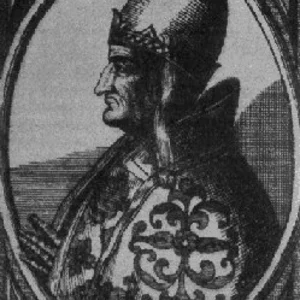
Saint Louis died of illness (probably dysentery) outside Tunis in 1270, during the Eighth Crusade. Twenty-seven years later, in 1297, Pope Boniface VIII proclaimed him a saint: he is the only king of France ever canonized.
Primary Sources
Many times it happened that in summer he would go and sit in the wood of Vincennes after his Mass, and lean against an oak, and have us sit around him; and all those who had a matter to settle came to speak with him, without any usher to hinder them.
Dear son, I teach you first of all that you love God with all your heart and with all your power, for without that no one can be worth anything.
The holy king served the poor with his own hands, washed their feet, and gave them food at his own table.
We inscribe Louis, formerly king of the Franks, in the catalogue of saints, ordaining that his feast be celebrated every year.
Key Places
Town where Louis IX was born in 1214. He liked to sign certain letters "Louis de Poissy," after the place of his baptism.
Palatine chapel built by Louis IX to house the relics of the Passion. A masterpiece of Rayonnant Gothic architecture, famous for its stained-glass windows.
Royal residence where, according to tradition, the king dispensed justice beneath an oak tree. A symbol of the approachable and fair-minded king.
Egyptian town where the crusader army suffered a heavy defeat in 1250. Louis IX was taken prisoner there before being freed for a ransom.
City before whose walls Louis IX died of illness in 1270, during the Eighth Crusade.
Necropolis of the kings of France where the remains of Louis IX rest. A place of remembrance for the Capetian monarchy.
Typical Objects

A relic of the Passion of Christ purchased from the Latin emperor of Constantinople. Possessing it made the Kingdom of France an exceptionally sacred place.

A staff of command handed to the king at his coronation. It symbolized the power to govern received from God.

A circle of gold adorned with precious stones worn by the king. It marked his sovereign dignity and the bond between royalty and the sacred.

A large silver coin created under Louis IX to give the kingdom a strong, reliable currency. It became a reference throughout Europe.

The weapon of the Christian knight, blessed before departing on crusade. Its cross-shaped hilt recalled the religious dimension of the fight.

A book of prayers that the king recited each day at the various canonical hours. It bears witness to the daily piety of Louis IX.
School Curriculum
Vocabulary & Tags
Key Vocabulary
Daily Life
Morning
The king rose early and attended Mass, often going to several services throughout the day. He then devoted time to prayer and to reading pious texts before turning to the affairs of the kingdom.
Afternoon
The afternoon was reserved for governing: he received counselors, bailiffs, and ambassadors, listened to petitions, and dispensed justice. He sometimes settled disputes himself, occasionally outdoors at Vincennes.
Evening
In the evening, after vespers, the king supped soberly, sometimes listening to edifying readings or conversing with close companions such as Joinville. He ended the day with prayers before going to bed.
Food
Louis IX ate in moderation and often kept to lean fare, avoiding excesses at the table. He diluted his wine with water and readily gave his food to the poor whom he welcomed at his table.
Clothing
The king gradually gave up overly rich fabrics in favor of simple woolen garments and plain cloth. During ceremonies, however, he wore the royal mantle, the crown, and the insignia of his office.
Housing
He resided in the royal palaces and castles, such as the Palais de la Cité in Paris and the Château de Vincennes. These residences combined ceremonial halls, a chapel, and spaces for governing.
Historical Timeline
Period Vocabulary
Liens externes & ressources
Références
Œuvres
Construction de la Sainte-Chapelle
1242-1248
Grandes ordonnances de réforme du royaume
1254
Création du gros tournois
1266
Fondation de l'hôpital des Quinze-Vingts
vers 1260
Traité de Paris avec l'Angleterre
1259
Traité de Corbeil avec l'Aragon
1258
Enseignements à son fils Philippe
vers 1270