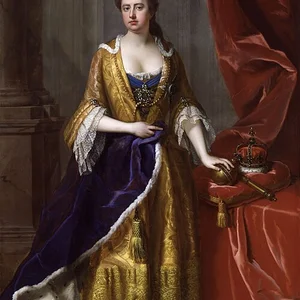

French nun of the Order of the Visitation, at the monastery of Paray-le-Monial. Her visions of Christ gave rise to the devotion to the Sacred Heart of Jesus. She was canonized in 1920.
Saint Margaret Mary Alacoque
Saint Margaret Mary Alacoque
5 min read
Frequently asked questions
Key Facts
- Born in 1647 in Verosvres, in Burgundy
- Entered the Visitation monastery of Paray-le-Monial in 1671
- Received her great visions of the Sacred Heart between 1673 and 1675
- Died in 1690 in Paray-le-Monial
- Beatified in 1864 and then canonized by Pope Benedict XV in 1920
Works & Achievements
An account of her life and visions, written out of obedience to her superiors; the main source on her spiritual experience.
An extensive correspondence spreading devotion to the Sacred Heart and guiding souls, published after her death.
The promotion of a devotion that would become one of the most widespread Catholic devotions in the world.
The origin of the liturgical Feast of the Sacred Heart, later extended to the entire Catholic Church.
Devotions associated with her visions, including the Holy Hour and communion on the first Friday of each month.
Anecdotes
Born in 1647 in Verosvres in Burgundy, Marguerite-Marie lost her father at a very young age and spent part of her childhood ill, bedridden for nearly four years, which fed her precocious piety.
Having entered the Visitandine convent of Paray-le-Monial in 1671, she reported receiving apparitions of Christ. Her sisters and even some of her superiors were at first wary and judged her to be deluded.
According to her writings, during the 'great apparition' of June 1675, Christ is said to have shown her his heart while asking for the establishment of a feast in its honor on the Friday after Corpus Christi: this is the origin of the Feast of the Sacred Heart.
The Jesuit Claude La Colombière, who became her spiritual director in 1675, was one of the few to believe her and helped spread the devotion to the Sacred Heart throughout the Church.
Having died in 1690 at only 43 years of age, she was beatified in 1864 and then canonized by Pope Benedict XV in 1920, nearly two and a half centuries after her visions.
Primary Sources
He revealed to me the inexplicable wonders of his pure love, and to what excess it had carried him in loving mankind, from whom he received only ingratitude.
Behold this Heart which has so loved mankind that it spared nothing, even to exhausting and consuming itself, to show them its love.
This devotion to the Sacred Heart of Jesus Christ is solidly grounded upon thoroughly Christian foundations.
Key Places
Village in Burgundy where Marguerite-Marie was born in 1647 and spent her childhood.
Convent she entered in 1671, where she experienced her visions and died in 1690. A major site of devotion to the Sacred Heart.
Town near Paray-le-Monial, in the Charolais region of Burgundy, where her entire religious life unfolded.
A sanctuary that became a major site of international pilgrimage linked to her apparitions.
Typical Objects

Black robe and veil of the Visitandine nuns, a sign of their consecration and their enclosure. Marguerite-Marie wore it from 1671 onward.

A depiction of a flaming heart, crowned with thorns and topped with a cross, which became the emblem of the devotion born of her visions.

A cross bearing the body of Christ, the central object of the nuns' meditation. Marguerite-Marie linked her contemplations of the Passion to it.

A string of beads used to count the prayers of the Rosary, a daily instrument of Marian piety at the monastery.

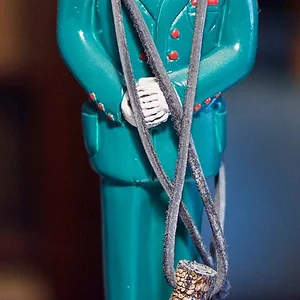
An instrument of penance worn directly against the skin to mortify the body. Marguerite-Marie practiced severe mortifications.

The writing materials with which she composed, in obedience to her superiors, her autobiography and her many letters.
School Curriculum
Vocabulary & Tags
Key Vocabulary
Tags
Daily Life
Morning
Woken before dawn by the bell, she would go to the choir for the Office of Matins and silent prayer. The morning continued with Mass and a long period of mental prayer.
Afternoon
The afternoon alternated between manual work and community duties: sewing, caring for the sick, sometimes supervising the novices. Silence and contemplation framed every task.
Evening
The evening gathered the community for Vespers and Compline, followed by an examination of conscience before bedtime. Marguerite-Marie often extended her vigils in prayer before the Blessed Sacrament.
Food
Monastic fare was frugal: bread, vegetables, soups, fish on days of abstinence, with frequent fasts. Marguerite-Marie added voluntary mortifications, eating little and giving up the dishes she preferred.
Clothing
She wore the black habit of the Visitation: a serge robe, a white wimple at the neck, and a black veil. Beneath her clothing, she sometimes concealed instruments of penance such as the hair shirt.
Housing
She lived within the enclosure of the monastery of Paray-le-Monial, occupying a narrow and bare cell. The nuns shared a chapel, refectory, and common room, cut off from the outside world.
Historical Timeline
Period Vocabulary
Liens externes & ressources
Références
Œuvres
Autobiographie
vers 1685
Lettres spirituelles
1675-1690
Diffusion de la dévotion au Sacré-Cœur
à partir de 1675
Institution de la fête du Sacré-Cœur
1685 (première célébration), 1856 (extension universelle)
Pratique des 'douze promesses' et de l'Heure Sainte
à partir de 1674