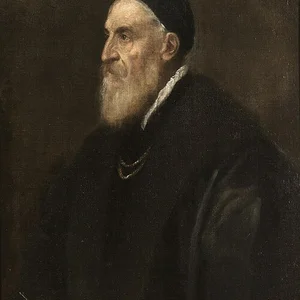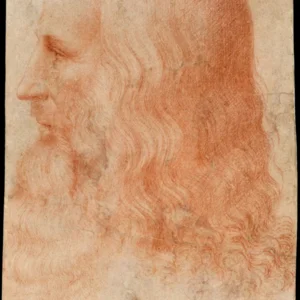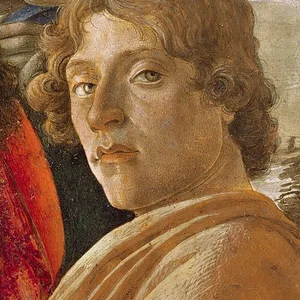

A major Florentine painter of the Italian Renaissance (1445–1510), Botticelli is celebrated for his mythological and religious compositions marked by graceful forms and a poetic visual world. His works, such as The Birth of Venus and Primavera, embody the humanist ideals of the Florentine Renaissance.
Sandro Botticelli(1445 — 1510)
Sandro Botticelli
République florentine
8 min read
Frequently asked questions
Key Facts
- Born in Florence in 1445, he apprenticed in the workshop of Filippo Lippi
- Painted The Birth of Venus around 1485, a masterpiece of Florentine Neoplatonism
- Created Primavera around 1481–1482, a complex allegory of love and beauty
- Worked for the Medici family, the great patrons of the arts in Florence
- Came under the influence of the preacher Savonarola in the 1490s, which shifted his approach to painting
Works & Achievements
A masterpiece of the Florentine Renaissance depicting the goddess Venus emerging from the sea on a shell. This painting embodies the humanist ideal through its elegant forms and balanced composition, becoming one of the most iconic images of the Renaissance.
A complex allegory populated with mythological figures in a flowering garden, celebrating renewal and beauty. This work symbolizes the Neoplatonic ideal of Medici Florence and demonstrates Botticelli's mastery of allegorical composition.
A tondo-format religious painting depicting the Virgin Mary writing the Magnificat, surrounded by angels. This work combines Christian spirituality with the formal elegance characteristic of Botticelli's style.
A mythological allegory depicting Athena subduing a centaur, symbolizing reason triumphing over instinct. This painting illustrates the intellectual and poetic sophistication of Botticelli's visual world.
A complex composition based on a description of a lost painting by Apelles, depicting allegorical figures set within an elaborate architectural backdrop. This work showcases Botticelli's humanist scholarship and his ability to give visual form to ancient texts.
A series of biblical frescoes painted for the Vatican, including scenes from the lives of Moses and Christ. These monumental works established Botticelli as one of the great fresco masters of the Renaissance.
An allegorical painting presenting the goddess of love and the god of war in an intimate, poetic composition. This work symbolizes the harmony between love and strength, a central theme in Florentine Neoplatonic philosophy.
Anecdotes
Botticelli was so admired in Florence that he was nicknamed 'il Botticello' (the little barrel) because of his stocky build. This nickname, given by his master Andrea del Verrocchio, became his official painter's name, replacing his real name Alessandro di Mariano Filipepi. It's an amusing example of how Renaissance artists received their nicknames, often based on physical traits or family characteristics.
Botticelli painted the famous 'Birth of Venus' around 1485, a work commissioned by the powerful Medici family who ruled over Florence. The painting measures nearly 1.73 meters in height and remains one of the most recognizable images of the Renaissance. It perfectly illustrates the humanist fascination of the era with Greco-Roman mythology.
Toward the end of his life, Botticelli went through a difficult period: he became deeply religious and even burned some of his works he considered too profane or pagan, under the influence of the Dominican friar Girolamo Savonarola, who preached against corruption in Florence. This spiritual transformation shows how intensely religious convictions could run during the Renaissance.
Botticelli worked for the Medici, the most powerful family in Florence, which gave him access to a thriving workshop and allowed him to use the finest materials, including expensive gold and lapis lazuli. This aristocratic patronage was essential for Renaissance artists, who depended entirely on wealthy patrons for their commissions.
One of Botticelli's defining traits is his highly recognizable style: he painted figures with delicate, expressive faces, flowing hair, and graceful poses. His women in particular possess a certain poetic melancholy that still captivates viewers today and sets him apart from other painters of his time.
Primary Sources
Sandro Botticelli was a painter of great talent and remarkable skill. He excelled particularly in depicting graceful and elegant figures, and his mythological compositions reveal a deep knowledge of ancient poetry and Florentine humanism.
Sandro Botticelli, an excellent painter of our Florence, has produced for us works of remarkable beauty that honor our city and bear witness to the excellence of our artists.
Sandro di Mariano Filipepi, known as Botticelli, Florentine master painter and member of the Confraternity of Saint Luke, contributed to the decorative projects and prestigious commissions of the Florentine Republic.
Listed among the possessions of the late painter Sandro Botticelli are several painted panels, preparatory studies, and drawings attesting to the breadth of his body of work and the productivity of his workshop.
Key Places
Botticelli's birthplace (1445) and the center of his artistic activity. Florence, under the patronage of the Medici family, was the cradle of the Renaissance where Botticelli developed his distinctive style and created his major works.
Florence's most important museum, home to Botticelli's masterpieces including The Birth of Venus and Primavera. These mythological paintings have been on display there since the 16th century and form one of the greatest collections of Italian Renaissance art.
Botticelli contributed to the chapel's decoration alongside other great Renaissance masters (1481–1482). His religious frescoes there demonstrate his reputation beyond Florence and his importance in the religious art of the period.
The creative space where Botticelli worked and trained his apprentices for several decades. It was in this Florentine workshop that his most celebrated paintings were conceived and produced.
A Florentine church where Botticelli worked and where some of his religious works can be found. It reflects his importance in Florentine sacred art and his contribution to the decoration of major religious buildings.
The residences of the Medici family, who were Botticelli's most important patrons. These villas formed a key backdrop to his career, particularly as the destination for the mythological commissions painted to adorn aristocratic homes.
Typical Objects

An essential tool of the Renaissance painter, used by Botticelli to apply pigments with precision onto his canvases. Brushes of varying sizes allowed him to create the delicate details characteristic of his style.

A flat surface on which Botticelli mixed his pigments and colors before applying them to the canvas. It reflects the mastery of chromatic composition that set the great Florentine masters apart.

The painting surface used by Botticelli, typically primed with a layer of gesso to receive paint. Canvas was the preferred medium of the Renaissance for large-scale compositions.

A natural binding agent used in the egg tempera technique, a common painting method in the 15th century before oil paint became widespread. It produced bright colors and allowed for precise, fine detail.

Geometric instruments used by Renaissance painters to construct perfect proportions and mathematical harmony in their compositions, particularly for perspective.

Natural coloring substances such as lapis lazuli for blue or ochre for earth tones, ground and mixed with binders. Botticelli used rare and costly pigments to achieve his subtle, elegant color palette.

A book of preliminary studies and sketches in charcoal or red chalk. Renaissance painters, including Botticelli, carefully prepared their compositions before transferring them to canvas.

Characteristic elements of Florentine Renaissance culture visible in Botticelli's portraits and compositions, reflecting the social status and wealth of his patrons as well as the refined aesthetic of the era.
School Curriculum
Vocabulary & Tags
Key Vocabulary
Tags
Époque
Mouvement
Daily Life
Morning
Botticelli rises at dawn, like most Florentine craftsmen. He begins his day with a prayer in his home-studio before reviewing ongoing commissions and preparing his pigments and canvases for the day's work.
Afternoon
The afternoon is devoted to intensive studio work: executing commissioned paintings, working on compositional studies, and supervising his apprentices as they prepare backgrounds and secondary details. Botticelli also receives visitors — patrons and collectors — to discuss new commissions.
Evening
In the evening, after closing the studio, Botticelli may join Florentine intellectual circles or host guests at home. He moves in humanist circles, where he can discuss mythology, classical literature, and art with scholars, poets, and fellow artists.
Food
A typical diet for a Florentine merchant middle class: wheat bread, cheese, fish on fast days, meat (poultry, mutton) on other days, seasonal vegetables, fruit, and local wine. Meals follow the dietary rules prescribed by the Church.
Clothing
Botticelli wears wool garments dyed in muted colors, suited to his status as a prosperous master craftsman: a tunic, hose, and a long cloak. As an established artisan, he can afford quality fabrics without excessive ostentation.
Housing
Botticelli lives in a home-studio in Florence, most likely in the Santa Maria Novella neighborhood. This dwelling combines family living quarters with a large workshop equipped with easels, pigment stores, and space to receive apprentices and clients.
Historical Timeline
Period Vocabulary
Visual Style
Un style visuel qui capture la poésie lyrique de Botticelli : compositions mythologiques éthérées aux figures gracieuses et élancées, baignées d'une lumière dorée et douce, enrichies de détails botaniques délicats et de drapés fluides inspirés des maîtres florentins.
Sound Ambience
Une ambiance sonore poétique et raffinée qui capture l'essence de la Florence de la Renaissance : mélange de musique délicate, de bruits d'atelier artistique et de l'atmosphère mystique des palais florentins baignés dans une aura humaniste et humaniste.
Liens externes & ressources
Références
Œuvres
Le Printemps (Allegoria della Primavera)
1477-1482