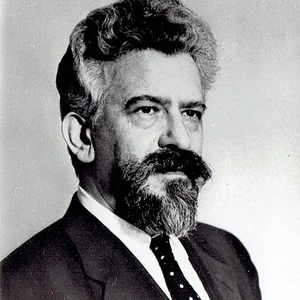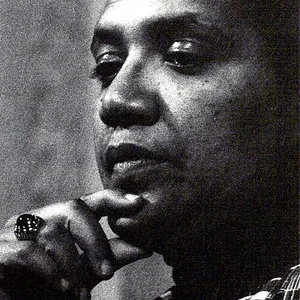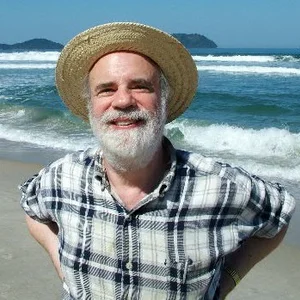

Saul Kripke (1940-2022) was an American philosopher and logician, considered one of the most influential thinkers in 20th-century analytic philosophy. A child prodigy, he revolutionized modal logic and the philosophy of language.
Saul Kripke(1940 — 2022)
Saul Kripke
États-Unis
6 min read
Frequently asked questions
Key Facts
- Born in 1940 in Bay Shore (New York), recognized as a child prodigy in logic from his teenage years
- From 1959 to 1963, develops a formal semantics for modal logic (Kripke semantics, or possible-worlds semantics)
- Publishes 'Naming and Necessity' in 1972/1980, introducing the notion of the rigid designator
- Professor at Princeton University and later at the City University of New York (CUNY)
- Died in 2022 in Plainsboro (New Jersey)
Works & Achievements
Early article proving the completeness of modal systems; it lays the foundations of possible-worlds semantics.
Key text formalizing “Kripke semantics” with possible worlds and an accessibility relation, now standard in logic.
Three lectures that revolutionized the philosophy of language: proper names as rigid designators, the necessary a posteriori, and the contingent a priori.
A fixed-point theory of truth offering an influential solution to the liar paradox.
A skeptical reading of Wittgenstein (the “Kripkenstein”) on what it means to follow a rule; a widely debated work.
A collection of his major articles, gathering decades of contributions to logic and philosophy.
A conceptual framework that became central to modal logic, metaphysics, and theoretical computer science (temporal logics, verification).
Anecdotes
A child prodigy, Saul Kripke is said to have discovered algebra on his own around the age of nine by reading Descartes. As a teenager, he wrote articles on modal logic of such quality that at 17 he published a decisive work on the semantics of modal logic, laying the foundations of what would come to be called “Kripke semantics.”
It is said that even before finishing high school in Omaha, Nebraska, Harvard's mathematics department offered him a teaching position; Kripke reportedly replied that he first had to finish secondary school. The story illustrates the legendary precociousness that surrounded him.
His most famous ideas, set out in *Naming and Necessity*, came from three lectures given at Princeton University in 1970, delivered without notes prepared in advance. The published text is in fact a transcription of those oral presentations.
Kripke popularized the idea of the “rigid designator”: a proper name like “Aristotle” refers to the same person in every possible situation, unlike a description such as “the teacher of Alexander.” This thesis transformed the philosophy of language in the 1970s.
Deeply attached to the Jewish tradition, Kripke observed the Sabbath and, it is said, refused to travel or write on that day, which sometimes constrained the scheduling of his lectures and academic conferences.
Primary Sources
Let us call a rigid designator a term that designates the same object in all possible worlds, and a non-rigid or accidental designator one that does not.
Article in which the young Kripke proves a completeness theorem for modal logic using a semantics grounded in possible worlds and an accessibility relation.
Here Kripke formulates the famous sceptical paradox about following a rule: no past fact about my mind determines what “plus” means for me.
A proposal for a theory of truth grounded in the notion of a fixed point, making it possible to handle statements of the type “this sentence is false” (the liar paradox).
Key Places
Town in New York State where Saul Kripke was born in 1940.
City where Kripke grew up, the son of a rabbi; he attended school there while already publishing works on logic.
Where Kripke studied mathematics and earned his degree in 1962, in a setting at the cutting edge of logic.
Site of the 1970 lectures and where he served as a professor; the heart of his American career.
Institution he joined in 2007, home to the Saul Kripke Center dedicated to his work.
Town where Saul Kripke died in 2022.
Typical Objects

Kripke's preferred medium for laying out his modal logic proofs, often improvised live in front of his students. He thought and demonstrated at the board rather than on paper.

A system of symbols (□ for the necessary, ◇ for the possible) that he helped equip with a rigorous semantics grounded in possible worlds. An abstract tool at the heart of his work.

Works by Frege, Russell, Wittgenstein, and Quine that he discussed and critiqued. *Naming and Necessity* engages directly with this tradition.

The 1970 Princeton lectures were recorded and then transcribed, as there was no prepared manuscript. The recording is the source of the published text of *Naming and Necessity*.

Candles, prayer books, and objects tied to Jewish observance, which Kripke practiced rigorously. His faith also shaped his university schedule.
School Curriculum
Vocabulary & Tags
Key Vocabulary
Tags
Daily Life
Morning
A thinker known to be a night owl and far from an early riser, Kripke often began his day late. The morning might be devoted to reading articles in logic and philosophy, or to corresponding with colleagues.
Afternoon
The afternoon was the time for teaching and seminars, where he laid out his reasoning at the blackboard, often without notes. He enjoyed discussing and debating directly with students and colleagues.
Evening
Evening and night, well suited to concentration, were when he developed his ideas and held long philosophical conversations. Many of his arguments were born in speech rather than in finished written form.
Food
As an observant Jew, Kripke kept the rules of kashrut (keeping kosher). His meals followed religious prescriptions, which also guided his choices when traveling for academic work.
Clothing
An American academic of the second half of the 20th century, he wore the plain, classic attire of professors: a shirt, a jacket, sometimes a tie, with no concern for show.
Housing
He lived in university towns on the East Coast of the United States (the Princeton area, then New York), in homes close to where he taught.
Historical Timeline
Period Vocabulary
Liens externes & ressources
Références
Œuvres
A Completeness Theorem in Modal Logic
1959
Semantical Considerations on Modal Logic
1963
Naming and Necessity (La logique des noms propres)
1970 / 1980
Outline of a Theory of Truth
1975
Wittgenstein on Rules and Private Language
1982
Philosophical Troubles: Collected Papers, Vol. 1
2011
Sémantique des mondes possibles
années 1960-1970