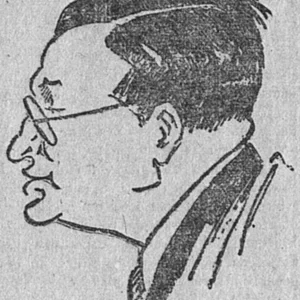

Sennep is one of the greatest French political caricaturists of the first half of the 20th century. His sharp pencil sketched the figures of the Third Republic and Parisian political life in the satirical press.
Sennep(1894 — 1982)
Jean Sennep
France
6 min read
Frequently asked questions
Key Facts
- Born in 1894 in Paris, died in 1982
- Pen name formed from the initials of his real name, J.-J. Pennès (J.N.P. → Sennep)
- Contributed to the major titles of the satirical and political press of the interwar period
- Sketched the parliamentary figures of the Third Republic with ferocity
- Published numerous albums of political caricatures during the 1920s and 1930s
Works & Achievements
The caricaturist's first efforts in the famous satirical newspaper, where he sharpened his pen against the failings of political life.
A series of caricatures targeting the great names of politics, such as **Édouard Herriot** or **Léon Blum**, made instantly recognizable through the exaggeration of their features.
Covers and topical drawings for one of the great Parisian weeklies, at the heart of the battles of opinion in the final years of the Third Republic.
Drawings commenting on the experience of **Léon Blum**'s government, witnesses to the political passions of the era.
Daily drawings accompanying the news of the Fourth and then the Fifth Republic, making Sennep one of the faces of the great postwar daily.
Collections gathering his drawings published in the press, which turn his body of work into a satirical chronicle of French political life.
Anecdotes
The name "Sennep" is actually a play on words: the caricaturist was named Jean-Jacques Charles Pennès, and he formed his pseudonym by reversing the syllables of his name, Pennès becoming Sennep. It was an elegant and amusing way to sign his drawings while keeping a link to his true identity.
Sennep never sought to flatter the powerful: under the Third Republic, he mercilessly sketched the great names of politics, such as the radical Édouard Herriot or the socialist Léon Blum. His caricatures were so recognizable that readers could identify a politician at first glance, even before reading the caption.
After the Second World War, Sennep became the official caricaturist of the daily newspaper Le Figaro, where his drawings accompanied political news for years. Every morning, thousands of readers looked first for his drawing to understand the day's event in a single glance and a smile.
Sennep's talent rested on the art of the "portrait-charge": he exaggerated a nose, a chin, or a pair of glasses until the figure became both ridiculous and instantly recognizable. This technique, inherited from the great nineteenth-century caricaturists like Daumier, turned each drawing into a small political weapon.
Between the two world wars, Sennep contributed to the most widely read satirical weeklies in Paris, such as Candide. His cover drawings were awaited each week and took part in the great opinion battles of the era, at a time when press cartoons could make or break a reputation.
Primary Sources
Sennep's daily drawings in the post-war Le Figaro commented on the current events of the Fourth and then Fifth Republic, capturing parliamentary debates and figures of power in a single stroke.
In the 1930s, Sennep produced drawings for the Parisian weekly press, sketching the successive governments and political crises of the end of the Third Republic.
Early in his career, Sennep contributed to the satirical newspaper Le Canard enchaîné, where drawing served as a weapon against the failings of the political world.
Key Places
Sennep's native city and capital of the French press, where newspapers, printing houses and political life were concentrated. It is the backdrop for his entire career.
Headquarters of the great daily newspaper where Sennep worked as a political cartoonist after 1945. His drawings were composed there to the rhythm of the day's news.
Seat of the Chamber of Deputies, an inexhaustible source of subjects for the cartoonist, who observed the debates and the figures of power there.
The heart of the Parisian press, where newsrooms and printing houses crowded together between the two World Wars. Sennep dropped off his drawings there for the satirical weeklies.
Typical Objects

The caricaturist's tool of choice, the pen dipped in black ink allows for the nervous, precise line of portrait-charges. India ink produces deep blacks that snap off the page.

Used for the quick sketch of a face, the pencil captures the expression before the pen sets the drawing in place. It is the tool of the first draft and of observation from life.

The medium through which press cartoons spread, the weekly or daily paper carries the caricature to thousands of readers. It is through the newspaper that the line becomes a political weapon.

The tilted work surface where the caricaturist spends his hours, bent over the paper. It is the studio reduced to its simplest form.

A plate engraved from the original drawing, allowing it to be reproduced in series on the printing presses. Without it, the caricature would remain a single, unique drawing.

A collection that gathers the best drawings published in the press, giving the caricatures a second life and preserving the memory of political life. These albums turn the press cartoon into a lasting work.
School Curriculum
Vocabulary & Tags
Key Vocabulary
Daily Life
Morning
The caricaturist's morning begins by reading the newspapers and listening to the news: he needs to know the day's political events before anyone else. Seated at his drawing table, he sketches out his first ideas in pencil, searching for the angle that will hit the mark.
Afternoon
The afternoon is devoted to work with the pen: he sets the final drawing in India ink, carefully rendering every line of the caricatured face. He has to meet the tight deadlines of the press, since his drawing must appear the very next day.
Evening
In the evening, Sennep carries or sends his drawing to the editorial office, where it will be turned into a printing plate. It is also the time for meetings in the circles of journalists and artists who bring Paris to life.
Food
Like Parisians of his standing, he frequents the cafés and brasseries where press people and politicians gather. There he has a simple meal and a strong coffee, as much to feed himself as to pick up the rumors and topics of the day.
Clothing
He wears the suit and tie required of the 20th-century pressman: dark jacket, shirt, and sometimes a hat for going out. A tidy outfit that lets him move just as easily through newsrooms as through the corridors of power.
Housing
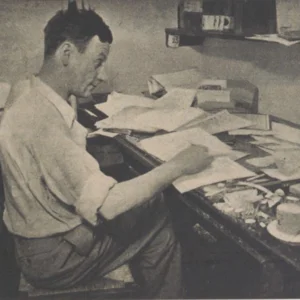
Sennep lives and works in Paris, in an apartment where one room serves as a studio. The drawing table, the pens, and the inkwells sit alongside piles of newspapers and drawings in progress.
Historical Timeline
Period Vocabulary
Liens externes & ressources
Références
Œuvres
Caricatures pour Le Canard enchaîné
années 1920
Portraits-charges des figures de la IIIe République
années 1920-1930
Dessins pour l'hebdomadaire Candide
années 1930
Caricatures du Front populaire
1936-1938
Caricaturiste politique du Figaro
années 1946-1960
Albums de caricatures
XXe siècle