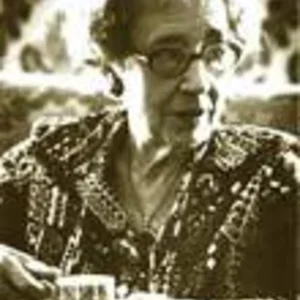

Simone Beck, known as “Simca,” was a 20th-century French cook and cookbook author. She is famous for co-writing, with Julia Child and Louisette Bertholle, the book Mastering the Art of French Cooking, which introduced French cuisine to Americans.
Simone Beck(1904 — 1991)
Simone Beck
France
5 min read
Frequently asked questions
Key Facts
- Born in 1904 in Tocqueville, Normandy, into a bourgeois family
- Co-founded, with Julia Child and Louisette Bertholle, the cooking school L'École des Trois Gourmandes in Paris (1950s)
- Published in 1961 the first volume of Mastering the Art of French Cooking, co-written with Julia Child and Louisette Bertholle
- Published a second volume of Mastering the Art of French Cooking in 1970
- Died in 1991 in Bramafam, Provence
Works & Achievements
Co-written with Louisette Bertholle and Julia Child, this landmark book made French haute cuisine accessible to American home cooks.
A cooking school founded in Paris with Bertholle and Child, where they taught French techniques to students, often American women.
A second volume co-written with Julia Child, delving deeper into breads, pastries, and more elaborate dishes.
Her first book published under her name alone, blending personal recipes with the French art of entertaining.
A collection of complete menus confirming her standing as a culinary author independent of Julia Child.
A memoir and recipe collection published late in her life, retracing her journey and her friendship with Julia Child.
Anecdotes
Nicknamed “Simca” by her friends, Simone Beck met Julia Child in Paris around 1949-1950, when this newly arrived American was trying to unlock the secrets of French cooking. From this friendship was born one of the most influential cookbooks of the 20th century.
Writing Mastering the Art of French Cooking took nearly ten years. Simone Beck tirelessly tested every recipe so that it would turn out just as well in an American kitchen as in Paris, because the ingredients and the ovens were not the same on either side of the Atlantic.
When the manuscript was finally finished, a first publisher turned it down, judging it too long and too complicated for Americans. Yet the book, ultimately published in 1961 by Knopf, became a huge success and brought French cooking into thousands of American homes.
Simone Beck and her husband Jean Fischbacher owned an estate in Provence, named “Bramafam.” Julia Child had her own holiday home, “La Pitchoune,” built on the neighboring plot, and for years the two families shared the pleasures of the table and of friendship.
Born into a well-off Normandy family, Simone Beck developed a passion for cooking very early on by watching the family cook. She then trained at the Cordon Bleu in Paris, convinced that great French cuisine could be taught to everyone, not just to professionals.
Primary Sources
This is a book for the servantless American cook who can be unconcerned on occasion with budgets, waistlines, time schedules, children's meals, or anything else which might interfere with the enjoyment of producing something wonderful to eat.
I believe that good cooking, like a good language, must be learned thoroughly before one can begin to take liberties with it.
Cooking has been my whole life, the passion that has bound me to my friends and to the French earth that nourished me.
Key Places
Region where Simone Beck was born, where she grew up in a well-to-do family and discovered a taste for fine produce.
City where she trained in cooking, met Julia Child and founded with her the École des Trois Gourmandes.
Famous Parisian cooking school where Simone Beck perfected her mastery of French techniques.
Provençal property of Simone Beck and her husband, next to Julia Child's vacation home, “La Pitchoune.”
Country where her book was an immense success and introduced French cooking to millions of households.
Typical Objects

An essential tool for beating sauces, eggs and cream in the classic French cooking she taught. A symbol of the cook's precise gesture.

A round container with high walls, emblematic of French pastry and starters. Many of the book's recipes depended on mastering it.

The two-volume cookbook she co-wrote, which became a worldwide reference. It translated French technique for American kitchens.

A versatile blade at the heart of the French prep work she championed. Slicing, chopping and mincing with precision were fundamentals for her.

A heavy pot for slow cooking dishes like beef bourguignon, the book's flagship recipe. It embodied French simmered cuisine.

A measuring instrument essential to the rigor of recipes she wanted to be reproducible. Beck insisted on exact proportions to guarantee success.
School Curriculum
Vocabulary & Tags
Key Vocabulary
Daily Life
Morning
In the morning, Simone Beck planned her recipes and went to the market in search of the best fresh produce. Selecting quality vegetables, meats, and cheeses was, for her, the starting point of all good cooking.
Afternoon
Afternoons were spent at the stove, testing and retesting recipes to make them foolproof. She scrupulously noted quantities, cooking times, and tips so that every dish could be reproduced.
Evening
In the evening, she loved to entertain friends and colleagues around a carefully set table. For her, a meal was a moment of sharing, where cooking became a true art of living.
Food
Her diet reflected classic French cuisine: sauces, braised meats, market vegetables, cheeses, and desserts. She championed the pleasure of eating well over restriction.
Clothing
A woman of the 20th-century French bourgeoisie, she wore elegant, refined outfits, covered by an apron the moment she stepped into the kitchen.
Housing
She lived between Paris and her Provençal estate of Bramafam, a home surrounded by olive trees where she cooked and entertained her friends.
Historical Timeline
Period Vocabulary
Liens externes & ressources
Références
Œuvres
Mastering the Art of French Cooking, Volume 1
1961
L'École des Trois Gourmandes
1951
Mastering the Art of French Cooking, Volume 2
1970
Simca's Cuisine
1972
New Menus from Simca's Cuisine
1979
Food and Friends: Recipes and Memories from Simca's Cuisine
1991