 flip
flipMarseille's Soupe au Pistou
Marseille's Soupe au Pistou
Why this dish? From 1940 to 1942, fleeing persecution, Simone Weil lived in Marseille with her parents. It was there that she wrote her great mystical notebooks. Soupe au pistou, a Provencal dish of the high season, is exactly the kind of simple, shared vegetable meal she could accept: convivial, vegetarian, made from what the garden of the Midi provides.
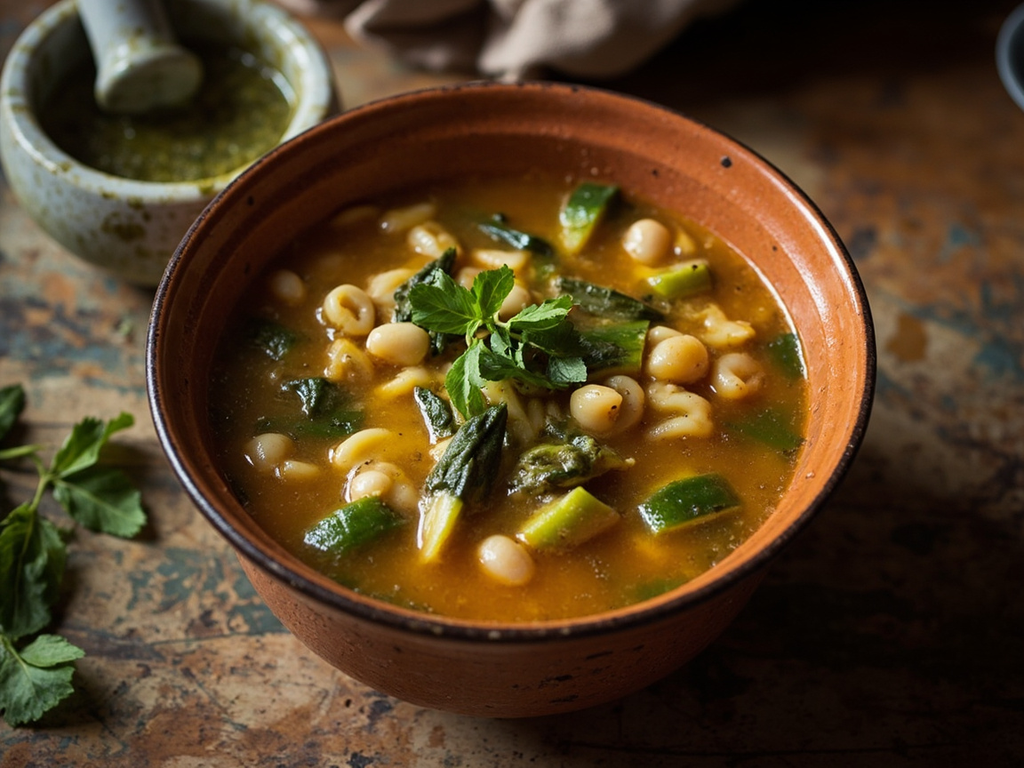
A large summer vegetable soup bound with a paste of basil, garlic, and olive oil. A modest, collective festive dish, where you hold out your bowl to the whole household.
In Marseille, in the evening, my mother would bring this fragrant soup to the table, and I made an exception to my refusals, for it costs almost nothing and feeds a whole table. Crush the basil and garlic with the oil until you get a green paste; it is this, added at the last moment off the heat, that transforms the broth. I found in this scent something of the beauty of the world, which is, you know, a door to the true. Share it widely: a soup kept for oneself alone has lost its flavor.
- •White and green beans — two handfuls (body of the soup)
- •Zucchini, potatoes — a few (vegetables)
- •Ripe tomatoes — 2-3 (acidity, umami)
- •Short pasta — a handful (nourishing binder)
- •Basil, garlic, olive oil — to taste (the pistou, signature)
Marseille's Soupe au Pistou
A large summer vegetable soup bound with a paste of basil, garlic, and olive oil. A modest, collective festive dish, where you hold out your bowl to the whole household.
Why this dish? From 1940 to 1942, fleeing persecution, Simone Weil lived in Marseille with her parents. It was there that she wrote her great mystical notebooks. Soupe au pistou, a Provencal dish of the high season, is exactly the kind of simple, shared vegetable meal she could accept: convivial, vegetarian, made from what the garden of the Midi provides.
In Marseille, in the evening, my mother would bring this fragrant soup to the table, and I made an exception to my refusals, for it costs almost nothing and feeds a whole table. Crush the basil and garlic with the oil until you get a green paste; it is this, added at the last moment off the heat, that transforms the broth. I found in this scent something of the beauty of the world, which is, you know, a door to the true. Share it widely: a soup kept for oneself alone has lost its flavor.
Ingredients (period version)
- White and green beans — two handfuls (body of the soup)
- Zucchini, potatoes — a few (vegetables)
- Ripe tomatoes — 2-3 (acidity, umami)
- Short pasta — a handful (nourishing binder)
- Basil, garlic, olive oil — to taste (the pistou, signature)
Ingredients
- Cooked white beans (or canned) — 200 g (body)
- Green beans — 150 g (vegetable)
- Zucchini — 2 (vegetable)
- Potatoes — 2 (vegetable)
- Tomatoes — 3 (acidity, umami)
- Short pasta (coquillettes) — 80 g (binder)
- Fresh basil — 1 large bunch (pistou)
- Garlic — 3 cloves (pistou)
- Olive oil — 10 cl (pistou)
- Parmesan or pecorino — 50 g grated (umami (optional))
Method
- Dice zucchini, potatoes, and tomatoes into small cubes; cut the green beans.
- Simmer all the vegetables for 30 minutes in a large pot of salted water, with the white beans.
- Add the pasta 10 minutes before the end.
- Meanwhile, pound the basil, garlic, and a little salt in a mortar, then gradually add olive oil (and cheese) to obtain a paste.
- Off the heat, stir the pistou into the soup at the last moment to keep its full fragrance. Serve very hot, with the remaining pistou on the table.
How it was made : In Provence, soupe au pistou is prepared at the height of summer when vegetables and basil abound; the pistou was pounded in a marble mortar and always added off the heat, never boiled, to preserve the aroma.
The contemporary twist : Present the pistou in the mortar at the center of the table: each person adds a spoonful to their soup, a shared gesture that would make the philosopher smile.
Sources : J.-B. Reboul, La Cuisinière provençale (common 20th-century editions) · Simone Pétrement, La Vie de Simone Weil (1973)
Simone Weil · Charactorium