 flip
flipChocolate batido al molinillo
Chocolate batido al molinillo
Why this dish? Chocolate was the queen of drinks in the learned convents of New Spain; as a privileged intellectual, Sor Juana consumed it in the parlor where she received the elite of Mexico to converse about poetry and science. It appears among the provisions in the San Jerónimo manuscript.
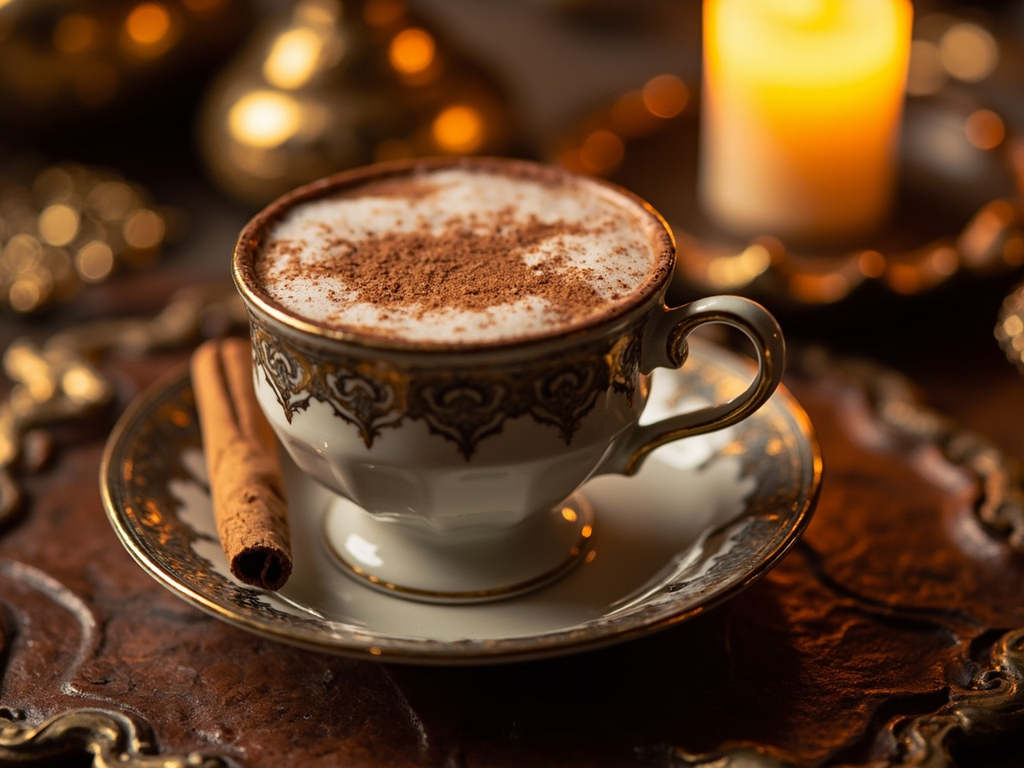
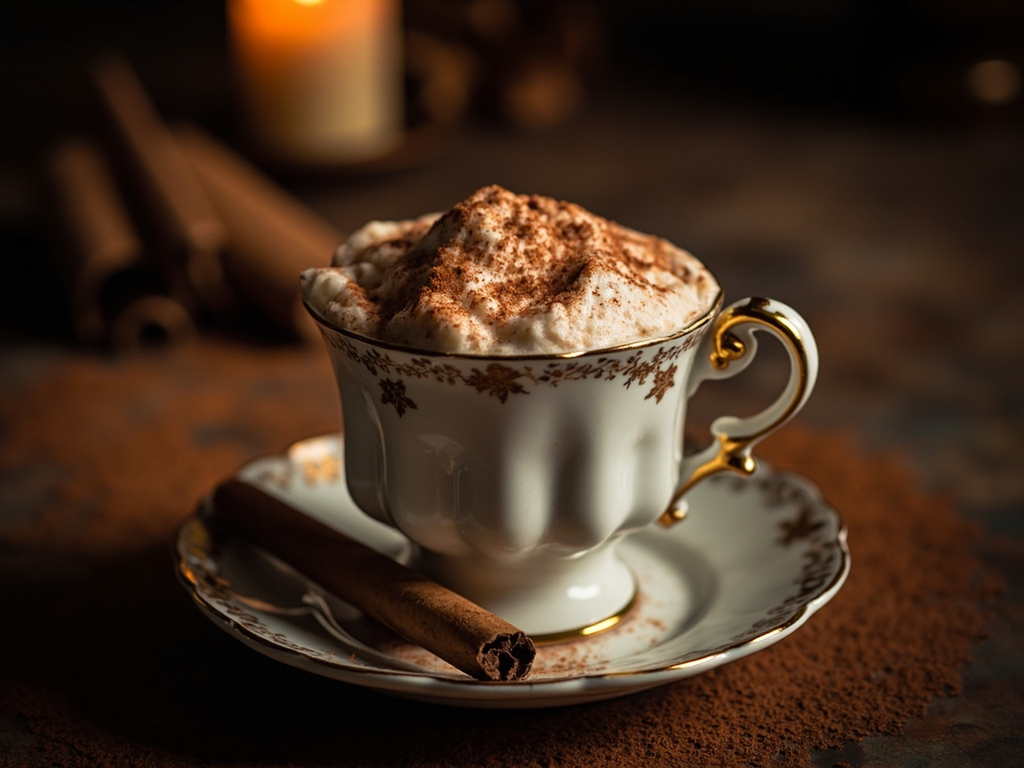
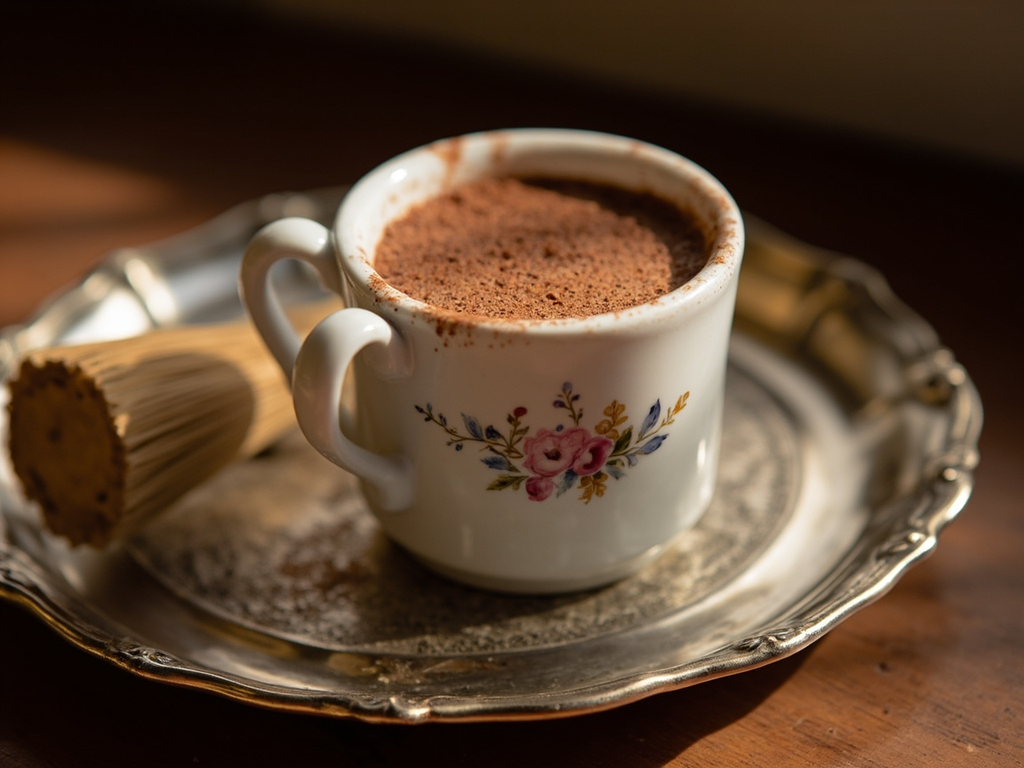
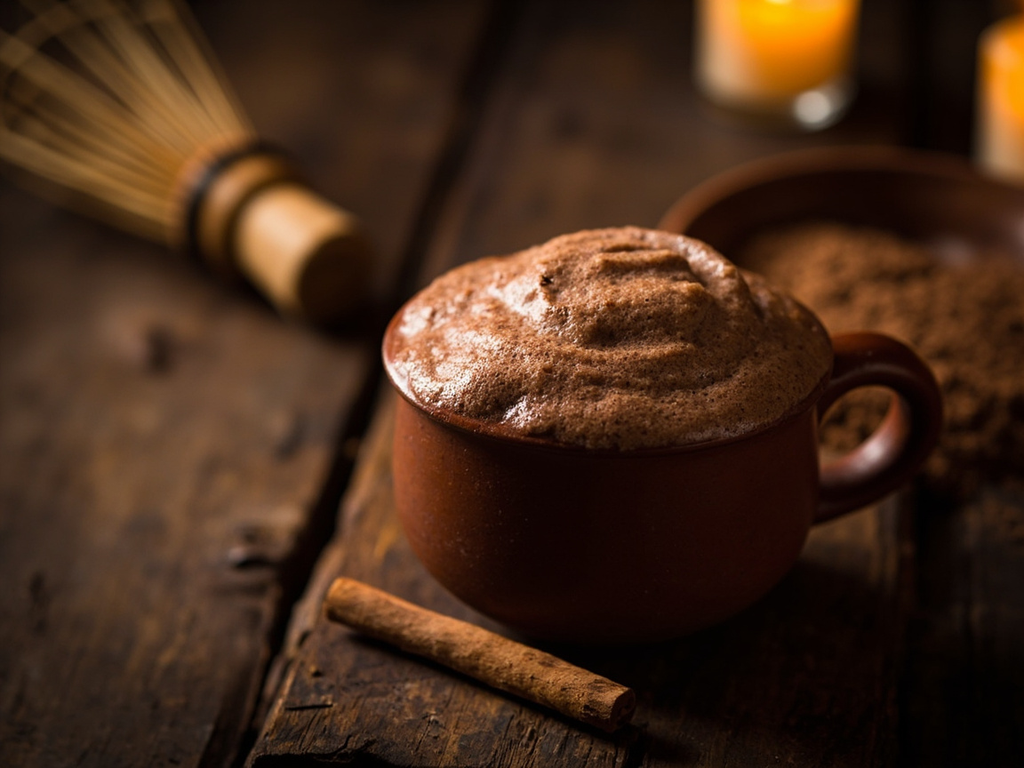
A hot, frothy, bitter drink of ground cacao, perfumed with cinnamon and beaten with a *molinillo* (wooden whisk twirled between the palms) until a thick foam forms — the daily ritual of conventual afternoons.
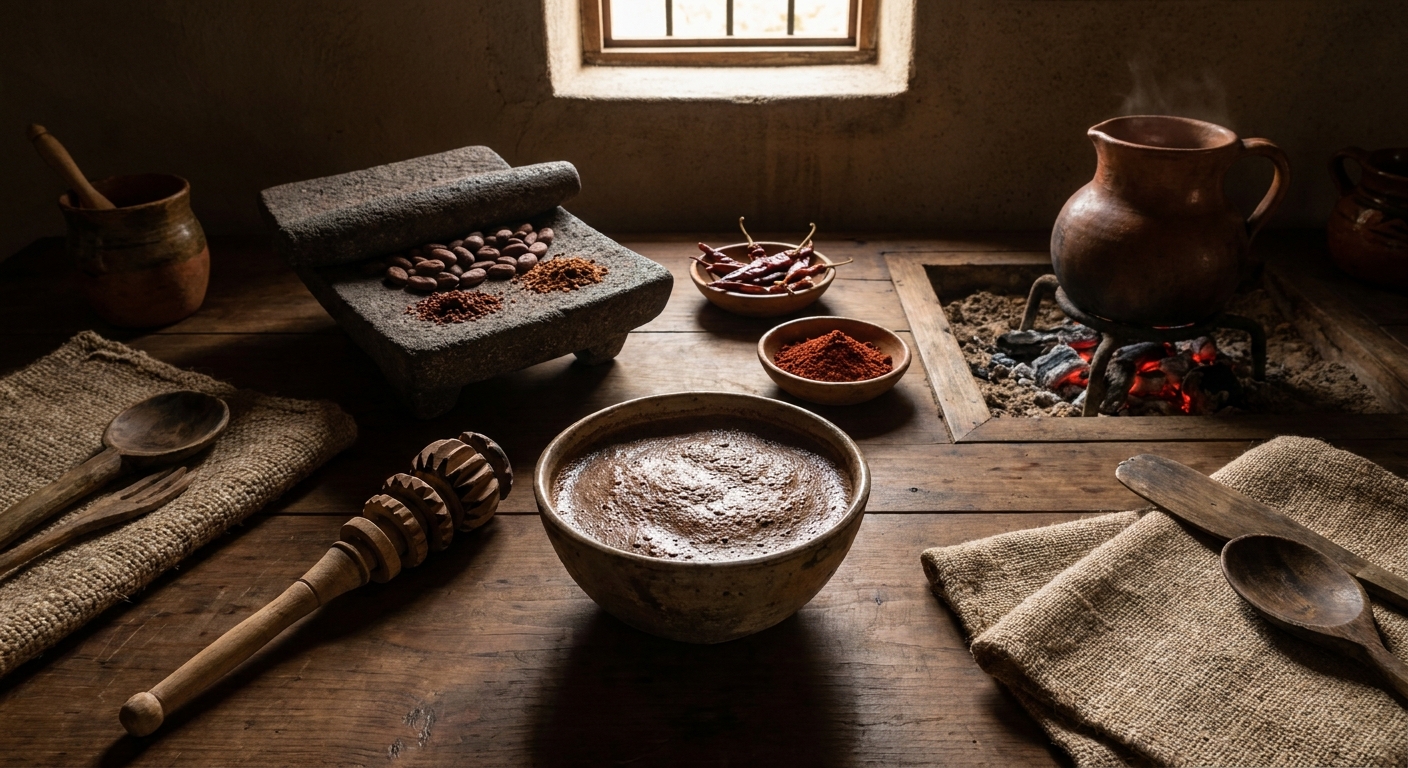
Sit down in the parlor, for no conversation worthy of the name takes place without a *jícara* of steaming chocolate in hand. I toast the cacao beans, grind them on the warm *metate* with a stick of cinnamon, then twirl the *molinillo* between my palms until a noble brown foam rises. It is bitter, I admit, as is the knowledge I am reproached for pursuing — but what better companion to keep vigil over my verses and books?
- •Cacao beans — a handful (base, bitterness)
- •Cinnamon — one stick (aroma)
- •Cane sugar or honey — to taste (sweetness)
- •Water — as needed (liquid)
- •Annatto seeds (achiote) — a few (optional) (color and earthy note)
Chocolate batido al molinillo
A hot, frothy, bitter drink of ground cacao, perfumed with cinnamon and beaten with a *molinillo* (wooden whisk twirled between the palms) until a thick foam forms — the daily ritual of conventual afternoons.
Why this dish? Chocolate was the queen of drinks in the learned convents of New Spain; as a privileged intellectual, Sor Juana consumed it in the parlor where she received the elite of Mexico to converse about poetry and science. It appears among the provisions in the San Jerónimo manuscript.
Sit down in the parlor, for no conversation worthy of the name takes place without a *jícara* of steaming chocolate in hand. I toast the cacao beans, grind them on the warm *metate* with a stick of cinnamon, then twirl the *molinillo* between my palms until a noble brown foam rises. It is bitter, I admit, as is the knowledge I am reproached for pursuing — but what better companion to keep vigil over my verses and books?
Ingredients (period version)
- Cacao beans — a handful (base, bitterness)
- Cinnamon — one stick (aroma)
- Cane sugar or honey — to taste (sweetness)
- Water — as needed (liquid)
- Annatto seeds (achiote) — a few (optional) (color and earthy note)
Ingredients
- Mexican table chocolate (or pure cacao + sugar) — 80 g (base)
- Water (or half water, half milk) — 500 ml (liquid)
- Cinnamon — 1 stick (aroma)
- Cane sugar — 1 to 2 tbsp (sweetness)
Method
- Heat the water (or water-milk) with the cinnamon stick without boiling.
- Melt the chocolate or cacao into it, stirring.
- Add sugar to taste and let simmer for 2 minutes.
- Beat vigorously with a *molinillo* (or whisk, or immersion blender) until a thick foam forms.
- Serve immediately in a cup, scooping the foam on top.
How it was made : Cacao was toasted on the *comal* then ground on the *metate* heated by embers, sometimes mixed with annatto (achiote) for color or dried flowers. It was beaten standing up, the *molinillo* rolling between the palms, a gesture that became emblematic of Novohispanic cuisine. Sugar, imported then cultivated on the colony's cane plantations, softened the native bitterness.
The contemporary twist : Serve in a small clay cup with a shard of 100% dark chocolate to nibble alongside — to taste, like Sor Juana, the bare bitterness before the sweetness.
Sources : Sophie D. Coe, America's First Cuisines · Libro de cocina del Convento de San Jerónimo (recipes attributed to Sor Juana Inés de la Cruz) — debated attribution
Sor Juana Inés de la Cruz · Charactorium