 flip
flipWhipped Cacao from Chiapas — Inspired by the Mesoamerican Drink
Whipped Cacao from Chiapas — Inspired by the Mesoamerican Drink
Why this dish? Appointed bishop of Chiapas in 1544, Las Casas lived on Maya lands where cacao was both a sacred drink and currency. This preparation is inspired — without reproducing a sacred rite — by the whipped cacao drink that Mesoamerican peoples offered and consumed, and that the Spanish discovered there.
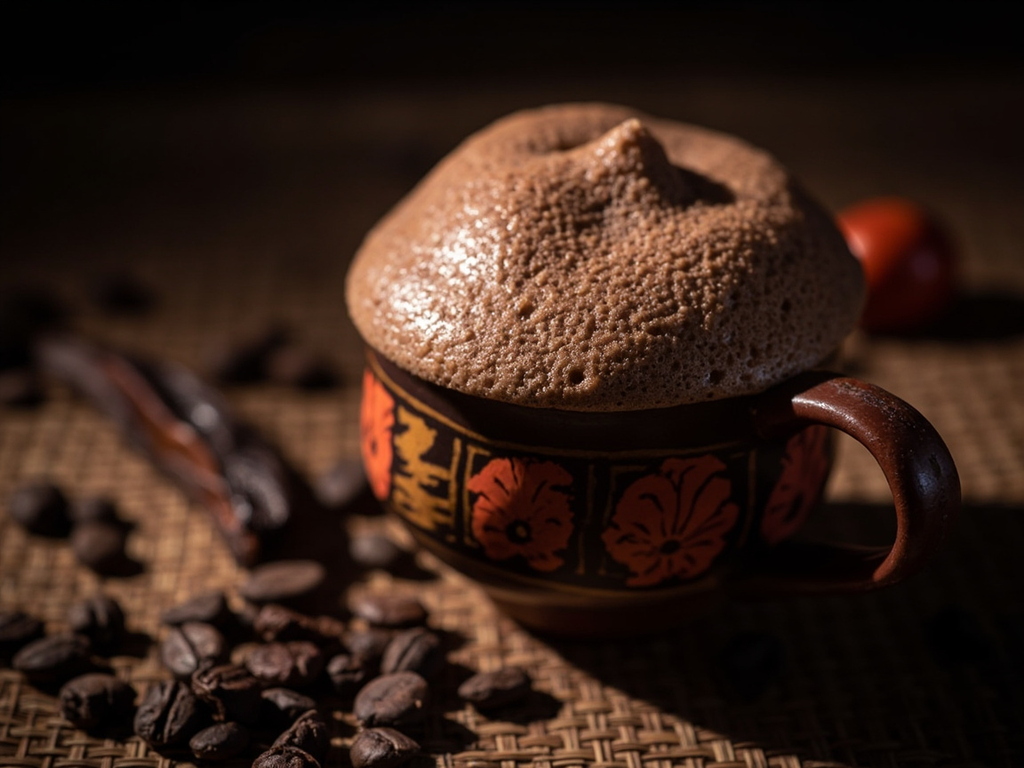
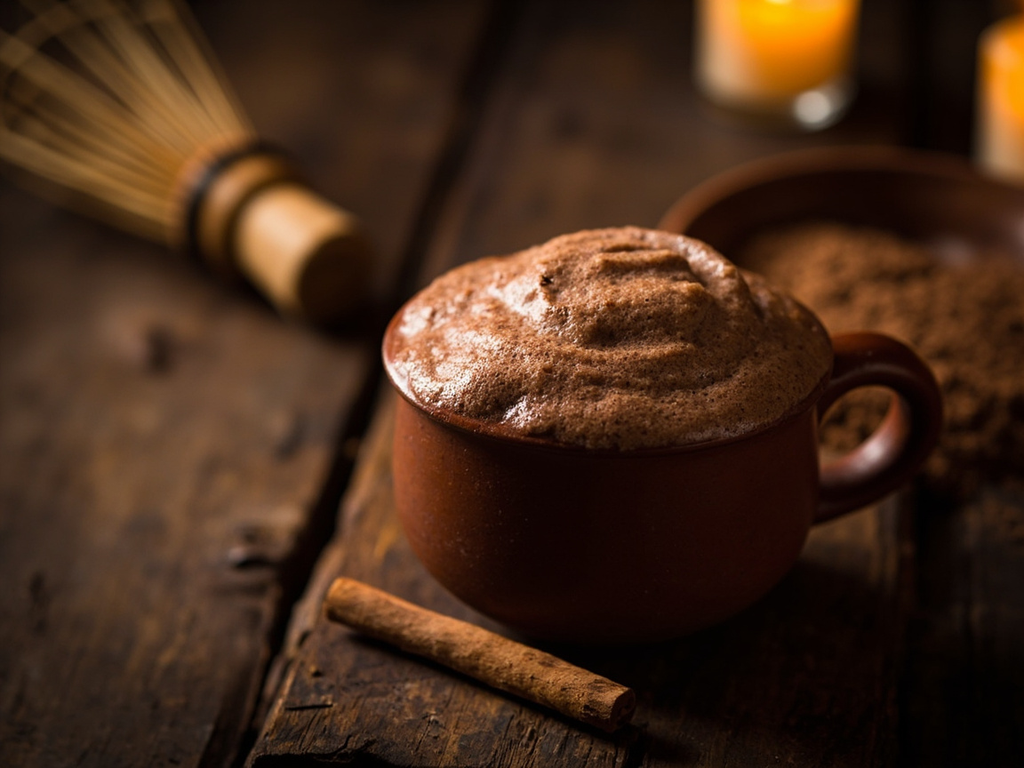
A drink of roasted and ground cacao beans, mixed with hot water, flavored with spices, and vigorously beaten until thick foam forms. Bitter, dense, without sugar originally: very far from today's sweet chocolate.
In Chiapas, among the peoples I was charged to protect, they offered me this drink of *cacau* which they hold in high esteem, so much so that they use it as money. They roast the bean, grind it on the stone, mix it with hot water, and beat it until it foams like the sea. It is bitter and strong, not sweet as our ladies of Castile like it. Taste it as it is, and respect these people: whoever knows how to offer with such ceremony is not the beast they claim.
- •Roasted cacao beans — a handful, ground (base)
- •Hot water — one bowl (liquid)
- •Local spices (achiote, mild chili, fragrant flowers) — to taste (fragrance, color)
- •Honey (possible ancient sweetener) — optional (sweetener)
Whipped Cacao from Chiapas — Inspired by the Mesoamerican Drink
A drink of roasted and ground cacao beans, mixed with hot water, flavored with spices, and vigorously beaten until thick foam forms. Bitter, dense, without sugar originally: very far from today's sweet chocolate.
Why this dish? Appointed bishop of Chiapas in 1544, Las Casas lived on Maya lands where cacao was both a sacred drink and currency. This preparation is inspired — without reproducing a sacred rite — by the whipped cacao drink that Mesoamerican peoples offered and consumed, and that the Spanish discovered there.
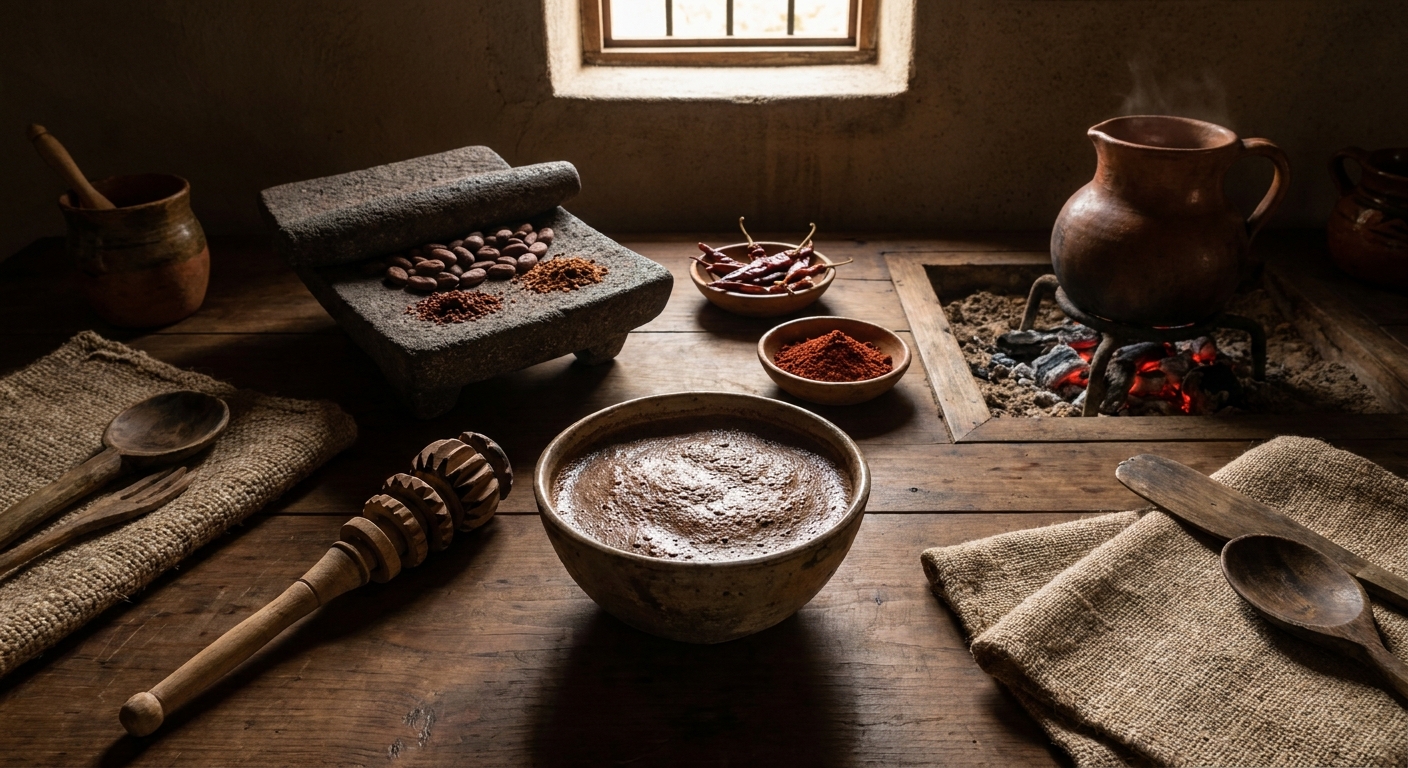
In Chiapas, among the peoples I was charged to protect, they offered me this drink of *cacau* which they hold in high esteem, so much so that they use it as money. They roast the bean, grind it on the stone, mix it with hot water, and beat it until it foams like the sea. It is bitter and strong, not sweet as our ladies of Castile like it. Taste it as it is, and respect these people: whoever knows how to offer with such ceremony is not the beast they claim.
Ingredients (period version)
- Roasted cacao beans — a handful, ground (base)
- Hot water — one bowl (liquid)
- Local spices (achiote, mild chili, fragrant flowers) — to taste (fragrance, color)
- Honey (possible ancient sweetener) — optional (sweetener)
Ingredients
- Unsweetened cocoa powder (or grated cacao paste) — 3 tbsp (base)
- Hot water — 250 ml (liquid)
- Pinch of mild chili + 1 pinch of annatto (achiote) — to taste (spices)
- Honey — optional, 1 tsp (mild sweetener)
Method
- Dissolve cocoa in a little hot water to form a smooth paste without lumps.
- Add the remaining hot water (not boiling), add mild chili and annatto.
- Beat vigorously with a whisk (or pour from one tall container to another) until thick foam forms on top.
- Taste: leave bitter for authenticity, or add a touch of honey.
- Serve immediately in a bowl, scooping up the beautiful foam on top.
How it was made : Among the Maya and Mexica, cacao (*cacahuatl*) was ground on the *metate*, mixed with water, annatto, chili, or flowers, then poured from one vessel to another to make it foam — the foam being the most prized part. Drunk without sugar (unknown there), it was bitter; sugar and milk cooking are later European additions.
The contemporary twist : Served cold and whipped into an emulsion, this bitter, lightly spiced cacao becomes an "espresso tonic" before the letter — the foam as signature.
Bartolomé de las Casas · Charactorium