 flip
flipGratin dauphinois
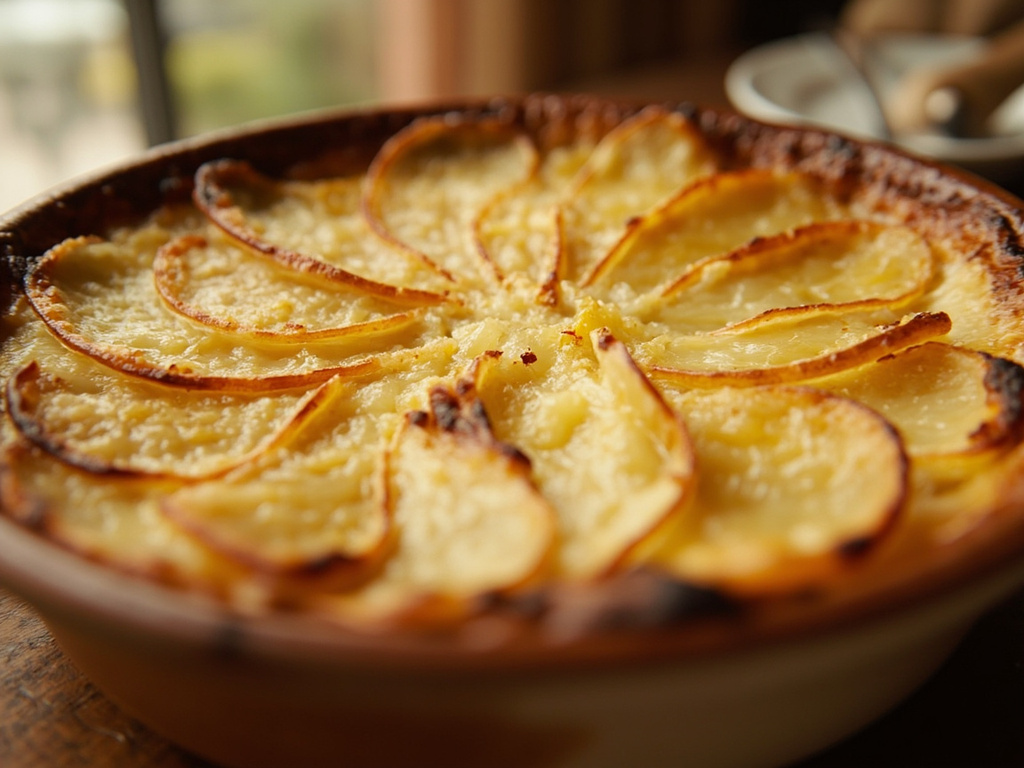
Gratin dauphinois
Why this dish? Stendhal was born in Grenoble in 1783, in the heart of the Dauphiné. This potato gratin, attested in the region as early as the late 18th century, is the dish of his Grenoble childhood, that of the family home and his grandfather Gagnon's garden.
Thin slices of potatoes slowly confited in milk and cream flavored with garlic, baked until a melting golden crust forms. A rustic and hearty dish from the Dauphiné mountains.
I was born in Grenoble, and God knows I hated that town — but not its cooking. This gratin, you see, was made over a low flame, without haste, for haste is the enemy of happiness as of a good dish. A clove of garlic rubbed on the bottom of the earthenware dish, potatoes sliced thin as paper, milk from our cows, and you waited. Patience alone gives this golden crust: remember this, the impatient never dines well.
- •Firm potatoes — a large dish (base)
- •Whole farm milk — enough to cover (cooking liquid)
- •Thick crème fraîche — a good ladleful (binder)
- •Garlic — 1 clove (flavoring)
- •Butter — a knob (greasing the dish)
- •Salt, nutmeg — to taste (seasoning)
Gratin dauphinois
Thin slices of potatoes slowly confited in milk and cream flavored with garlic, baked until a melting golden crust forms. A rustic and hearty dish from the Dauphiné mountains.
Why this dish? Stendhal was born in Grenoble in 1783, in the heart of the Dauphiné. This potato gratin, attested in the region as early as the late 18th century, is the dish of his Grenoble childhood, that of the family home and his grandfather Gagnon's garden.
I was born in Grenoble, and God knows I hated that town — but not its cooking. This gratin, you see, was made over a low flame, without haste, for haste is the enemy of happiness as of a good dish. A clove of garlic rubbed on the bottom of the earthenware dish, potatoes sliced thin as paper, milk from our cows, and you waited. Patience alone gives this golden crust: remember this, the impatient never dines well.
Ingredients (period version)
- Firm potatoes — a large dish (base)
- Whole farm milk — enough to cover (cooking liquid)
- Thick crème fraîche — a good ladleful (binder)
- Garlic — 1 clove (flavoring)
- Butter — a knob (greasing the dish)
- Salt, nutmeg — to taste (seasoning)
Ingredients
- Firm waxy potatoes (Charlotte, Monalisa) — 1 kg (base)
- Whole milk — 40 cl (cooking liquid)
- Heavy cream — 20 cl (binder)
- Garlic — 1 clove (flavoring)
- Butter — 20 g (greasing the dish)
- Salt, pepper, nutmeg — to taste (seasoning)
Method
- Preheat the oven to 150 °C.
- Peel and slice the potatoes into very thin rounds (2-3 mm), without rinsing to keep the starch.
- Rub the gratin dish with the cut garlic clove, then butter it.
- Gently heat the milk and cream with salt, pepper, and nutmeg; par-cook the potatoes in it for 10 minutes.
- Pour everything into the dish, spread evenly, and bake for 1 hour until a knife tip pierces without resistance and the top is golden.
How it was made : The gratin dauphinois is mentioned as early as 1788 during an official meal in Gap, in the Dauphiné. Originally, no cheese: only potatoes, milk, and sometimes a little cream, slowly cooked in a wood-fired oven. The potato, from the Americas but widely spread in France by the 18th century, was no longer an anachronism.
The contemporary twist : Served in individual mini cast-iron pots, crust caramelized with a blowtorch — "Dauphiné en cocotte".
Stendhal · Charactorium