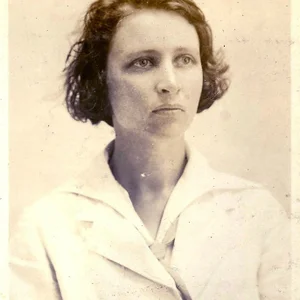

American philosopher, a major figure in the philosophy of art and symbolism in the 20th century. She developed a theory of the symbol encompassing language, art, and myth, making feeling and symbolic form the heart of human experience.
Susanne Langer(1895 — 1985)
Susanne Langer
États-Unis
5 min read
Frequently asked questions
Famous Quotes
« Art is the creation of forms symbolic of human feeling.»
Key Facts
- Born in 1895 in New York, into a family of German origin.
- Earned her doctorate in philosophy from Harvard University (Radcliffe College) in 1926.
- Published her major work, Philosophy in a New Key, on symbolism, in 1942.
- Developed her theory of art in Feeling and Form (1953).
- Died in 1985; a recognized pioneer of aesthetics and the philosophy of the symbol.
Works & Achievements
Her first philosophical work, with a preface by Alfred North Whitehead, which defines philosophy as a clarification of meanings.
A textbook of formal logic that was long in use, showcasing her mastery of the rigorous tools of reasoning.
Her most famous book: it places the symbol at the heart of the human mind and enjoyed immense, lasting success.
An application of her theory of the symbol to the various arts (music, painting, dance, poetry), defining art as the expressive form of feeling.
A collection of lectures that extends and clarifies her philosophy of art for a wider audience.
Essays exploring the connections between mind, biology, and symbolism, paving the way for her great final work.
A three-volume summa linking philosophy, biology, and psychology around feeling; the major work of her maturity.
Anecdotes
Susanne Langer grew up in a cultivated German-American family in New York, where German was spoken at home; as a child, she preferred fairy tales and long walks in the woods to ordinary games, and she remained a passionate nature lover all her life.
As a student at Radcliffe College, she studied under the great philosopher and mathematician Alfred North Whitehead, who became her mentor and even wrote the preface to her first major book. She earned her doctorate in philosophy from Harvard/Radcliffe in 1926, at a time when very few women reached that level.
Her book 'Philosophy in a New Key' (1942) enjoyed an unexpected and lasting success: selling hundreds of thousands of copies, it became one of the most widely read works of philosophy of the 20th century in the United States and made her a rare philosopher to reach a broad audience.
A passionate musician, Langer played the cello and believed that music offered the key to understanding how art expresses emotions without using words — the central idea of her entire philosophy of the symbol.
At more than 70 years old, she embarked on a monumental work, 'Mind: An Essay on Human Feeling', in three volumes published between 1967 and 1982; she completed it as her eyesight was failing, demonstrating exceptional intellectual endurance right up to the threshold of her 90s.
Primary Sources
The symbol is the instrument of thought, and the making of symbols is one of the fundamental activities of the human mind, comparable to eating, looking, or moving.
A work of art is an expressive form created for our perception through the senses or the imagination, and what it expresses is human feeling.
Feeling is the starting point of a philosophy of mind, for it is in sensibility that life becomes conscious of itself.
Philosophy does not consist in accumulating facts, but in clarifying meanings and posing questions correctly.
Key Places
Susanne Langer's birthplace, where she grew up in a cultured German-American family.
The institution where she pursued her higher education and earned her doctorate in philosophy in 1926.
The university where she taught philosophy in the 1940s.
The institution where she was a professor of philosophy from 1954 and completed the bulk of her teaching career.
The town where she spent her final years, close to the nature she loved, and where she died in 1985.
Typical Objects

Musical instrument that Langer played with passion; music was for her the privileged model for thinking about how art gives form to emotions.

The text of her major 1942 book, in which she develops her theory of the symbol encompassing language, art, and myth.

Notations and formulas of formal logic that she taught and presented in her 1937 textbook.

Notebook in which she recorded ideas and readings, the daily working tool of a thinker who wrote into old age.

Writing instruments with which she composed thousands of pages, including the three volumes of 'Mind'.

Book of children's tales that she published in 1923, evidence of her early taste for myth and symbolic storytelling.
School Curriculum
Vocabulary & Tags
Key Vocabulary
Tags
Daily Life
Morning
An early riser, Langer devoted her most lucid mornings to writing and philosophical reading, in the quiet of her study. She liked to work with full concentration, pen or typewriter within reach.
Afternoon
Her afternoons were often split between university teaching, grading students' work, and intellectual exchanges with her colleagues. A demanding professor, she took the work of passing on knowledge seriously.
Evening
In the evening, she relaxed by playing the cello or listening to music, which nourished her reflection on art. Reading and correspondence also filled her evenings.
Food
She led a sober and orderly life, typical of the cultivated middle-class American academics of the 20th century. Meals stayed simple, in the service of intellectual work.
Clothing
She wore the plain, practical attire of a university professor of her time, with no taste for luxury. Her dress reflected a life turned toward the mind rather than appearances.
Housing
She lived in university housing and later in a house in Connecticut, near the woods and countryside she cherished. This attachment to nature accompanied her entire life as a thinker.
Historical Timeline
Period Vocabulary
Liens externes & ressources
Références
Œuvres
The Practice of Philosophy
1930
An Introduction to Symbolic Logic
1937
Philosophy in a New Key
1942
Problems of Art
1957
Philosophical Sketches
1962
Mind: An Essay on Human Feeling
1967–1982