 flip
flipCornbread
Cornbread
Why this dish? Cornbread is the inseparable companion of braised greens and all African American supper dishes. A daily, democratic bread, it embodies the shared abundance that Tarana Burke knew as a child and evokes as the foundation of Black community solidarity.
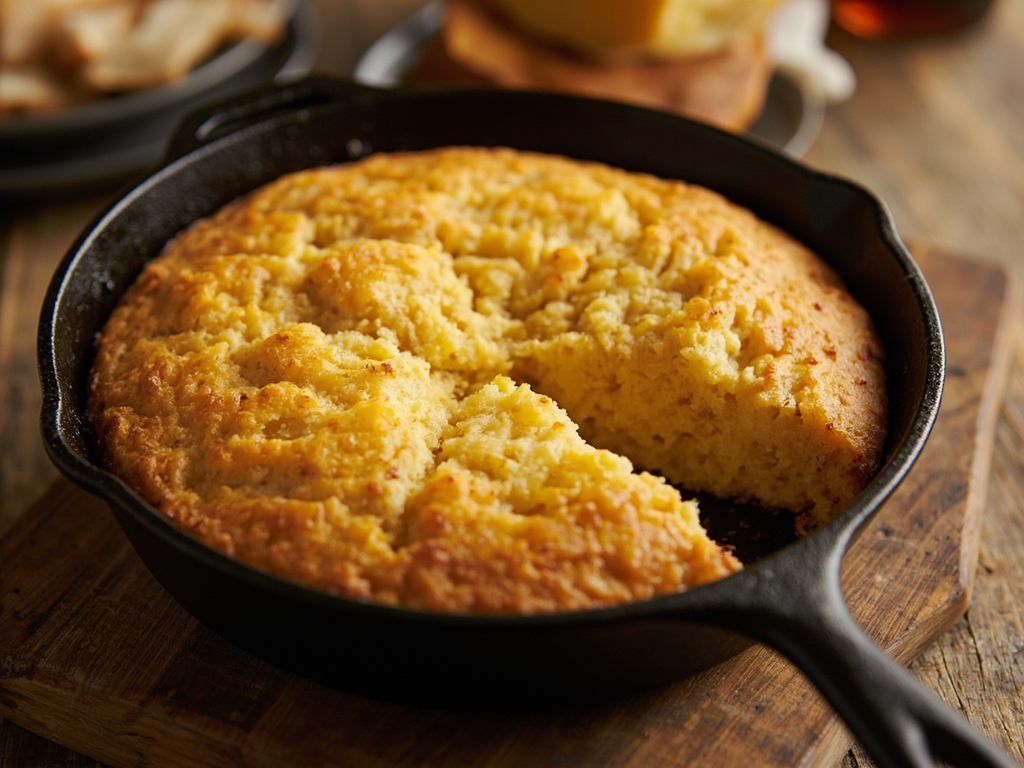
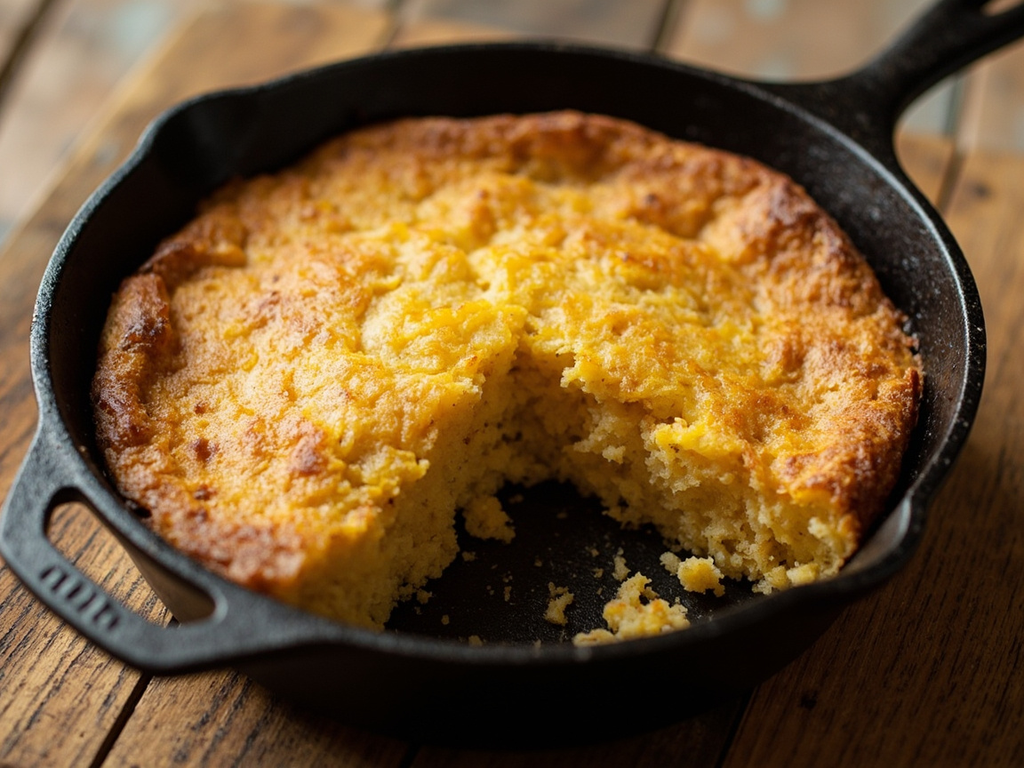
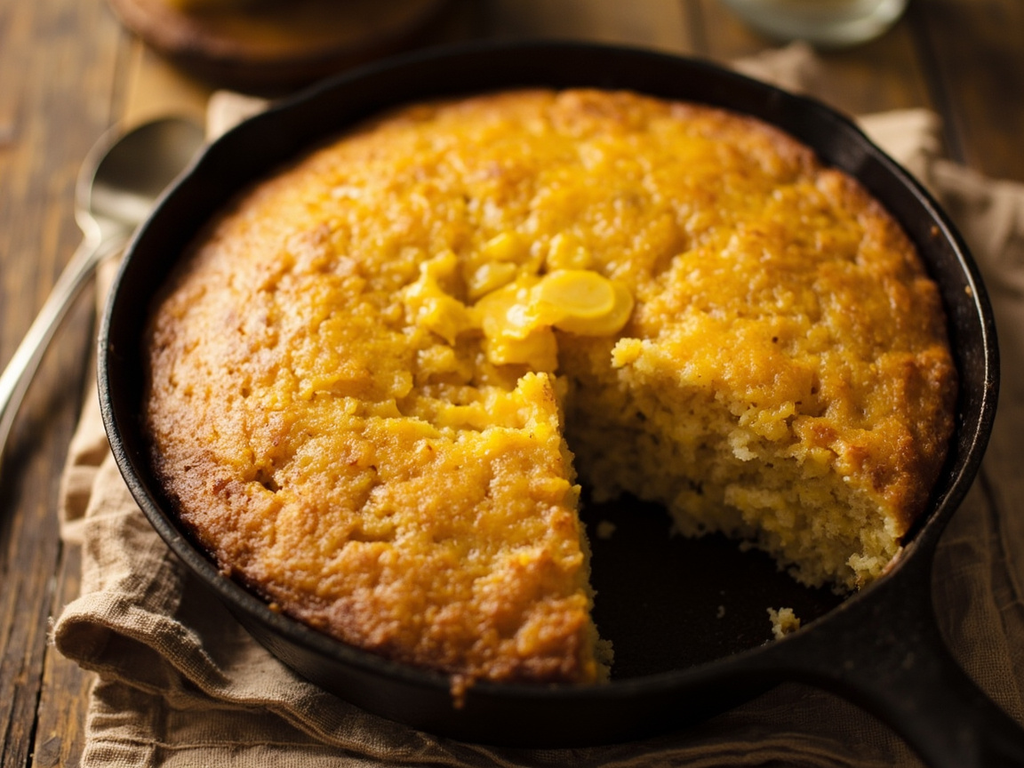
A golden bread with a crisp crust and tender crumb, halfway between bread and cake, just sweet enough. You break it by hand to sop up collard juice or slather it with melting butter.
Cornbread, in my family, we made it in a blazing hot cast-iron skillet — you hear the batter sizzle, that sound tells you the crust will be perfect. Cut it while it's hot, put a pat of butter that melts right in, and dip it in the collard juice. It's simple, it's honest, and it brings everyone around the table. You don't need more to feel at home.
- •Cornmeal — two cups (base)
- •Buttermilk — as needed (tenderness and acidity)
- •Eggs — two (binder)
- •Fat (lard or butter) — a good spoonful (richness, crust)
- •Sugar — a pinch to a spoonful depending on family (sweetness)
- •Salt — a pinch (seasoning)
Cornbread
A golden bread with a crisp crust and tender crumb, halfway between bread and cake, just sweet enough. You break it by hand to sop up collard juice or slather it with melting butter.
Why this dish? Cornbread is the inseparable companion of braised greens and all African American supper dishes. A daily, democratic bread, it embodies the shared abundance that Tarana Burke knew as a child and evokes as the foundation of Black community solidarity.
Cornbread, in my family, we made it in a blazing hot cast-iron skillet — you hear the batter sizzle, that sound tells you the crust will be perfect. Cut it while it's hot, put a pat of butter that melts right in, and dip it in the collard juice. It's simple, it's honest, and it brings everyone around the table. You don't need more to feel at home.
Ingredients (period version)
- Cornmeal — two cups (base)
- Buttermilk — as needed (tenderness and acidity)
- Eggs — two (binder)
- Fat (lard or butter) — a good spoonful (richness, crust)
- Sugar — a pinch to a spoonful depending on family (sweetness)
- Salt — a pinch (seasoning)
Ingredients
- Fine cornmeal — 240 g (base)
- Wheat flour — 120 g (structure, tenderness)
- Buttermilk (or milk + 1 tbsp lemon juice) — 300 ml (tenderness and acidity)
- Eggs — 2 (binder)
- Melted butter — 60 g (richness)
- Sugar — 2 to 3 tbsp (sweetness)
- Baking powder — 1 packet (leavening)
- Salt — 1/2 tsp (seasoning)
Method
- Preheat the oven to 200 °C with a cast-iron skillet (or pan) inside.
- Mix dry ingredients: cornmeal, flour, baking powder, sugar, salt.
- In another bowl, beat the eggs with buttermilk and melted butter.
- Combine the two without overworking the batter — a few lumps are fine.
- Pour the batter into the hot greased skillet: it should sizzle. Bake 20 to 25 minutes until golden.
- Unmold, cut into warm wedges, and serve with butter.
How it was made : Corn, a plant of the Americas cultivated by Indigenous peoples, became a major subsistence grain in the South. African American cuisines created countless breads baked in cast-iron skillets over coals. The debate 'sweet or not sweet' still distinguishes Northern and Southern family traditions today.
The contemporary twist : A version in individual muffins with a hot honey center for the trendy sweet-spicy kick.
Sources : Adrian Miller, 'Soul Food: The Surprising Story of an American Cuisine' (2013) · Toni Tipton-Martin, 'The Jemima Code: Two Centuries of African American Cookbooks' (2015)
Tarana Burke · Charactorium