 flip
flipHóngshāo ròu — red-braised pork belly
Hóngshāo ròu — red-braised pork belly
Why this dish? Eileen Chang admitted her attachment to Shanghai-style braised pork: in her essays on food, the melting, glistening pork belly returns as the very smell of home—a slow-cooked dish that a family in the concessions would enjoy in the evening, white rice alongside.
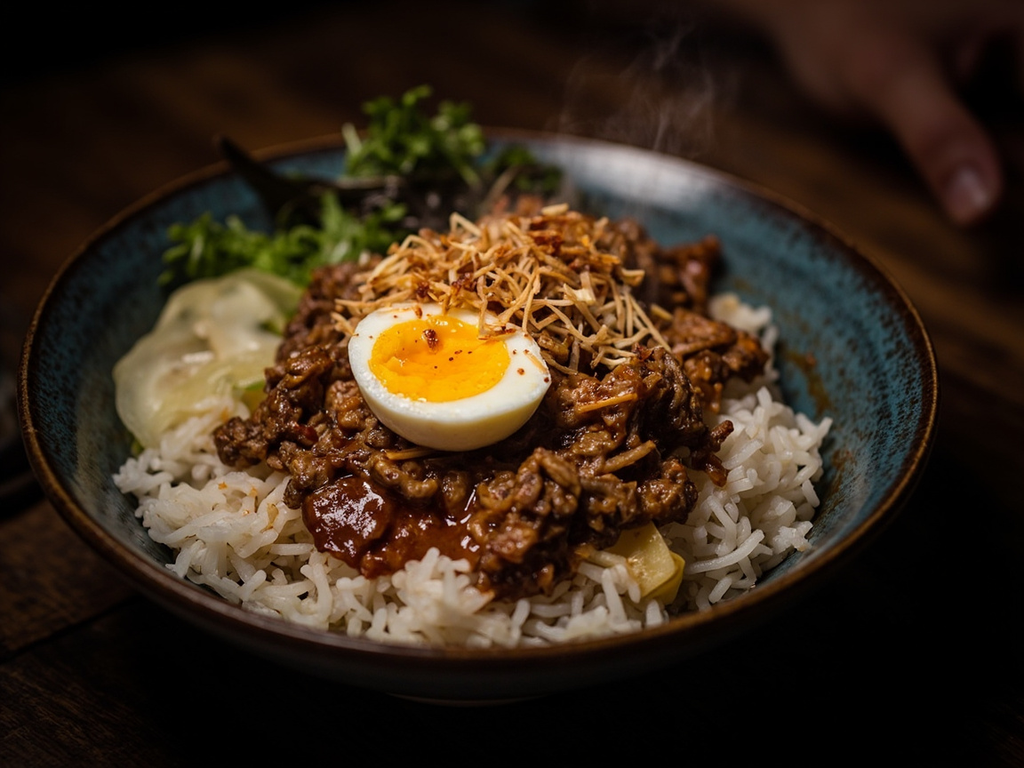
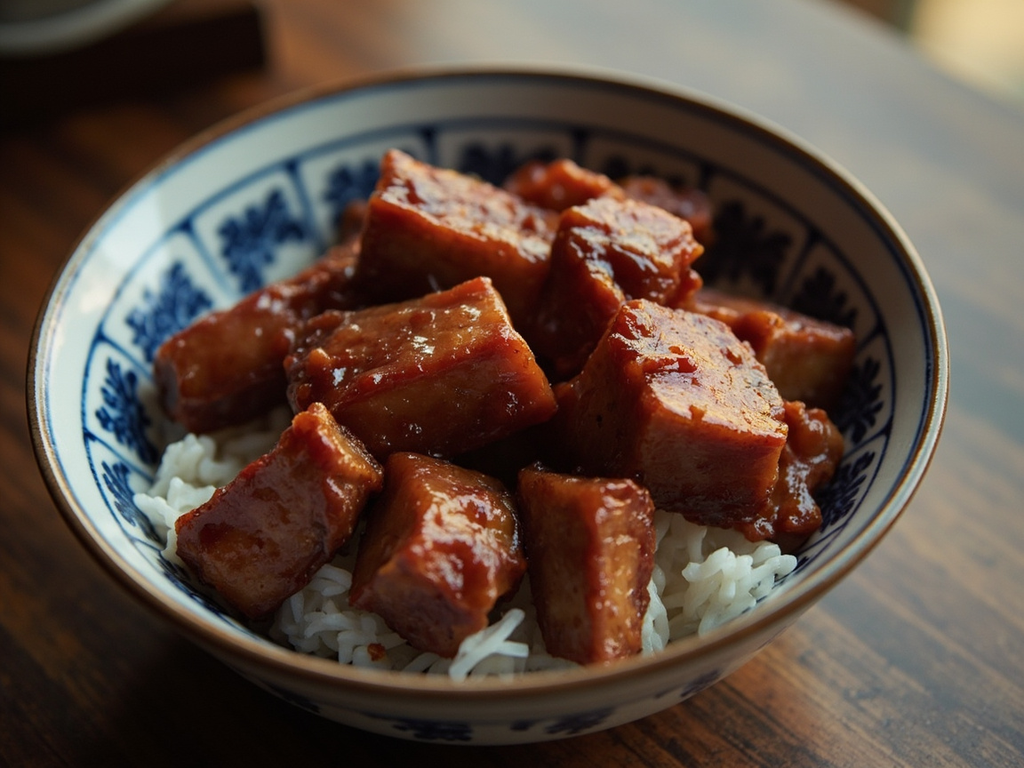
Cubes of pork belly long-braised in soy sauce and rock sugar until lacquered, trembling, the fat turned to gelatin. Shanghai's signature dish: sweet, salty, glossy as red lacquer.
You see, in Shanghai we never said a dish was good: we said it had color. The braised pork must shine like well-polished furniture, reddish-brown, quivering under the chopstick. My family would melt rock sugar in oil until it sang, then toss in the meat and soy sauce, and wait—that is cooking, waiting. As evening fell over the concession, that sweet, fatty smell rose up the stairs, and I knew, just from it, that I was home.
- •Pork belly with skin — a nice piece (meat, gelatinous skin)
- •Rock sugar (crystal sugar) — a handful (caramel, gloss)
- •Light and dark soy sauce — according to desired color (saltiness, vermilion color)
- •Shaoxing rice wine — one bowl (aroma, deglazing)
- •Fresh ginger — a few slices (remove meat odor)
- •Star anise and Chinese cinnamon bark — 1 star, a shard (deep fragrance)
Hóngshāo ròu — red-braised pork belly
Cubes of pork belly long-braised in soy sauce and rock sugar until lacquered, trembling, the fat turned to gelatin. Shanghai's signature dish: sweet, salty, glossy as red lacquer.
Why this dish? Eileen Chang admitted her attachment to Shanghai-style braised pork: in her essays on food, the melting, glistening pork belly returns as the very smell of home—a slow-cooked dish that a family in the concessions would enjoy in the evening, white rice alongside.
You see, in Shanghai we never said a dish was good: we said it had color. The braised pork must shine like well-polished furniture, reddish-brown, quivering under the chopstick. My family would melt rock sugar in oil until it sang, then toss in the meat and soy sauce, and wait—that is cooking, waiting. As evening fell over the concession, that sweet, fatty smell rose up the stairs, and I knew, just from it, that I was home.
Ingredients (period version)
- Pork belly with skin — a nice piece (meat, gelatinous skin)
- Rock sugar (crystal sugar) — a handful (caramel, gloss)
- Light and dark soy sauce — according to desired color (saltiness, vermilion color)
- Shaoxing rice wine — one bowl (aroma, deglazing)
- Fresh ginger — a few slices (remove meat odor)
- Star anise and Chinese cinnamon bark — 1 star, a shard (deep fragrance)
Ingredients
- Pork belly (skin on) — 700 g (meat)
- Rock sugar (or brown sugar) — 40 g (caramel)
- Light soy sauce — 3 tbsp (saltiness)
- Dark soy sauce — 1 tbsp (color)
- Shaoxing rice wine — 100 ml (aroma)
- Ginger — 4 slices (aromatic)
- Star anise — 1 (fragrance)
- Hot water — about 400 ml (braising liquid)
Method
- Cut the pork belly into 3 cm cubes. Blanch in boiling water for 2 minutes, drain.
- In a heavy pot, gently melt the rock sugar in a drizzle of oil until it turns amber (do not burn).
- Add the pork cubes, coat with caramel, and brown.
- Deglaze with Shaoxing wine, add both soy sauces, ginger, star anise, then enough hot water to cover.
- Cover and simmer on low heat for 1 to 1.5 hours, until the meat is tender.
- Uncover, increase heat, and reduce the sauce while stirring to glaze the pieces until they shine.
How it was made : In 1930s–40s Shanghai kitchens, braising was done on a charcoal stove (huoye) for hours; rock sugar, nobler than granulated sugar, gave the sought-after sheen. Each family kept its secret ratio of soy sauce to sugar—it was a domestic signature.
The contemporary twist : Serve the glazed cubes over a soft-boiled egg and a nest of steamed rice, sprinkled with a little sliced scallion for freshness—a "pocket hongshao rou" for today's dinner.
Sources : Eileen Chang, "談吃與畫餅充饑" (On Eating and Drawing Cakes to Stave Off Hunger), essay, collection 《張看》 · Fuchsia Dunlop, Land of Fish and Rice: Recipes from the Culinary Heart of China (2016)
Eileen Chang · Charactorium