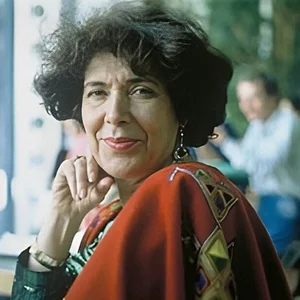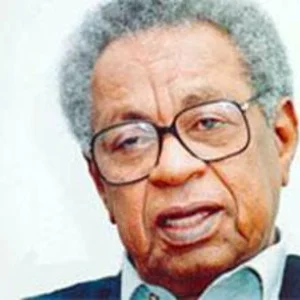

Tayeb Salih (1929-2009) was a Sudanese writer in the Arabic language, regarded as one of the great voices of modern Arabic literature. His novel *Season of Migration to the North* (1966) is a major work on the encounter and clash between East and West.
Tayeb Salih(1929 — 2009)
Tayeb Salih
Soudan
6 min read
Frequently asked questions
Key Facts
- Born in 1929 in northern Sudan, into a rural family
- Studied at the University of Khartoum and then in London
- Published *Season of Migration to the North*, his masterpiece, in 1966
- Long career at the BBC (Arabic section) and later at UNESCO
- Died in London in 2009; his work has been translated into many languages
Works & Achievements
A short novel blending humor and tenderness around a village character. It was adapted into a film and presented at the Cannes Film Festival.
A short story in which a sacred tree becomes the symbol of a village's resistance to imposed modernity. It establishes Salih's village world.
Salih's masterpiece about the clash between East and West. In 2001 it was named the most important Arabic novel of the 20th century.
A novel in two parts (Daw al-Bayt and Maryud) exploring power and generations in a village on the Nile. An ambitious and more complex work.
A short story told from the point of view of a child who discovers the injustice of adults. A text often studied for its moving simplicity.
Anecdotes
In 2001, a jury from the Arab Academy of Damascus named "Season of Migration to the North" the most important Arabic novel of the 20th century. For a short book written by a low-profile Sudanese author, this was an enormous honour throughout the Arab world.
Tayeb Salih grew up in a village of farmers on the banks of the Nile, in northern Sudan, and at first he seemed destined for a life in agriculture. It was only later, after his studies and a long stay in England, that he became one of the greatest voices in Arabic literature.
For years he worked in London for the BBC's Arabic Service, where he headed the radio drama department. The boy from the banks of the Nile thus found himself at the very heart of the studios of Britain's great broadcaster.
His masterpiece was banned for a time in Sudan, his own country, because some scenes were judged too explicit. A book can therefore become famous all over the world while being censored in its author's homeland.
Many of his stories take place in an imaginary village called Wad Hamid, inspired by the region of his childhood. There Salih invented a whole world of farmers, holy men and storytellers, drawn from memories of his native village.
Primary Sources
It was, gentlemen, after a long absence — seven years to be exact, during which I was studying in Europe — that I returned to my people.
I am no Othello. Othello was a lie.
I will live because there are a few people I want to stay with for the longest possible time, and because I have duties to discharge.
Key Places
A village on the banks of the Nile, near Al Dabbah, where Tayeb Salih was born. It inspired the rural world of his stories, notably the imaginary village of Wad Hamid.
The capital of Sudan, where Salih continued his studies at the University of Khartoum before leaving for England.
The city where Salih worked for many years at the BBC's Arabic Service and where he died in 2009. The center of his life as an exile and journalist.
The city where Salih worked with UNESCO, extending his career within international cultural institutions.
The capital of Qatar, where Salih held responsibilities at the Ministry of Information for the Gulf states.
Typical Objects
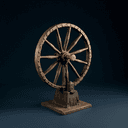
A large wheel turned by an ox or a donkey to draw water from the Nile and irrigate the fields. Its creaking set the rhythm of life in the riverside villages of Salih's childhood.
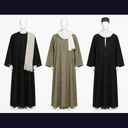
A long, loose, light-coloured tunic worn by men in Sudan. The everyday garment of the villagers that Salih often portrays.
📷 CC0 · Wikimedia Commons ↗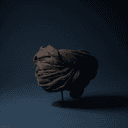
A long piece of white cloth wound around the head. A mark of respectability and dignity among the men of northern Sudan.

A tool of Salih's trade during his years with the BBC's Arabic service in London. There he produced programmes and radio drama for an Arabic-speaking audience.
📷 CC BY-SA 3.0 fr · Wikimedia Commons ↗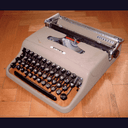
The writing instrument of twentieth-century novelists and journalists. It was with this kind of tool that the Arabic manuscripts of Salih's era were composed.
📷 Domaine public · Wikimedia Commons ↗
The fruit of the palm trees of the Nile's oases, a staple of the diet and a source of village wealth. They give their name to the short story “A Handful of Dates”.
School Curriculum
Vocabulary & Tags
Key Vocabulary
Daily Life
Morning
As a child, Tayeb Salih would rise early in his village by the Nile, to the sound of the *saqia*, the waterwheel creaking as it drew up water. As an adult and a journalist in London, his mornings were devoted to reading the news and preparing his broadcasts.
Afternoon
In the afternoon, he worked in the **BBC** studios, writing and recording programs in Arabic. It was also the time when he slowly composed his novels — a writer who published little but with great rigor.
Evening
In the evening, he returned to books and conversations, torn between the Arab culture of his roots and London life. Many of his stories were born from memories of village evening gatherings, when the elders would tell tales.
Food
In his native **Sudan**, the diet was based on broad beans (*ful*), bread, dates, and sweet tea — products of the lands irrigated by the Nile. In London, he discovered a European cuisine very different from that of his childhood.
Clothing
In the village, men wore the white *jellabiya* and the *imma*, the Sudanese turban. As a journalist in England, Salih dressed like a city man, in a Western suit.
Housing
His childhood was spent in a house of mud bricks, typical of the villages of northern **Sudan**, near the river. His adult life unfolded mostly in apartments in big cities like **London**.
Historical Timeline
Period Vocabulary
Liens externes & ressources
Références
Œuvres
Le Doum de Wad Hamid
années 1960
Saison de migration vers le Nord (Mawsim al-hijra ila al-shamal)
1966
Bandarshah
1971-1976
Une poignée de dattes
années 1960