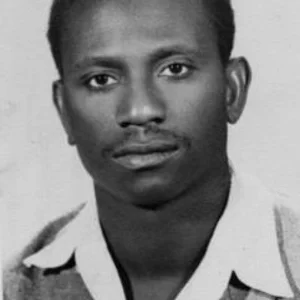

Ben Okri is a Nigerian writer and poet born in 1959. A major figure in contemporary African literature, he is known worldwide for his novel *The Famished Road*, which won him the Booker Prize in 1991.
Ben Okri(1959 — ?)
Ben Okri
Royaume-Uni, Nigeria
6 min read
Frequently asked questions
Famous Quotes
« The greatest sin is to despise or waste the experience of being alive.»
Key Facts
- Born on 15 March 1959 in Minna, Nigeria
- Left Nigeria to study literature in England in the late 1970s
- Published *The Famished Road* in 1991, blending magical realism and West African mythology
- Received the Booker Prize in 1991, becoming one of its youngest winners
- Continued a prolific body of novels, poems, and essays into the 21st century
Works & Achievements
Okri's first novel, written at a very young age, about corruption and social tensions in postcolonial Nigeria.
His second novel, which follows a young painter confronted with the chaos of his country.
A collection of short stories that brought him his first critical recognition and several awards.
A collection of short stories blending raw reality and the marvelous in contemporary Nigeria.
Okri's masterpiece, winner of the Booker Prize, telling the story of the spirit-child Azaro caught between the real world and the world of spirits.
A collection of poems expressing hope and beauty in the face of suffering.
The sequel to *The Famished Road*, which continues Azaro's adventures.
A novel-fable about an invisible people and the quest for meaning, of great philosophical depth.
Anecdotes
At nineteen, Ben Okri left Nigeria to study comparative literature at the University of Essex, in England. When his scholarship was cut off, he experienced poverty and sometimes spent his nights outdoors, sleeping in parks or at friends' homes, all while continuing to write tirelessly.
In 1991, at just 32 years old, he won the Booker Prize, one of the most prestigious British literary awards, for *The Famished Road*. He thus became one of the youngest winners in the history of the prize and one of the first African writers to receive it.
The hero of *The Famished Road*, Azaro, is an “abiku”: according to Yoruba and Urhobo beliefs, a spirit-child who endlessly dies and is reborn, hesitating between the world of the living and that of the spirits. Okri thus blends the daily life of a Nigerian shantytown with the marvellous, in a style that has been compared to “magical realism”.
As a child, Ben Okri returned to Nigeria with his family and lived through, while still very young, the Biafran civil war (1967-1970). The violence and suffering he witnessed would deeply shape his imagination as a writer.
Okri invented a word to describe a literary form all his own: the “stoku”, a blend of *story* and *haiku*, very short tales seeking to capture an instant or a sudden revelation.
Primary Sources
In the beginning there was a river. The river became a road and the road branched out to the whole world. And because the road was once a river it was always hungry.
We are the miracles that God made / To taste the bitter fruit of Time.
Storytellers and poets are the true invisible legislators of the world, for they shape the way we see and feel.
Key Places
Town in central Nigeria where Ben Okri was born in 1959. A region marked by the diversity of the country's peoples.
Large Nigerian metropolis where Okri partly grew up and which inspires the urban landscapes of his novels. Its working-class neighbourhoods feed the world of *The Famished Road*.
British institution where Okri studied comparative literature from the late 1970s onward. There he endured years of great hardship.
City where Ben Okri settled and built his career as an acclaimed writer. There he received the Booker Prize in 1991.
Typical Objects

Okri's basic tools, with which he filled countless pages even during his precarious years in London. Handwriting is at the heart of his work as a novelist and poet.

Okri's major work, a thick novel that follows the spirit-child Azaro through a Nigerian slum. The book itself became a symbol of the renewal of African literature.

Award received in 1991 for *The Famished Road*. It symbolizes the international recognition of an African voice at the summit of English-language letters.

A figure in Yoruba and Urhobo beliefs: a child who dies and is reborn endlessly, suspended between two worlds. The hero Azaro embodies this creature at the heart of the novel.

A fermented drink tapped from the palm tree, served in the drinking establishment run by Azaro's mother. It is at the center of the neighborhood's social life in *The Famished Road*.

The source of light in the modest home of Azaro and his parents, where electricity is lacking. It lights up the long evenings filled with spirits and stories.
School Curriculum
Vocabulary & Tags
Key Vocabulary
Tags
Daily Life
Morning
Like many writers, Okri often devotes his mornings to writing, in quiet, before the bustle of the day. During his student years in England, his mornings were sometimes those of a young man without stable housing, searching for a place to work.
Afternoon
The afternoon may be reserved for reading, revising texts, or literary gatherings. Okri takes part in public readings, lectures, and festivals around the world.
Evening
In the evening, he frequents London's cultural circles, attends poetry events, or continues his reading. It is also a time well suited to reflection and to composing his poems.
Food
His diet blends the flavours of West Africa, such as dishes made with yam, rice, or spicy stews, with the British cuisine of his adopted country. Palm wine, ever-present in his novels, belongs to Nigerian culture.
Clothing
Okri wears contemporary clothing, suits or elegant attire for ceremonies and public appearances. He sometimes sports elements recalling his African heritage.
Housing
After years of precariousness, he lives in classic London dwellings, apartments furnished with books. His novels, however, depict the shacks and hovels of Nigerian slums, the opposite of this comfort.
Historical Timeline
Period Vocabulary
Liens externes & ressources
Références
Œuvres
Flowers and Shadows
1980
The Landscapes Within
1981
Incidents at the Shrine
1986
Stars of the New Curfew
1988
La Route de la faim (The Famished Road)
1991
An African Elegy
1992
Songs of Enchantment
1993