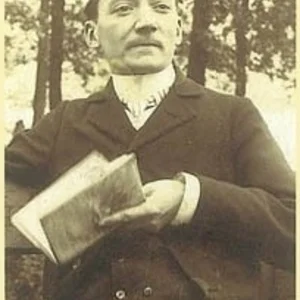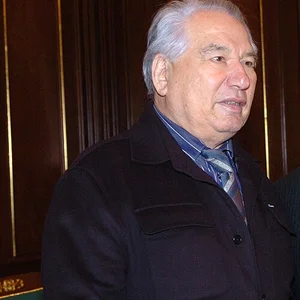

Chingiz Aitmatov (1928-2008) was a Kyrgyz writer who wrote in both Kyrgyz and Russian, a major figure of Soviet literature. His novels blend realism, ancestral legends, and social criticism, celebrating the nomadic culture of Central Asia.
Chingiz Aitmatov(1928 — 2008)
Chingiz Aitmatov
Kirghizistan, Union soviétique
6 min read
Frequently asked questions
Key Facts
- Born on December 12, 1928 in the village of Sheker, in Soviet Kyrgyzstan
- Published the novella “Jamilia” in 1958, praised by Louis Aragon as “the most beautiful love story in the world”
- Received the Lenin Prize in 1963 for his collection “Tales of the Mountains and Steppes”
- Published his major novel “The Day Lasts More Than a Hundred Years” in 1980
- Died on June 10, 2008 in Nuremberg, Germany
Works & Achievements
A love story set against the backdrop of kolkhoz life during the war. Translated by Aragon, it revealed Aitmatov to the world.
The story of a young Komsomol schoolteacher bringing education to a remote village. Adapted for the screen by Andrei Konchalovsky.
A collection of short stories awarded the Lenin Prize, establishing Aitmatov as a great Soviet writer.
A novel in which the fate of a pacing horse mirrors the trials of a Kyrgyz shepherd facing those in power. Honored with the USSR State Prize.
A poetic and tragic tale of a dreamy child confronted with the cruelty of adults, weaving together the legend of the Mother-Deer and reality.
Aitmatov's first great novel, in which the legend of the mankurt becomes a metaphor for lost memory and faithfulness to one's roots.
A perestroika-era novel addressing drugs, corruption, and faith, carried by the pair of wolves Akbara and Tashchainar.
Anecdotes
Tchinguiz Aïtmatov was only nine years old when his father Törökul, a senior Kyrgyz communist official, was arrested in 1937 and then shot in 1938 during Stalin's Great Terror. Raised as the “son of an enemy of the people,” the boy grew up listening to his grandmother tell the nomadic tales and legends that would later nourish his novels.
During the Second World War, while the adult men were at the front, the fourteen-year-old Aïtmatov became secretary of his village soviet because he could read and write. Among other duties, he had to collect taxes and inform families of the deaths of their soldiers.
In 1958, the French poet Louis Aragon discovered the novella Jamila, translated it into French, and called it “the most beautiful love story in the world.” This preface made Aïtmatov known in the West and launched his international reputation.
The word “mankurt,” coined by Aïtmatov in his 1980 novel, refers to a slave who has lost all memory of his origins. The term entered the Russian language and the languages of Central Asia to describe a person cut off from their culture and history.
In 1991, a mass grave of victims of Stalin's purges was discovered at Chong-Tash, near Bishkek. There Aïtmatov recognized his father's remains and helped create the Ata-Beyit memorial, where he himself would be buried upon his death in 2008.
Primary Sources
Jamilia is, to my mind, the most beautiful love story in the world.
The Juan-Juan turned their captives into mankurts: they shaved the prisoner's head and clamped a piece of camel hide onto it which, as it dried, crushed his memory; the slave then no longer remembered his name, his mother, or his people.
I write in Kyrgyz and in Russian: these two languages are like my two hands, and I could not give up either of them.
Key Places
Aitmatov's native village, at the foot of the Tian Shan mountains. It was here that he discovered nomadic life and the legends told to him by his grandmother.
Capital of the Kyrgyz SSR where Aitmatov studied at the agricultural institute and later pursued his career as a writer and public figure.
Training school for Soviet writers that Aitmatov attended from 1956 to 1958. There he perfected his craft at the heart of the USSR's literary life.
Diplomatic posting where Aitmatov represented independent Kyrgyzstan as ambassador to the European Union and the Benelux countries.
City where Aitmatov, hospitalized, died on 10 June 2008 of kidney failure.
Memorial to the victims of Stalin's purges, where his father's remains were found. Aitmatov is buried here at his own request.
Typical Objects

Three-stringed lute, the emblematic instrument of Kyrgyz music. It accompanies the bards who recite the ancestral epics dear to Aitmatov.

Tall white felt hat worn by Kyrgyz men. It protects against sun and cold and remains a strong symbol of national identity.

Large smoked leather skin used to ferment mare's milk. It is in this vessel that nomads prepare kumis, their traditional drink.

Kyrgyz felt rug with colorful, hand-stitched patterns. It insulates the floor of the yurt and decorates the nomadic home.

Braided riding crop of Central Asian horsemen. A tool for riding, it is also a sign of authority among the nomads.

Aitmatov's everyday working tool, which he uses to write his novels in Kyrgyz and Russian. It embodies his profession as a Soviet writer and journalist.
School Curriculum
Vocabulary & Tags
Key Vocabulary
Tags
Daily Life
Morning
A disciplined writer, Aitmatov devoted his mornings to writing, his most productive hours, often from dawn. This habit harked back to his childhood in the *aïl*, where the day began early to tend the livestock.
Afternoon
His afternoons were given over to his many public duties: journalist at *Pravda*, head of literary journals, member of parliament, then diplomat. He took part in meetings, received visitors and travelled a great deal.
Evening
In the evening, he read, welcomed friends and fellow writers, or reworked his texts. Conversation, storytelling and the memory of nomadic legends held a great place in his evenings.
Food
His diet blended Central Asian cuisine with Soviet habits: bread, tea, mutton and rice dishes such as *plov*, sometimes accompanied by *kumis*, the fermented mare's milk of his childhood.
Clothing
As an adult, Aitmatov most often wore the plain suit and tie of Soviet intellectuals and dignitaries. At Kyrgyz ceremonies, he might sport the white felt hat, the *ak-kalpak*, a sign of attachment to his culture.
Housing
Having become a recognized writer, he lived in urban apartments in Frunze and Moscow, then in diplomatic residences in Europe. These dwellings contrasted with the felt yurt of the nomads of his youth.
Historical Timeline
Period Vocabulary
Liens externes & ressources
Références
Œuvres
Djamilia
1958
Récits des montagnes et des steppes
1963
Adieu, Goulsary !
1966
Le Bateau blanc
1970
Une journée plus longue qu'un siècle
1980
Le Billot
1986