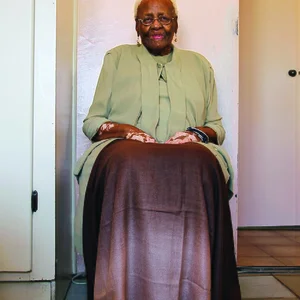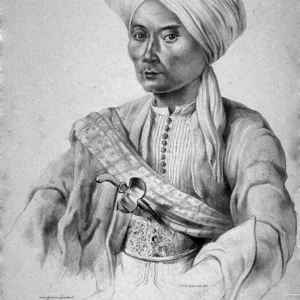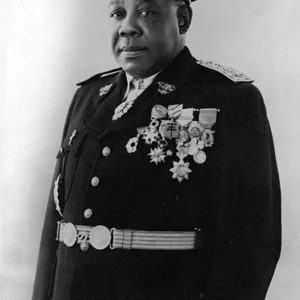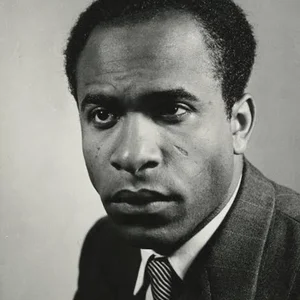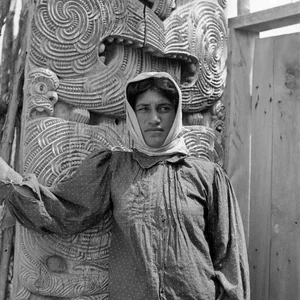

Māori princess from New Zealand (1883–1952), granddaughter of King Tāwhiao, she devoted her life to the cultural and political revival of her people. She resisted the conscription of Māori during World War I and built the village of Tūrangawaewae, a symbol of Māori dignity.
Te Puea Herangi(1883 — 1952)
Te Puea Herangi
Nouvelle-Zélande
8 min read
Frequently asked questions
Key Facts
- 1883: born into the Kīngitanga (Māori King Movement)
- 1915–1918: active resistance to the conscription of Māori into the British army
- 1921: founding and construction of the village of Tūrangawaewae at Ngāruawāhia
- 1930s: organized the reception of the British royal family, raising the profile of the Māori people
- 1952: death, leaving a lasting legacy for the Māori movement
Works & Achievements
A masterpiece of community rebuilding: Te Puea mobilised impoverished Māori families to construct from scratch a model village and a marae adorned with outstanding carvings. The site is now heritage-listed and remains the principal home of the Kīngitanga.
Te Puea collected, taught, and shared hundreds of Māori songs and dances that were at risk of being lost, forming travelling performance groups. Her work is regarded as foundational to the twentieth-century Māori cultural renaissance movement.
A major act of political defiance: Te Puea organised civil disobedience among Waikato men against military conscription, arguing that the Waikato had not signed the Treaty of Waitangi and owed nothing to a Crown that had confiscated their lands.
Over two decades, Te Puea negotiated with the New Zealand government for compensation for the Waikato lands confiscated in 1863. In 1946 she secured a partial payment — the first official acknowledgement of the injustice of the confiscations.
When health authorities abandoned Māori communities during the Spanish flu pandemic, Te Puea personally coordinated care, transport of the sick, and burials across the Waikato, saving many lives.
Anecdotes
During the First World War, the New Zealand government attempted to forcibly conscript Māori men from the Waikato. Te Puea fiercely opposed this, arguing that these men should not fight for a Crown that had confiscated their lands. She hid young men in the swamps and forests of the Waikato, defying colonial authorities who threatened her with arrest.
From 1921 onwards, Te Puea personally oversaw the construction of the Tūrangawaewae village at Ngāruawāhia, often working with her own hands alongside her people. She rallied hundreds of impoverished Māori families to build what would become the symbolic heart of the Kīngitanga movement, the Māori King tradition.
During the great influenza epidemic of 1918, which devastated Māori communities far more severely than Pākehā (New Zealanders of European descent), Te Puea organised emergency care for her people, personally nursing the sick at a time when many were dying for lack of official medical assistance. Her dedication during this crisis permanently strengthened her standing among her people.
In 1940, Te Puea joined a Māori delegation to Wellington for the centenary celebrations of the Treaty of Waitangi. She used this public platform to remind the audience that her people, the Waikato, had never signed the treaty, and that the lands confiscated since the wars of 1863–1864 remained an unresolved injustice. Her speech left a lasting impression across New Zealand.
Te Puea was a guardian and restorer of Māori arts: she collected and taught hundreds of waiata (traditional songs) that colonisation had nearly erased, and trained performing groups who travelled throughout the country. Her cultural revitalisation work laid the foundations for the Māori renaissance of the twentieth century.
Primary Sources
We, the Waikato, have not forgotten the confiscation of our lands. We cannot send our sons to fight for a King whose government took what was ours. They must first give back what was stolen.
The Waikato tribes, under the influence of their leaders, continue to resist enlistment, citing the land confiscations of 1863 as the primary grievance against the Crown.
This house is not built of wood alone — it is built of the tears and labour of our people. Let it stand as proof that we are still here, that our mana endures, that no war or sickness or law can silence us.
I write to you once more on the matter of the Waikato lands. My people are patient, but patience without justice is only silence imposed upon us. The time has come for the Crown to acknowledge its debt.
Princess Te Puea, widely regarded as the foremost leader of the Maori people, has in the course of three decades transformed a community of poverty and despair into a proud and thriving settlement at Ngaruawahia.
Key Places
A marae (ceremonial and community gathering place) built from 1921 under Te Puea's leadership, which became the seat of the Kīngitanga and the symbolic heart of the Māori nation. Its name literally means 'a place to stand' — a metaphor for restored dignity.
The ancestral territory of the Waikato people, much of which was confiscated by the British Crown following the wars of 1863–1864. It was here that Te Puea was born, lived, and led her campaign for the return of Māori land.
The capital city where Te Puea travelled on multiple occasions to negotiate directly with successive governments for compensation over confiscated Waikato lands and to defend the rights of her people.
Te Puea's home marae in the Huntly area, and the starting point of her community activism. It was here that she came to understand the hardship faced by her people and resolved to dedicate her life to their revival.
Typical Objects

A Māori ceremonial cloak woven from flax and adorned with huia or kiwi feathers, symbolizing rank and mana. Te Puea wore it on official occasions, asserting the dignity and continuity of Māori chieftainship in the face of colonial authority.

A long carved hardwood weapon and ceremonial emblem used during formal welcomes and speeches on the marae. It represented the authority and warrior tradition of the Kīngitanga, of which Te Puea was the guardian.

A traditional Māori basket made from native flax (harakeke), used daily to carry food and belongings. Te Puea encouraged the teaching of weaving as a form of cultural resistance and a way of passing down Māori women's knowledge.

Te Puea devoted part of her life to collecting and recording traditional Māori songs that were at risk of being forgotten. These handwritten notebooks were a tool of cultural revitalization that she used to educate younger generations.

A carved paddle used on waka (traditional Māori canoes), symbolizing the voyage, ancestral heritage, and collective solidarity. Te Puea had waka restored and brought back into use for major Kīngitanga celebrations.

As an instrument of diplomatic resistance, Te Puea corresponded extensively with New Zealand ministers and prime ministers to demand justice over confiscated lands. Her letters, written in both English and Māori, combined colonial formality with sovereign dignity.
School Curriculum
Vocabulary & Tags
Key Vocabulary
Tags
Daily Life
Morning
Te Puea began her days with a karakia (traditional Māori prayer), recited facing the marae at sunrise. She would then oversee communal work — construction, collective gardening — often working side by side with the laborers herself.
Afternoon
Afternoons were dedicated to meetings (hui) on the marae, where Te Puea listened to families' grievances, resolved disputes, and planned political action. She also drafted letters in English to New Zealand authorities from her office at Tūrangawaewae.
Evening
Evenings often took place in the community hall, where Te Puea led young people in learning waiata and haka. Gatherings around the fire were also an opportunity to pass down whakapapa (genealogies) and the stories of the ancestors.
Food
The diet at Tūrangawaewae combined traditional Māori resources — fish and eels from the Waikato River, sweet potatoes (kūmara), vegetables from the communal garden — with foods introduced by settlers, such as bread and tea, which had become staples.
Clothing
In daily life, Te Puea wore simple European-style clothing, practical for communal work. During ceremonies and official occasions, she donned the korowai (feathered cloak) and other markers of her rank, proudly reaffirming her Māori identity.
Housing
Te Puea lived in a modest house within the Tūrangawaewae village, deliberately close to the families she guided. The gradual construction of the marae and community buildings around her symbolized the collective revival she embodied.
Historical Timeline
Period Vocabulary
Visual Style
Esthétique de la Nouvelle-Zélande maorie du début du XXe siècle : sculptures en spirale sur bois rouge, manteaux de plumes, paysages verdoyants du Waikato et dignité solennelle des portraits photographiques de l'époque coloniale.
Sound Ambience
Ambiance sonore d'un marae maori actif au bord de la rivière Waikato dans les années 1920-1940 : chants traditionnels, sons de la nature néo-zélandaise et bruits de la vie communautaire en reconstruction.
Liens externes & ressources
Références
Œuvres
Construction du village et marae de Tūrangawaewae
1921-1929
Revitalisation des arts maoris (waiata, haka, sculpture, tressage)
1920-1952
Résistance à la conscription des Maoris du Waikato
1916-1918
Négociation de la compensation foncière du Waikato
1926-1946
Organisation des secours lors de l'épidémie de grippe de 1918
1918