 flip
flipSmall beer caudle with saffron and eggs
Small beer caudle with saffron and eggs
Why this dish? Mindful of his health, Hobbes lived to 91, an extraordinary age for his century, and watched his diet. Caudle — a hot liquid porridge of ale or wine, eggs and spices — was the universal restorative: given to the sick, to women in childbirth and to minds tired from late study.
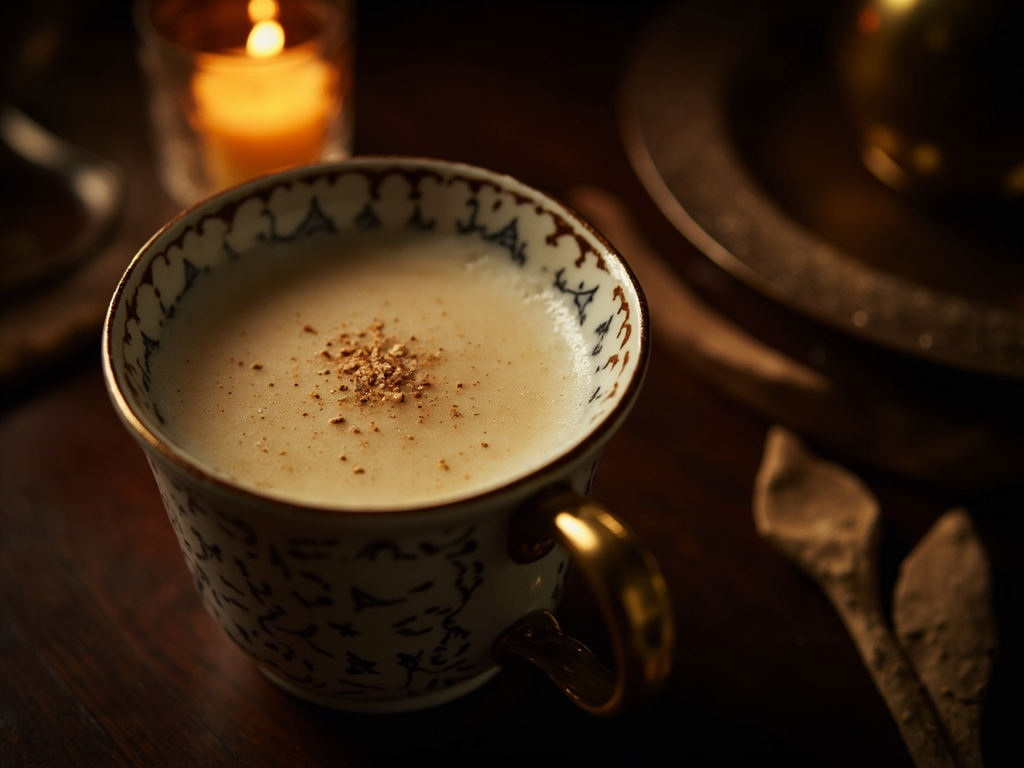
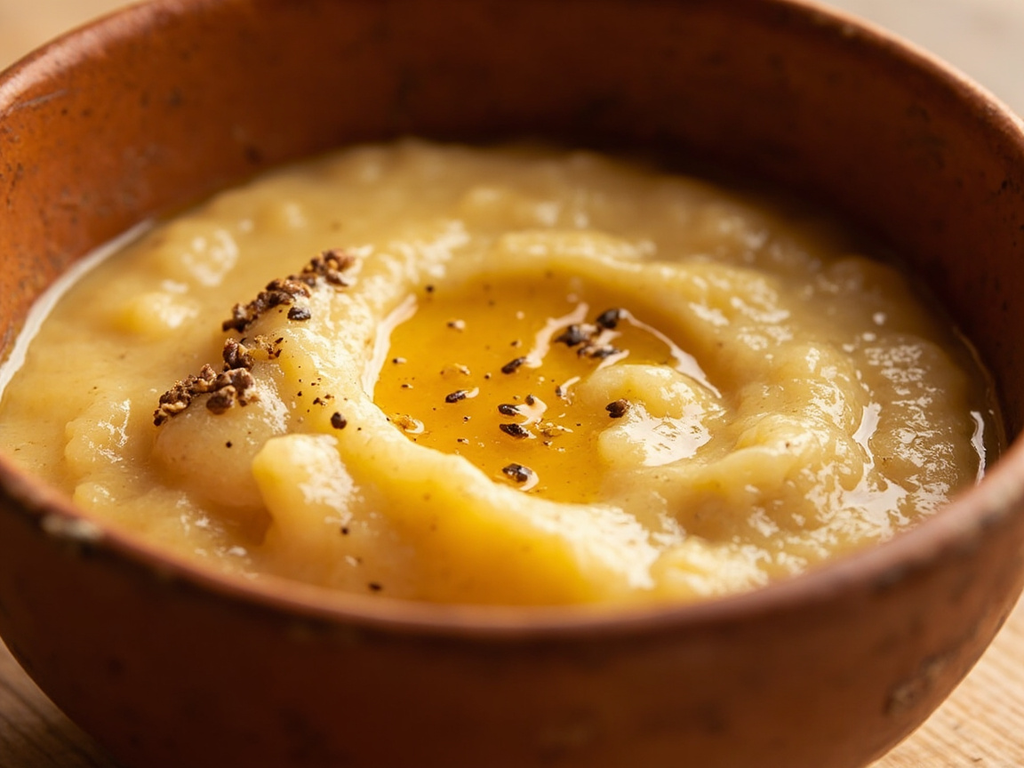
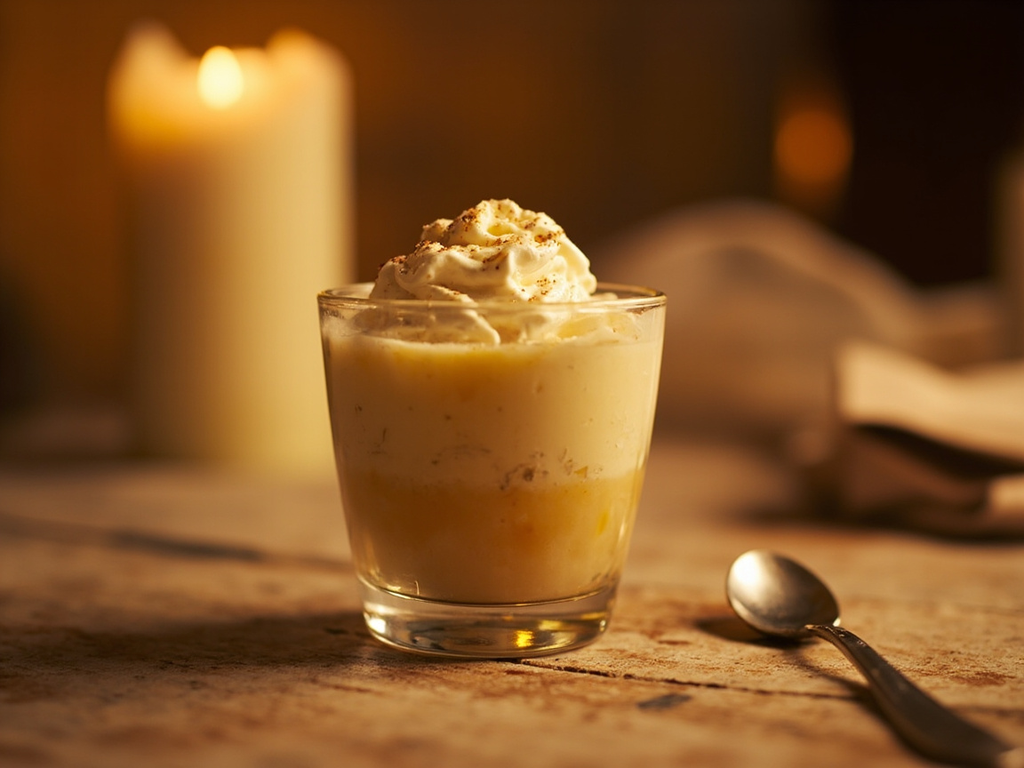
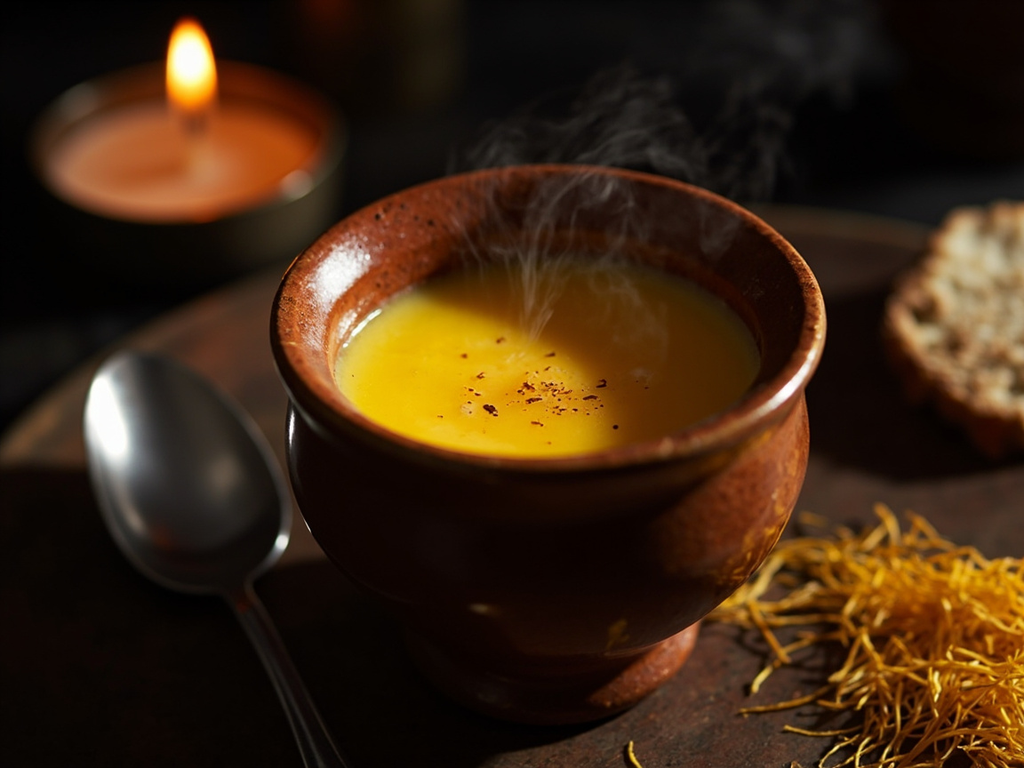
A thick hot drink, between broth and liquid custard: small beer (or light wine) bound with egg yolks, sweetened with sugar, perfumed with saffron and sweet spices. The 'comfort food' of the sick and the night-watchers of old England.
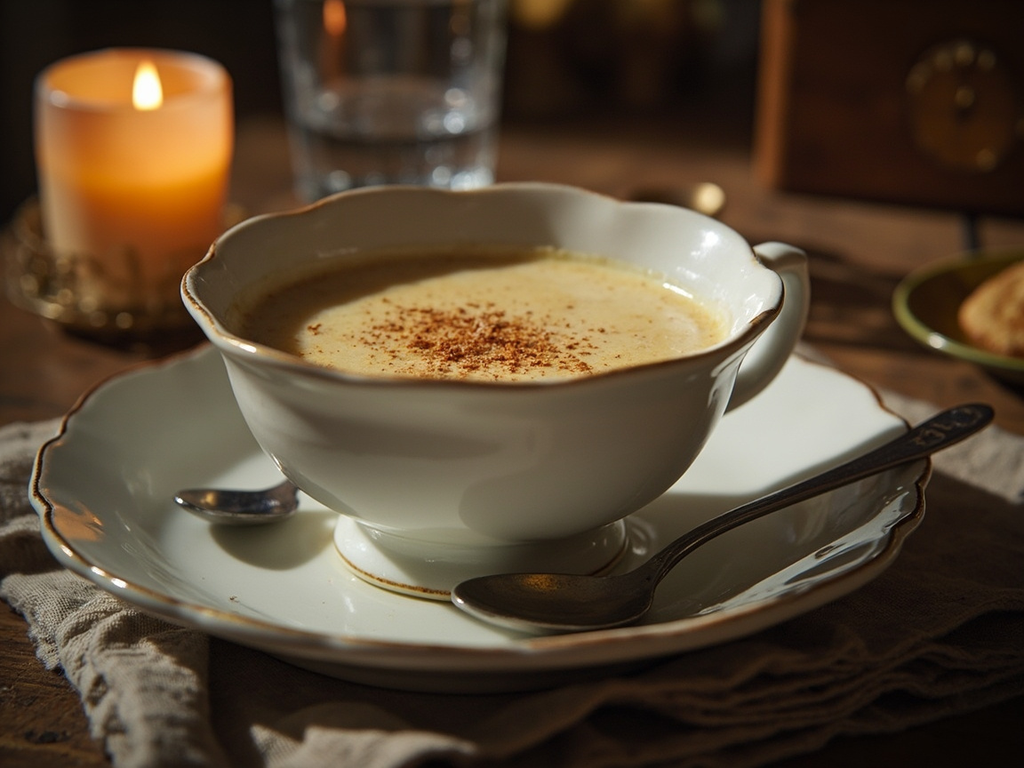
The studious man stays up late, and late watching exhausts the animal spirits as much as cold undermines old bones. For both ills, my housekeepers prepared me a caudle: warm small beer, beaten egg yolks, a little sugar, saffron that gilds it like gold, and nutmeg. One heats without letting it boil, else the egg curdles and all is lost — patience, always, in cooking as in politics. Drunk in small sips, it restores warmth to the body and serenity to the soul. I have often thought, my steaming cup in hand, better than at my desk.
- •Small beer (light ale) or white wine cut with water — a bowl (base)
- •Egg yolks — two (nourishing binder)
- •Breadcrumbs or groats — a little (thickener)
- •Sugar or honey — to taste (sweetness)
- •Saffron, nutmeg, ginger — a pinch (spices and colour)
Small beer caudle with saffron and eggs
A thick hot drink, between broth and liquid custard: small beer (or light wine) bound with egg yolks, sweetened with sugar, perfumed with saffron and sweet spices. The 'comfort food' of the sick and the night-watchers of old England.
Why this dish? Mindful of his health, Hobbes lived to 91, an extraordinary age for his century, and watched his diet. Caudle — a hot liquid porridge of ale or wine, eggs and spices — was the universal restorative: given to the sick, to women in childbirth and to minds tired from late study.
The studious man stays up late, and late watching exhausts the animal spirits as much as cold undermines old bones. For both ills, my housekeepers prepared me a caudle: warm small beer, beaten egg yolks, a little sugar, saffron that gilds it like gold, and nutmeg. One heats without letting it boil, else the egg curdles and all is lost — patience, always, in cooking as in politics. Drunk in small sips, it restores warmth to the body and serenity to the soul. I have often thought, my steaming cup in hand, better than at my desk.
Ingredients (period version)
- Small beer (light ale) or white wine cut with water — a bowl (base)
- Egg yolks — two (nourishing binder)
- Breadcrumbs or groats — a little (thickener)
- Sugar or honey — to taste (sweetness)
- Saffron, nutmeg, ginger — a pinch (spices and colour)
Ingredients
- Light beer (or white wine + water half and half) — 300 ml (base)
- Egg yolks — 2 (binder)
- Fine breadcrumbs (or blended oat flakes) — 1 tbsp (thickener)
- Honey or sugar — 1-2 tbsp (sweetness)
- Saffron (a few threads), nutmeg, ground ginger — 1 pinch each (spices/colour)
Method
- Warm the beer (or wine cut with water) with saffron, nutmeg and ginger; let infuse 5 min.
- Stir the breadcrumbs into a little of the warm liquid to avoid lumps.
- Beat the yolks with honey, add a ladle of warm liquid while whisking (to temper).
- Pour everything back into the saucepan and heat over very low heat, stirring constantly, until it coats the spoon — do not boil.
- Serve immediately, steaming, in a cup, to be drunk in small sips.
How it was made : Caudle (from Latin calidus, hot) was a common medicinal cordial: ale or wine thickened with eggs and groats, sweetened and spiced. It was served to convalescents, to women after childbirth and during long vigils. Its non-alcoholic version, 'gruel', nourished the weakest patients.
The contemporary twist : Non-alcoholic, made with saffron-infused oat milk: a baroque 'golden milk' before its time, ideal for winter evenings.
Sources : Hannah Woolley, The Queen-like Closet (1670) · Kenelm Digby, The Closet of Sir Kenelm Digby Opened (1669)
Thomas Hobbes · Charactorium