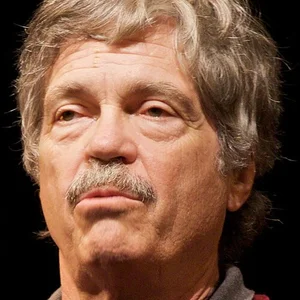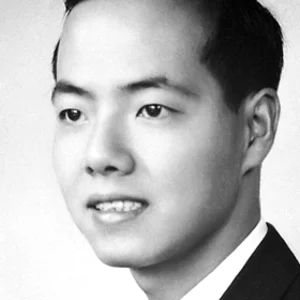

American theoretical physicist of Chinese origin. With Chen Ning Yang, he demonstrated in 1956 the non-conservation of parity in weak interactions, which earned them the Nobel Prize in Physics in 1957.
Tsung-Dao Lee(1926 — 2024)
Tsung-Dao Lee
États-Unis, Taïwan, république de Chine
6 min read
Frequently asked questions
Key Facts
- Born in 1926 in Shanghai, China, he emigrated to the United States in 1946 to study at the University of Chicago
- In 1956, with Chen Ning Yang, he proposed the non-conservation of parity in weak interactions
- In 1957, at the age of 30, he received the Nobel Prize in Physics, becoming one of the youngest laureates in history
- Chien-Shiung Wu's experiment confirmed their hypothesis on parity violation in 1957
- A professor at Columbia University for decades, he died in 2024
Works & Achievements
Landmark paper proposing that parity might not be conserved in weak interactions, and suggesting experiments to test it. It revolutionized particle physics.
Demonstration that nature distinguishes left from right in certain interactions, breaking a symmetry once believed to be universal.
Key contributions to the understanding of the neutrino and the weak nuclear forces, laying foundations of the Standard Model.
Educational initiative founded by Lee that sent more than 900 Chinese students to pursue physics doctorates in the United States, rebuilding Chinese science after the Cultural Revolution.
A reference work aimed at advanced students, synthesizing knowledge in particle physics and field theory.
Research on the behavior of matter at very high density and on solitons, broadening the scope of his theoretical contributions.
Anecdotes
In 1957, at just 30 years old, Tsung-Dao Lee became the second-youngest winner of the Nobel Prize in Physics in history. Together with his colleague Chen Ning Yang, he was also the first Chinese person to receive this honor, a momentous event for Chinese science.
Lee and Yang showed extraordinary boldness: they dared to question a law that all physicists believed sacred, the conservation of parity — the idea that nature makes no distinction between left and right. The physicist Chien-Shiung Wu carried out the experiment that proved them right in early 1957.
Lee was a child prodigy: he left China in the midst of war to study, arriving in the United States in 1946. At the University of Chicago, he so impressed the great physicist Enrico Fermi that he became his favorite student and earned his doctorate in 1950, at the age of 23.
At 29, in 1956, Lee became a full professor at Columbia University: he was the youngest professor in the entire history of that prestigious institution since its founding.
After his Nobel, Lee never forgot his roots: starting in the 1970s, he worked to rebuild scientific ties between the United States and China, creating a program (CUSPEA) that allowed hundreds of young Chinese students to go and study physics in America.
Primary Sources
“To decide unequivocally whether parity is conserved in weak interactions, one must perform an experiment to determine whether weak interactions differentiate the right from the left.”
“The discovery of the nonconservation of parity shows that our intuition of a nature symmetric between right and left was wrong for the weak interactions.”
“If parity is not conserved... an asymmetry in the distribution between the beta particles emerging in the upper and lower hemispheres should be observed.”
Key Places
Birthplace of Tsung-Dao Lee, where he spent his childhood before the war scattered his family.
Where Lee earned his doctorate under the guidance of Enrico Fermi, shaping his mind as a physicist.
The institution where Lee spent his entire career as a professor and where, together with Yang, he developed his theory on parity.
The research center where Lee worked and collaborated closely with Chen Ning Yang on weak interactions.
The city where Lee received the Nobel Prize in Physics in December 1957, at the age of 30.
The city where Tsung-Dao Lee passed away in 2024, after a life devoted to physics.
Typical Objects

The favorite tool of the theoretical physicist, on which Lee would cover pages with equations to explore his ideas. The blackboard was the heart of discussions among theorists.

Notebook where the theorist recorded his mathematical derivations. For Lee, it was the foremost instrument of discovery, more important than any apparatus.

Experimental device used to observe radioactive decays, like the one used in Wu's experiment to test Lee's ideas. It turns an abstract theory into a concrete measurement.

A radioactive source kept at very low temperature and aligned by a magnetic field in the decisive 1957 experiment. Its asymmetric behavior revealed the violation of parity.

The gold medal awarded to Lee and Yang in 1957 in Stockholm. It symbolized worldwide recognition of a revolution in the understanding of the laws of nature.

A mechanical calculating instrument widely used by physicists before the arrival of computers. Lee used it for quick numerical estimates.
School Curriculum
Vocabulary & Tags
Key Vocabulary
Tags
Daily Life
Morning
Lee often started his day early, reading the latest physics papers and picking up the calculations he had begun the day before. The morning, with a fresh mind, was his favorite time to tackle the most difficult mathematical problems.
Afternoon
Afternoons were split between teaching classes to Columbia students, seminars, and long blackboard discussions with his colleagues. These exchanges, sometimes lively, were the driving force behind his discoveries.
Evening
In the evening, Lee frequently continued his research at home, covering pages with calculations. He also enjoyed traditional Chinese painting and reading, keeping a strong connection to his native culture.
Food
Lee enjoyed Chinese cuisine, which he found in New York's restaurants, while also adapting to American meals. Like many researchers absorbed in their work, he often ate simply and quickly.
Clothing
In his role as a university professor in the 20th century, Lee most often wore a suit, shirt, and tie — the usual attire of American academics of the time.
Housing
Lee lived in an apartment in New York, near Columbia University, in the comfortable setting typical of the city's professors. His home held a substantial scientific library.
Historical Timeline
Period Vocabulary
Liens externes & ressources
Références
Œuvres
« Question of Parity Conservation in Weak Interactions » (avec C. N. Yang)
1956
Théorie de la non-conservation de la parité
1956-1957
Travaux sur les interactions faibles et le modèle à deux composantes du neutrino
1957
Programme CUSPEA
1979-1989
« Particle Physics and Introduction to Field Theory »
1981
Travaux sur la matière nucléaire dense et les états de la matière
années 1970-1990