 flip
flipMahi
Mahi
Why this dish? To navigate between islands — sometimes over thousands of kilometers — Tupaia and Polynesian navigators carried mahi, a fermented breadfruit paste that could keep for months. This preservation knowledge was vital for the deep-sea expeditions Tupaia planned using his mental maps of the Pacific.
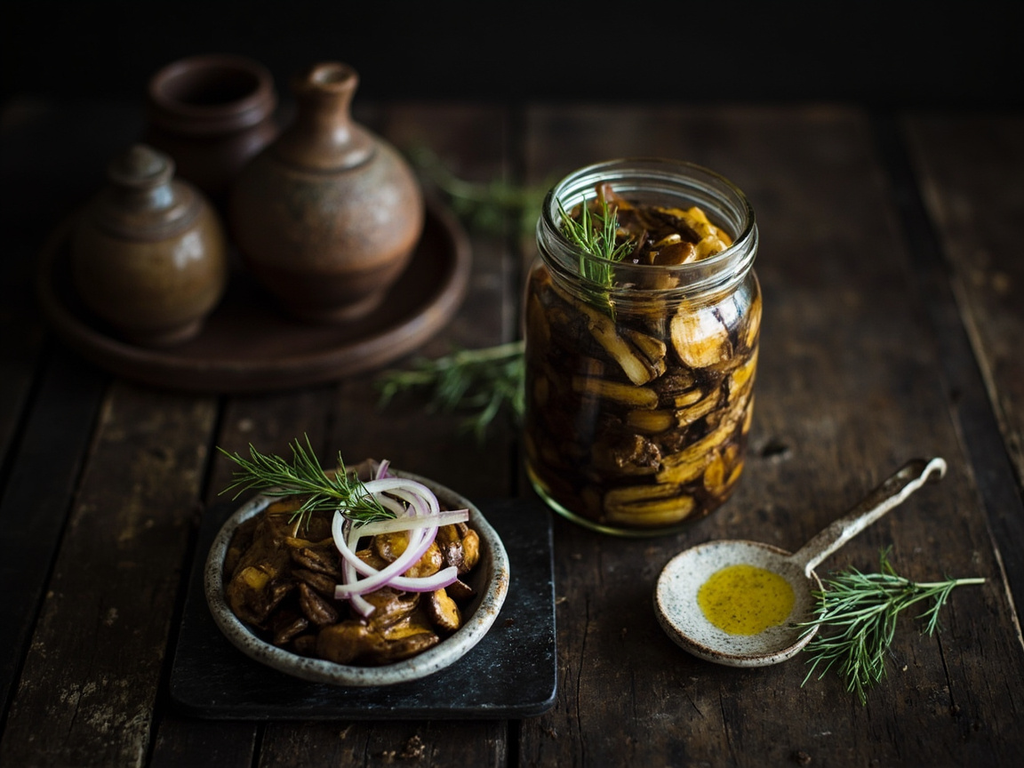
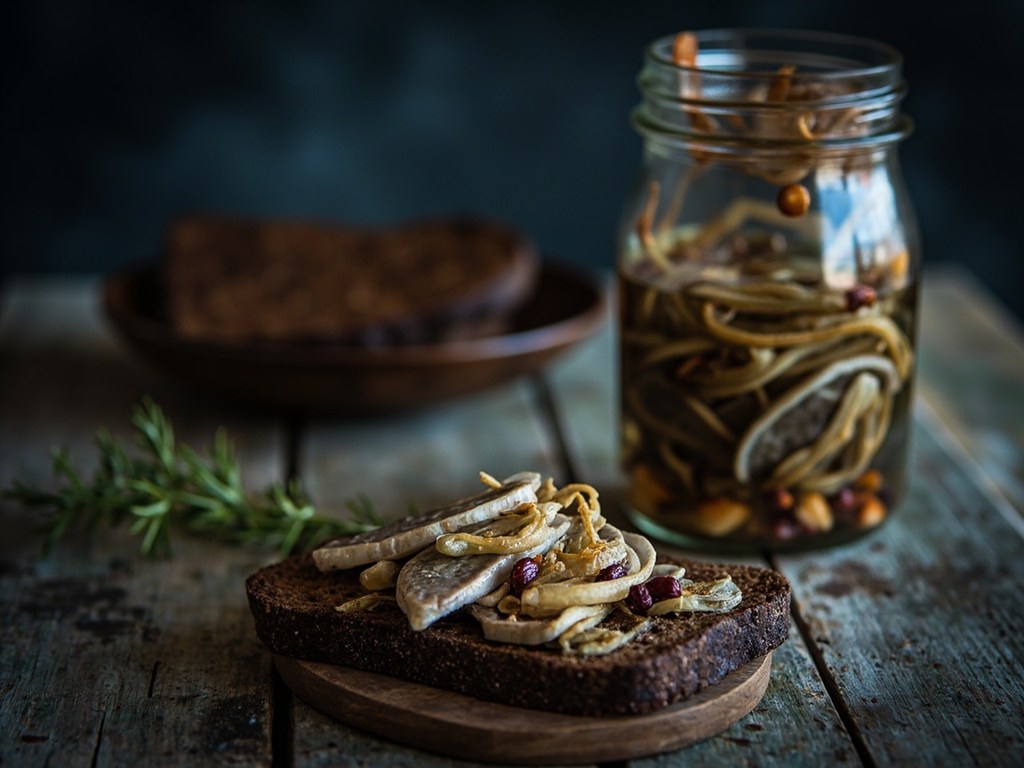
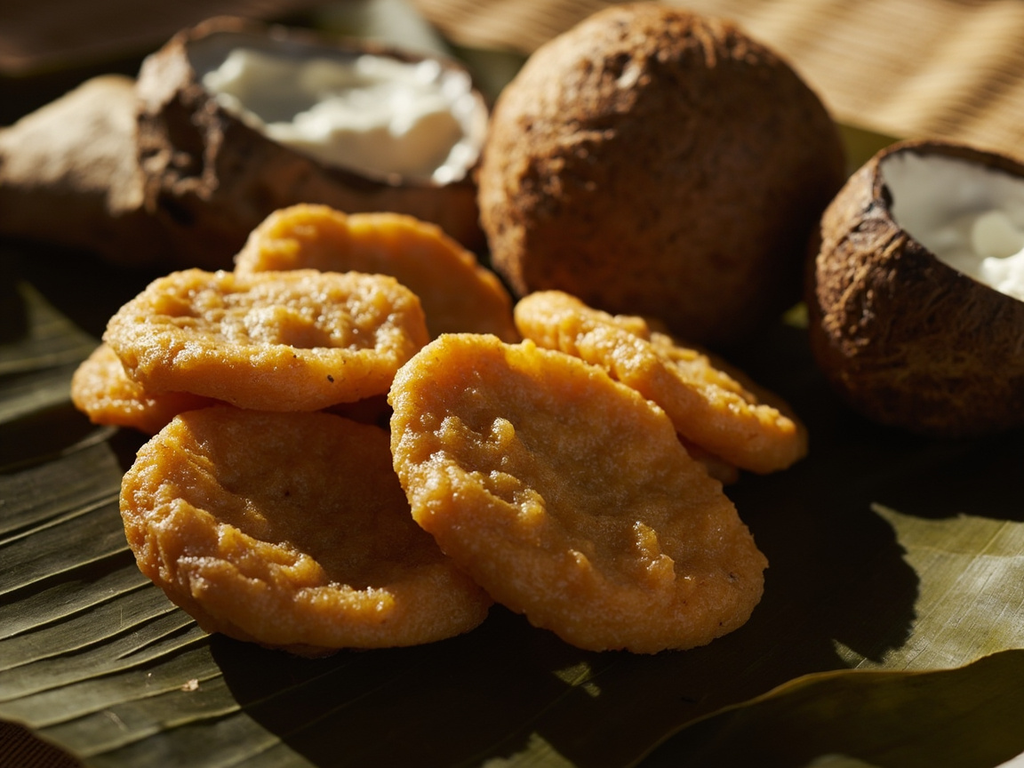
Fermented breadfruit paste, stored in pits lined with leaves. Ripe fruits are peeled, pitted, kneaded, then buried. After several weeks of lactic fermentation, the sour paste keeps indefinitely. It is eaten by shaping it into cakes cooked on hot stones or in leaves in the oven.
When you take to the sea to seek lands beyond the horizon, you cannot rely on fishing alone. Mahi is the wisdom of our ancestors buried in the earth. We take the fully ripe uru, peel them, knead them until the flesh is smooth, then we bury that paste in a pit lined with ti leaves. It ferments, it turns sour, and that sourness keeps it alive for whole moons. When hunger comes on the high sea, you take a portion, shape it, and cook it on the stone — and it carries you to the next island.
- •Very ripe breadfruit (uru) — Several fruits (Starchy base)
- •Ti or banana leaves — To line the pit (Fermentation wrap)
- •Fresh water — For rinsing (Cleaning)
Mahi
Fermented breadfruit paste, stored in pits lined with leaves. Ripe fruits are peeled, pitted, kneaded, then buried. After several weeks of lactic fermentation, the sour paste keeps indefinitely. It is eaten by shaping it into cakes cooked on hot stones or in leaves in the oven.
Why this dish? To navigate between islands — sometimes over thousands of kilometers — Tupaia and Polynesian navigators carried mahi, a fermented breadfruit paste that could keep for months. This preservation knowledge was vital for the deep-sea expeditions Tupaia planned using his mental maps of the Pacific.
When you take to the sea to seek lands beyond the horizon, you cannot rely on fishing alone. Mahi is the wisdom of our ancestors buried in the earth. We take the fully ripe uru, peel them, knead them until the flesh is smooth, then we bury that paste in a pit lined with ti leaves. It ferments, it turns sour, and that sourness keeps it alive for whole moons. When hunger comes on the high sea, you take a portion, shape it, and cook it on the stone — and it carries you to the next island.
Ingredients (period version)
- Very ripe breadfruit (uru) — Several fruits (Starchy base)
- Ti or banana leaves — To line the pit (Fermentation wrap)
- Fresh water — For rinsing (Cleaning)
Ingredients
- Breadfruit (fresh or frozen, Caribbean/Asian grocery) — 1 large fruit (about 1 kg) (Starchy base)
- Banana leaves — 2 large leaves (Wrap)
- Airtight glass jar — 1 large jar (1.5 L) (Fermentation container)
- Coconut milk (for serving) — 100 ml (Accompaniment sauce)
Method
- Peel the breadfruit, remove the fibrous core and any seeds. Cut the flesh into pieces.
- Boil the pieces in water for 20 to 25 minutes until very tender. Drain.
- Mash the flesh with a pestle or fork until a smooth, sticky paste forms.
- Line the bottom of the jar with pieces of blanched banana leaf. Press the paste in, expelling air.
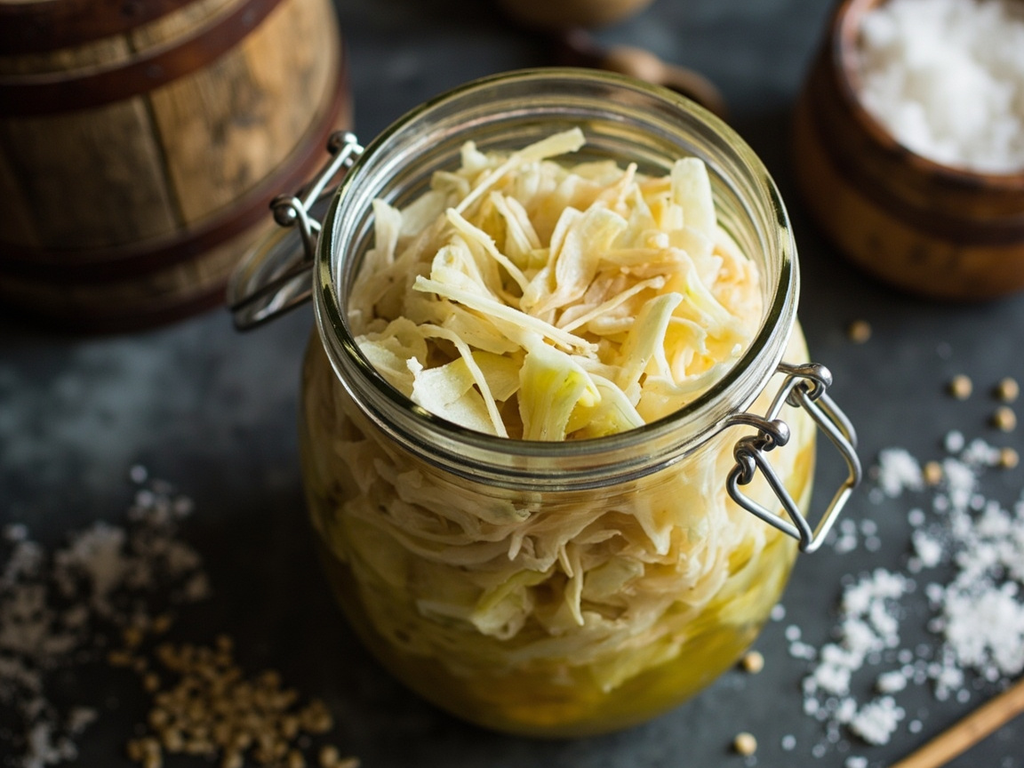
- Cover with banana leaf, close the jar, and let ferment at room temperature (25-30°C) for 3 to 5 days. The paste will turn sour.
- To consume: take a portion, shape into a thick cake, and cook in a dry pan or oven (200°C, 15 min) until golden.
- Serve hot, drizzled with a little coconut milk.
How it was made : Fermentation of breadfruit in pits (called mā or mahi depending on the archipelago) is one of the most ingenious preservation techniques in the Pacific, documented by early Europeans. The paste could keep for several years in these pits. It served as a strategic reserve in case of cyclone famine and the essential provision for long deep-sea voyages.
The contemporary twist : Form small fermented paste discs cooked like blinis, served with whipped coconut milk and toasted coconut flakes — an appetizer that tells a journey.
Sources : Ragone, Diane. Breadfruit — Artocarpus altilis. International Plant Genetic Resources Institute, 1997. · Pollock, Nancy J. These Roots Remain: Food Habits in Islands of the Central and Eastern Pacific since Western Contact. University of Hawaii Press, 1992. · Cox, Paul Alan. 'Polynesian Herbal Medicine.' In Islands, Plants, and Polynesians. Dioscorides Press, 1991.
Tupaia · Charactorium