 flip
flipQuince Marmalade with Honey
Quince Marmalade with Honey
Why this dish? 'Preserved fruits' are among the captain's health provisions. *Marmelada de coing*—whose name comes from Portuguese *marmelo*, quince—was reputed to be good for the stomach and kept for months at sea: exactly the kind of medicinal sweet a Portuguese navigator would carry.
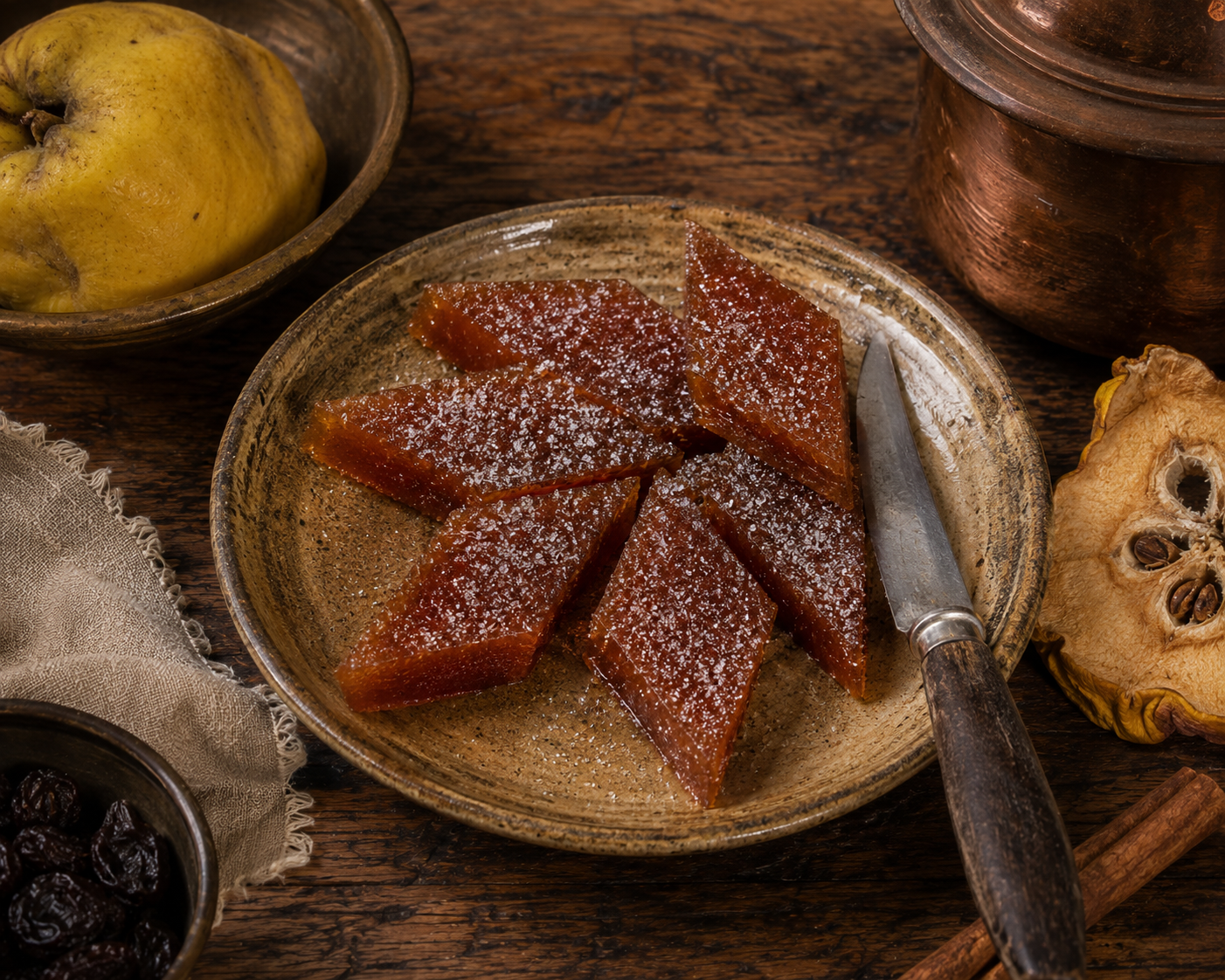
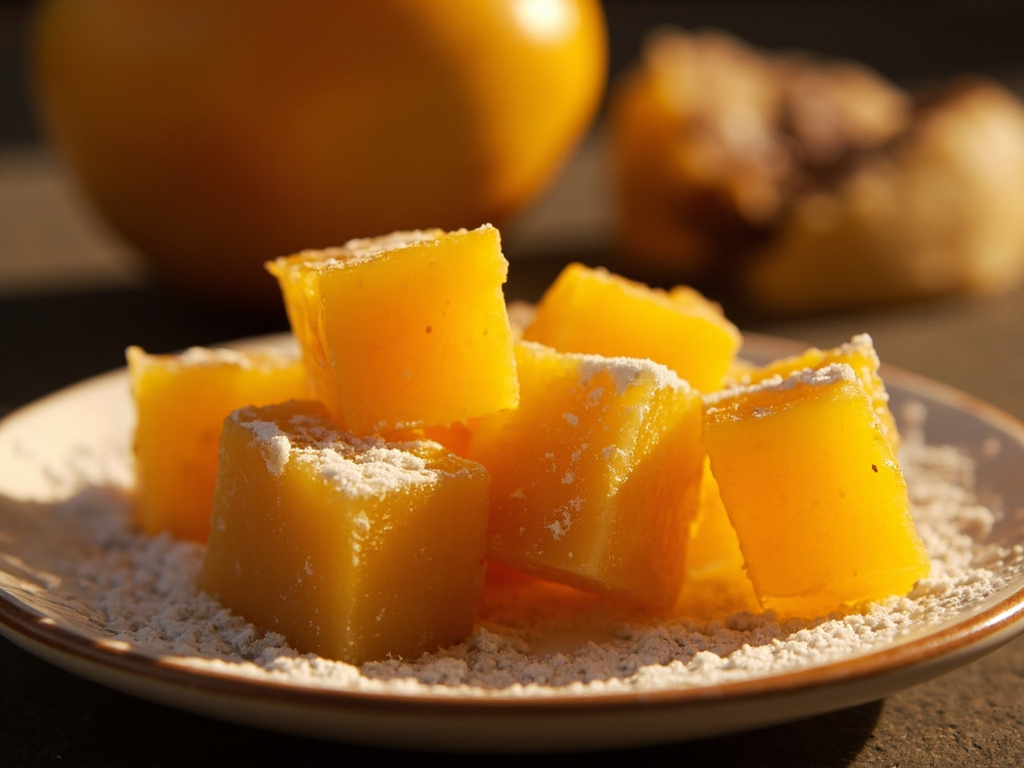
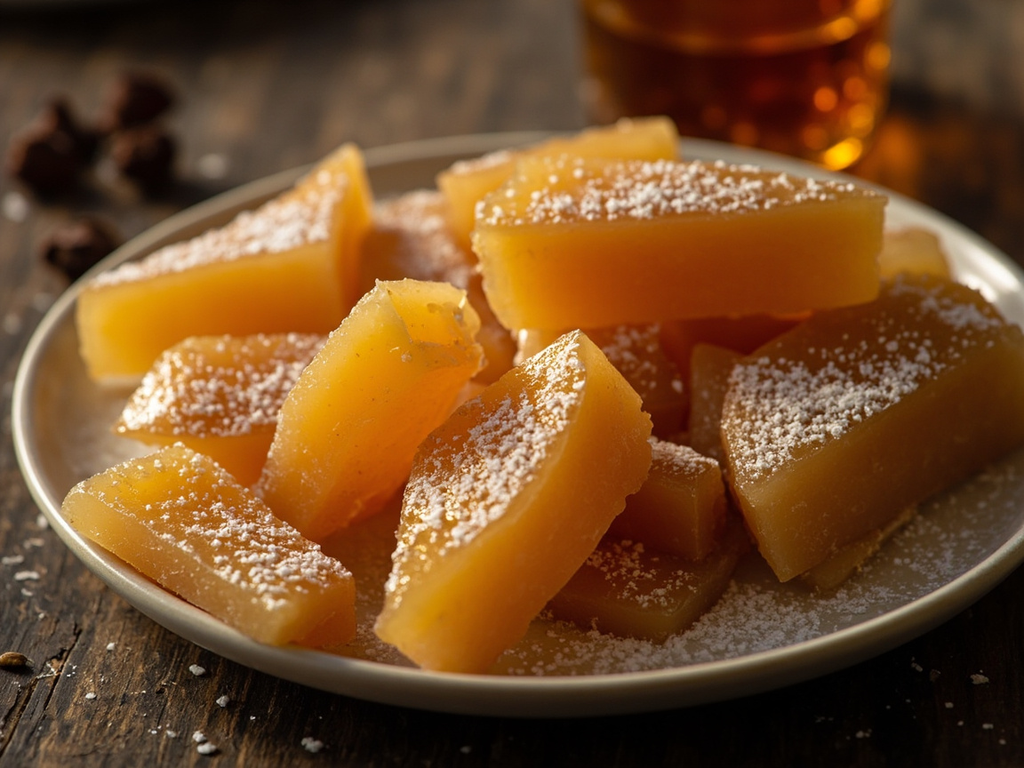
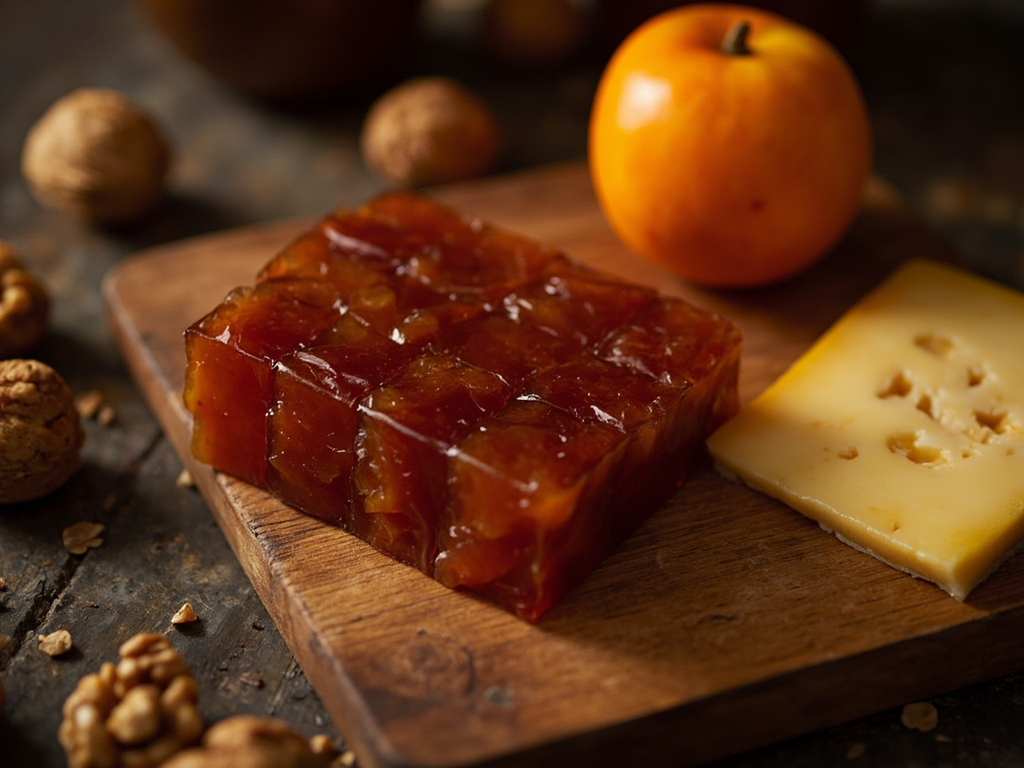
A thick paste of quinces cooked slowly with honey or sugar until firm and sliceable. Tart and sweet, it was eaten at the end of a meal as a digestive and long-lasting provision.
Know, you who listen to me, that not everything was salt and biscuit on my ship: a captain takes care of his body. I carried *marmelada de marmelo*, that quince paste cooked until it set like wax, sweet and a little tart on the tongue. Our physicians held it to be a friend of the stomach, and it kept without rotting where everything else spoiled. A blade would cut a square that I let melt, thinking of the orchards of Portugal while the unknown coasts of Africa passed by.
- •Quinces (marmelos) — several, very ripe (base fruit)
- •Honey — abundant (sweetener and preservative)
- •Water — for first cooking (to soften)
Quince Marmalade with Honey
A thick paste of quinces cooked slowly with honey or sugar until firm and sliceable. Tart and sweet, it was eaten at the end of a meal as a digestive and long-lasting provision.
Why this dish? 'Preserved fruits' are among the captain's health provisions. *Marmelada de coing*—whose name comes from Portuguese *marmelo*, quince—was reputed to be good for the stomach and kept for months at sea: exactly the kind of medicinal sweet a Portuguese navigator would carry.
Know, you who listen to me, that not everything was salt and biscuit on my ship: a captain takes care of his body. I carried *marmelada de marmelo*, that quince paste cooked until it set like wax, sweet and a little tart on the tongue. Our physicians held it to be a friend of the stomach, and it kept without rotting where everything else spoiled. A blade would cut a square that I let melt, thinking of the orchards of Portugal while the unknown coasts of Africa passed by.
Ingredients (period version)
- Quinces (marmelos) — several, very ripe (base fruit)
- Honey — abundant (sweetener and preservative)
- Water — for first cooking (to soften)
Ingredients
- Quinces — 1 kg (peeled net weight) (base fruit)
- Honey (or sugar) — 700 to 800 g (sweetener and preservative)
- Water — to cover (first cooking)
- Lemon juice — 1 tbsp (brighten acidity and set)
Method
- Peel, core, and cut the quinces into pieces.
- Cook them in water for 25 to 30 minutes until very tender, then drain.
- Puree finely (mortar or blender).
- Return the puree to a heavy-bottomed pan with the honey and lemon juice.
- Cook over low heat for 30 to 45 minutes, stirring constantly: the paste thickens, darkens, and pulls away from the sides.
- Spread 2 cm thick in a mold, smooth, and let dry for 1 to 2 days. Unmold and cut into squares.
How it was made : The word 'marmalade' comes from Portuguese *marmelo* (quince): originally, marmalade was a quince paste, not orange. Very rich in pectin, quince sets into a firm jelly without additives, and sugar or honey acts as a natural preservative. Portugal exported it from the 15th century, and it was credited with digestive virtues—hence its place in the health provisions of long voyages.
The contemporary twist : Serve in thin squares with aged sheep cheese and walnuts, Iberian style, or roll into period candies dusted with sugar.
Vasco de Gama · Charactorium