 flip
flipCotignac — quince paste with honey
Cotignac — quince paste with honey
Why this dish? Rabelais was a physician, a graduate of the Montpellier medical school, and a practitioner at the Hôtel-Dieu in Lyon. The medicine of his time considered quince astringent and good for the stomach: cotignac, a quince paste with honey, was both a festive confection and a digestive remedy. The link between medical knowledge and the pleasures of the table is thoroughly Rabelaisian.
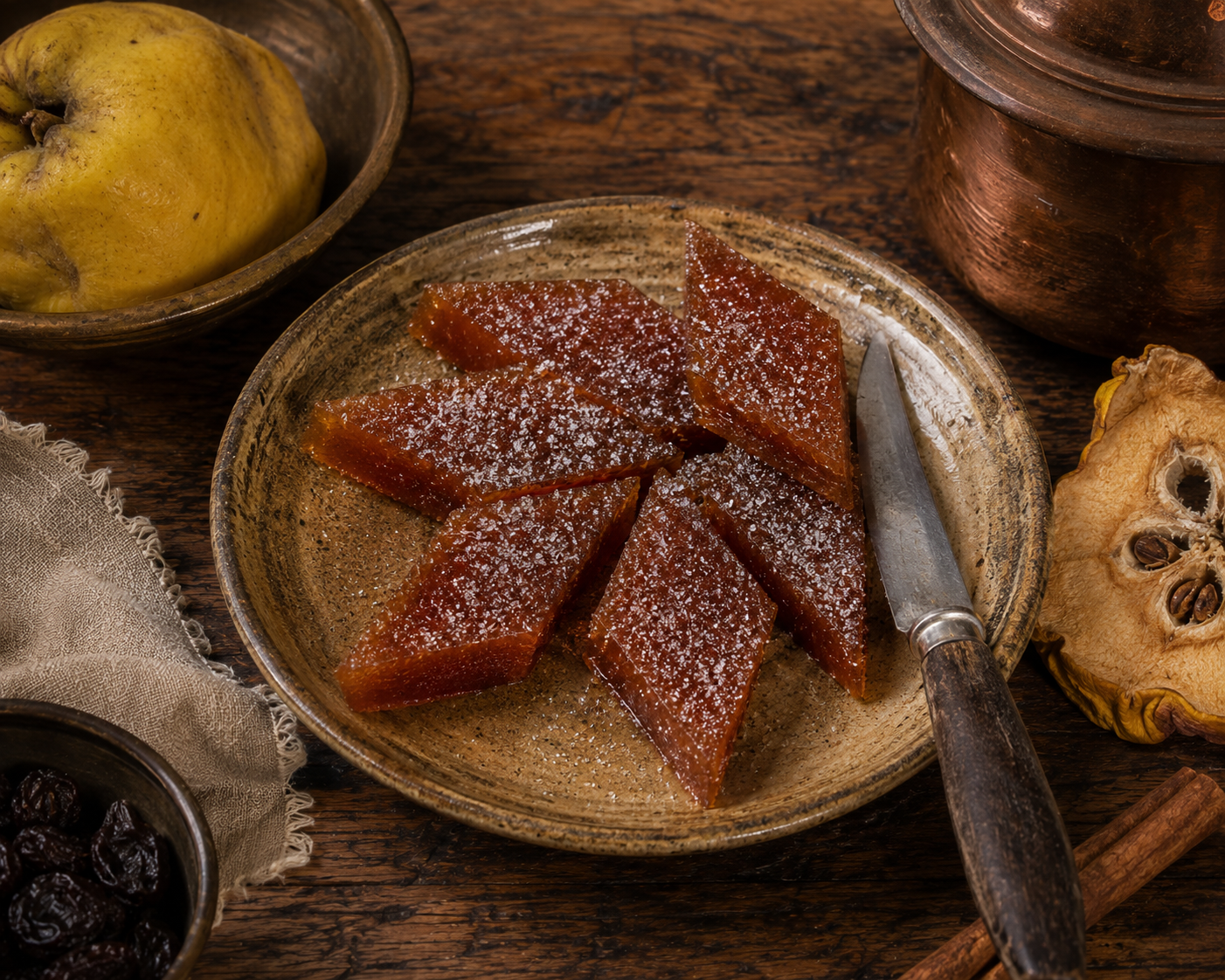
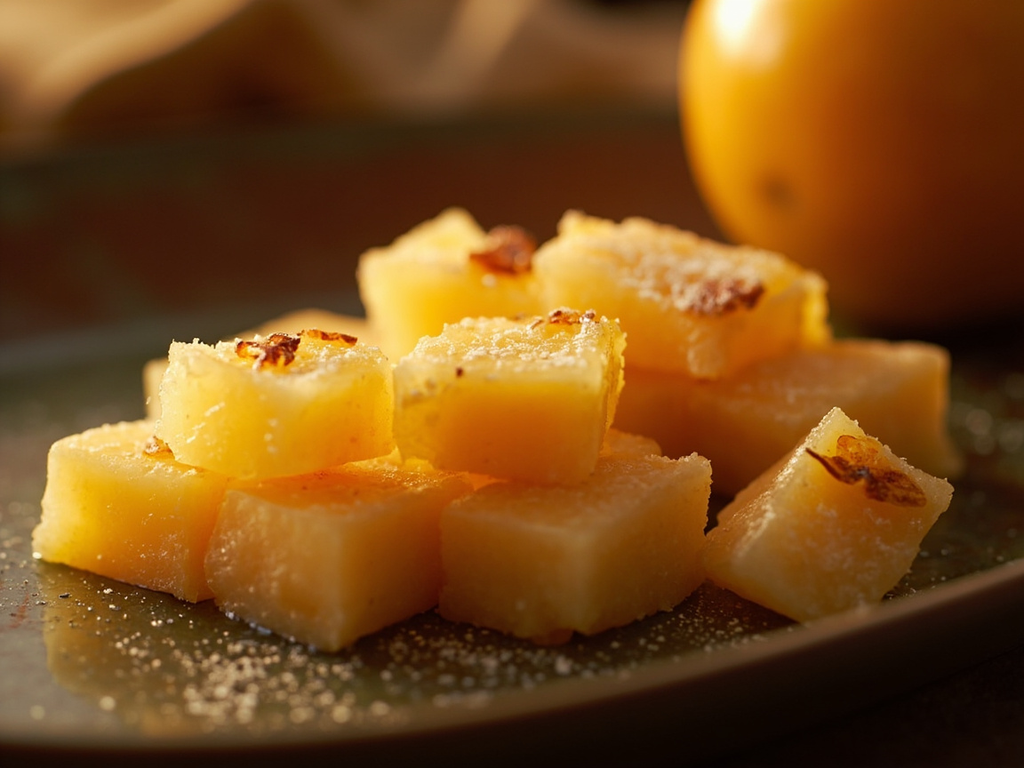
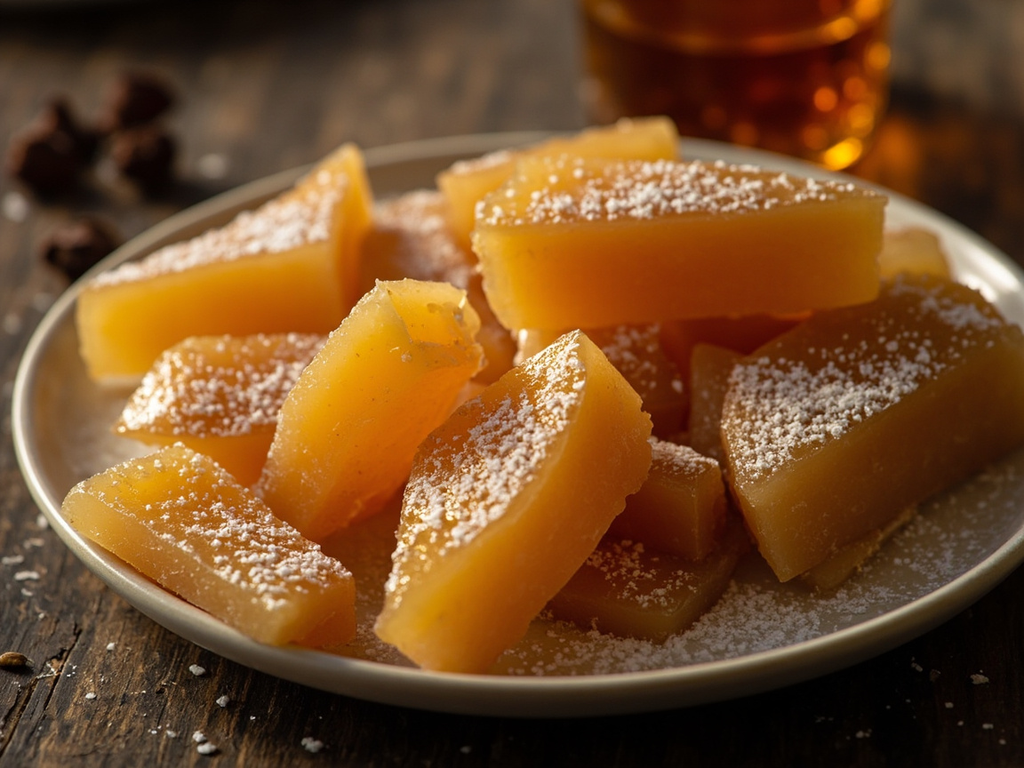
Firm, translucent fruit paste made from quinces slowly cooked with honey and sugar, perfumed with a hint of spices. Cut into diamonds, left to dry, and nibbled at the end of the meal as a sweet and a cordial.
Sache, mon disciple, que le médecin et le cuisinier logent souvent sous le même bonnet ! Prends les coings bien mûrs, fais-les cuire jusqu'à tendreté, passe-les en purée et marie-les à pareil poids de miel et de sucre. Remue sans cesse sur le feu jusqu'à ce que la pâte se détache du fond et prenne couleur de vieil ambre. Coupe-la en losanges, laisse-la sécher, et offre-en après le repas : elle resserre l'estomac débordé et fait passer le vin. Voilà une médecine que le malade réclame deux fois !
- •Ripe quinces — full basket (base fruit)
- •Honey and sugar — equal weight of pulp (preservation and sweetness)
- •Cinnamon (optional) — hint (perfume)
Cotignac — quince paste with honey
Firm, translucent fruit paste made from quinces slowly cooked with honey and sugar, perfumed with a hint of spices. Cut into diamonds, left to dry, and nibbled at the end of the meal as a sweet and a cordial.
Why this dish? Rabelais was a physician, a graduate of the Montpellier medical school, and a practitioner at the Hôtel-Dieu in Lyon. The medicine of his time considered quince astringent and good for the stomach: cotignac, a quince paste with honey, was both a festive confection and a digestive remedy. The link between medical knowledge and the pleasures of the table is thoroughly Rabelaisian.
Sache, mon disciple, que le médecin et le cuisinier logent souvent sous le même bonnet ! Prends les coings bien mûrs, fais-les cuire jusqu'à tendreté, passe-les en purée et marie-les à pareil poids de miel et de sucre. Remue sans cesse sur le feu jusqu'à ce que la pâte se détache du fond et prenne couleur de vieil ambre. Coupe-la en losanges, laisse-la sécher, et offre-en après le repas : elle resserre l'estomac débordé et fait passer le vin. Voilà une médecine que le malade réclame deux fois !
Ingredients (period version)
- Ripe quinces — full basket (base fruit)
- Honey and sugar — equal weight of pulp (preservation and sweetness)
- Cinnamon (optional) — hint (perfume)
Ingredients
- Quinces — 1.5 kg (base fruit)
- Sugar — about 800 g (weight of cooked pulp) (preservation and sweetness)
- Honey — 2 tbsp (roundness and perfume)
- Ground cinnamon — 1 pinch (optional) (perfume)
- Juice of half a lemon (or verjus) — 1 (brightness and setting)
Method
- Wash, do not peel, cut quinces into quarters and remove the core; cook in water until tender.
- Drain, peel, then reduce the flesh to a fine purée; weigh the resulting pulp.
- Add a weight of sugar close to that of the pulp, honey, cinnamon, and lemon juice.
- Cook over low heat, stirring constantly, for 30 to 45 min, until the paste thickens and pulls away from the bottom.
- Spread to 1.5 cm thick in a parchment-lined dish, smooth, and let dry for 24 to 48 h.
- Cut into diamonds, optionally roll in sugar, and store dry in a box.
How it was made : Cotignac, famous in Orléans and appreciated throughout the Loire region, extended the quince season by preserving the fruit in a sweet paste. Sugar and honey acted as preservatives; these dry preserves were both a luxury sweet and a pharmacopoeia item, as quince was believed to strengthen the stomach.
The contemporary twist : Cut the cotignac into thin sticks and serve with an aged Touraine goat cheese — the sweet-sour-lactic pairing would honor the "dive bouteille."
François Rabelais · Charactorium